


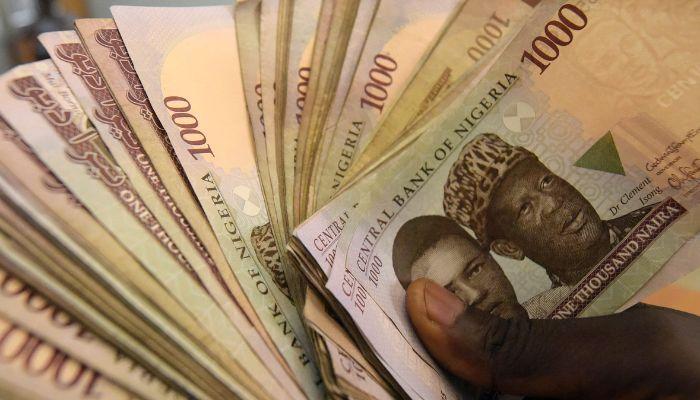
Nigerian Naira Sees Recovery Amid Foreign Reserve Decline
On Wednesday, the Nigerian naira rebounded on the official foreign exchange market, recovering some ground lost the previous day. This shift occurred despite a slowdown in capital inflows stemming from ongoing tensions in the Middle East, which led to a $1.08 billion drop in Nigeria’s foreign exchange reserves.
The naira appreciated by 14.84 naira, closing at 1,371.82 naira to the dollar, based on data from the Central Bank of Nigeria (CBN). This marks a 1.08% increase from the exchange rate of 1,386.66 naira reported on the Nigerian Foreign Exchange Market (NFEM) on Tuesday.
In contrast, the parallel market showed the local currency stabilizing at 1,405 naira to the dollar. This development expanded the gap between the official and parallel markets to 34 naira, representing a 2.5% divergence from the previous day’s difference of 19 naira.
The decline in Nigeria’s foreign exchange reserves, which serve as a critical buffer for the central bank in supporting the naira, continues to be concerning. According to the CBN’s latest publication, reserves fell by 2.16% to $48.94 billion as of April 7, 2026, down from $50.02 billion on March 11, 2026.
This drop in reserves coincides with rising global uncertainty, prompting the International Monetary Fund (IMF) to urge emerging and developing nations to bolster their external buffers in anticipation of potential economic shocks. Participants at the AlUla conference in Saudi Arabia highlighted that, while emerging markets have shown resilience since the global financial crisis, many still face vulnerabilities due to insufficient reserves.
The IMF has pointed out that countries with weak reserve levels are particularly susceptible to abrupt shifts in capital flows and external disruptions. Low reserves can hinder investor confidence, limit policy flexibility, and exacerbate exchange rate volatility.
Despite a significant increase in global reserves over the past 25 years, their distribution remains uneven. While some nations maintain foreign exchange reserves well above recommended levels, a number of low-income countries struggle to meet IMF benchmarks due to political and structural barriers that impede their ability to build necessary buffers.
The IMF’s findings suggest that accumulating foreign exchange reserves should be a gradual process, founded on fiscal discipline and current account surpluses, rather than short-term borrowing or erratic capital inflows. It cautioned that nations relying on unstable financial sources could jeopardize their stabilization efforts, especially in adverse external conditions.
Nevertheless, holding substantial reserve assets entails trade-offs. Often invested in highly liquid, low-yield instruments, maintaining a large reserve can introduce higher costs compared to alternative investments. If not managed correctly, this accumulation could also contribute to inflationary pressures.
In light of these challenges, the IMF has proposed enhanced global cooperation to reduce the costs associated with holding foreign exchange reserves. Suggested reforms include broadening the range of eligible reserve assets beyond short-term U.S. Treasuries to include a varied selection of long-term instruments, potentially managed through collective investment frameworks.
Such reforms are expected to yield better returns on foreign exchange reserves while maintaining liquidity, thus enabling countries to balance stability and growth objectives more effectively. The IMF emphasized that strengthening reserve buffers should be an integral aspect of economic policy, parallel to investments in infrastructure and human capital, particularly in light of the increasing volatility in global markets.
