


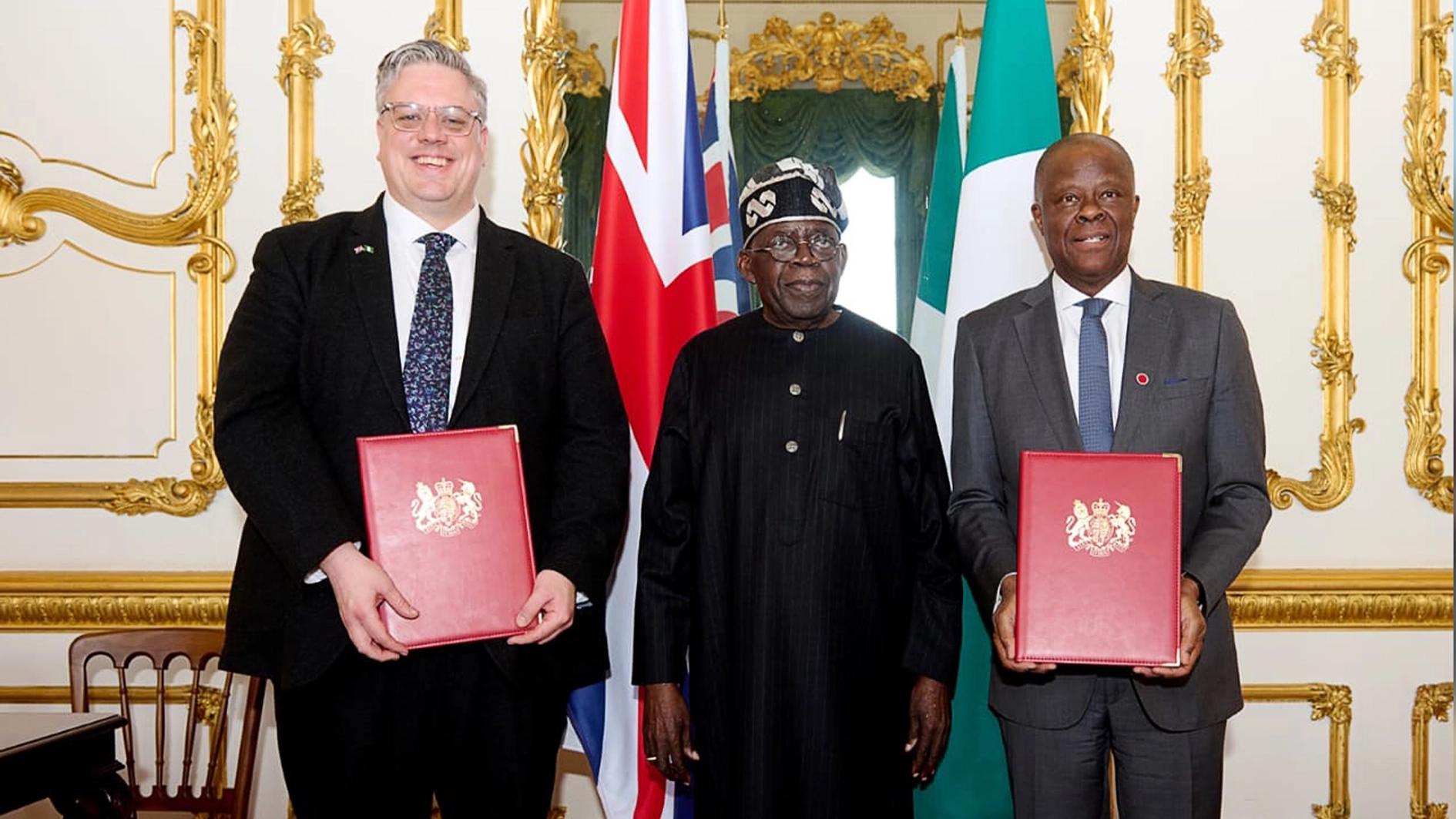
Nigeria and UK Forge Major Infrastructure Deal
Nigeria and the United Kingdom have formalized a significant £746 million (approximately $997 million) agreement to enhance the infrastructure of two of Nigeria’s busiest ports. This initiative is anticipated to bolster trade, generate employment opportunities, and strengthen bilateral economic relations.
During a meeting with British Prime Minister Sir Keir Starmer at Downing Street, President Bola Tinubu emphasized the necessity for both nations to deepen their longstanding ties through enhanced trade relations and cooperative economic initiatives. This meeting marked a pivotal moment, with Tinubu describing his visit as “thrilling and significant,” as it was the first time in 37 years that a Nigerian leader visited the UK, according to his spokesperson, Bayo Onanuga.
The discussions at Downing Street touched on critical subjects such as trade, environmental concerns, terrorism, and other global issues, as Tinubu remarked on the progress made over the years in institutional relations between the two countries. He noted that the ongoing global challenges have not spared Nigeria and expressed a desire to collaborate for the benefit of both nations’ economies and populations.
Prime Minister Starmer characterized the visit as historic and acknowledged the significant state dinner hosted by the King for the Nigerian delegation. He underscored the enduring UK-Nigeria relationship, especially the robust people-to-people connections that have continually enriched both societies. The discussions also highlighted existing cooperation in economics, defense, and security, paving the way for further business exchanges and export agreements.
At Lancaster House, President Tinubu, alongside his wife Oluremi Tinubu, witnessed the signing of the £746 million port infrastructure agreement aimed at revamping the Apapa and Tin Can Island ports in Lagos. Wale Edun, Nigeria’s Minister of Finance, representing Nigeria, and Blair McDougall, Permanent Secretary of State and UK Minister for Small Business and Economic Transformation, represented the UK in the signing. Edun detailed that the agreement aligns with Nigeria’s focus on improving infrastructure, energy, and industrial development.
With an increased emphasis on collaborative partnerships, Edun expressed confidence that this deal will draw the substantial investment necessary to invigorate economic activities, create jobs, and alleviate poverty in line with the administration’s New Hope Agenda. The agreement highlights the mutual trust and commitment between Nigeria and the UK to achieve substantial economic results.
Completed on the same day, the financing package—backed by UK Export Finance (UKEF)—will facilitate the refurbishment of the Lagos Port Complex (Apapa Quays) and the Tin Can Island Port Complex. This project, coordinated by Citibank NA London Branch, is expected to safeguard thousands of skilled jobs in both nations and infuse considerable economic resources. The agreement also earmarks at least £236 million in contracts for British companies, including a major £70 million contract for British Steel to supply 120,000 tonnes of steel billets for the port renovations.
Peter Kyle, UK Secretary of State for Business and Trade, remarked that this deal significantly boosts both British industry and the UK-Nigeria relationship. He added that the outcome reflects the quality of British steel and the ethos driving UK-Nigeria relations. In Nigeria, Adegboyega Oyetola, Minister of Maritime Affairs and Blue Economy, affirmed that modernizing the ports represents a substantial stride toward enhancing the maritime sector’s potential.
Oyetola noted that the infrastructure upgrades, along with the integration of digital and automated systems, aim to decrease vessel turnaround and cargo dwell times while boosting efficiency. This initiative is positioned to optimize government revenue, and as part of ongoing cooperation, both nations have signed a Memorandum of Understanding (MoU) to identify future trade and investment opportunities.
British Steel’s CEO Alan Bell heralded the deal as a record-breaking achievement for the company, representing a shift from stabilization to long-term sustainability. Citi’s Richard Hodder remarked that the financing ranks as the largest export credit agency-supported facility in West Africa. Tim Reid, CEO of UK Export Finance, highlighted that this agreement signifies a vital milestone for UK-Nigeria trade and sets the stage for a long-lasting relationship that will open new avenues for UK exporters.
Since 2018, UKEF has expanded its financial support to West and Central Africa by over £3 billion, a reflection of the growing demand for diverse trading partnerships and significant infrastructure investments. Notably, both Apapa Port, established in the early 1920s, and Tin Can Port, which began operations in 1977, are instrumental in handling more than two-thirds of Nigeria’s merchandise trade.
