


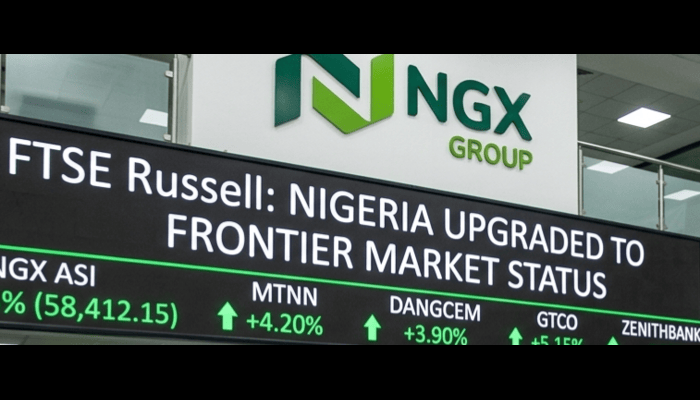
FTSE Russell Reclassifies Nigeria to Frontier Market Status
FTSE Russell has officially updated Nigeria’s classification in its latest Stock Country Classification Interim Review, released on April 7, 2026. After a monitoring period that began in September 2025, the index provider has confirmed Nigeria’s return to frontier market status from its previous unclassified designation.
Significance of Reclassification for Nigerian Stocks
This reclassification marks a significant milestone for the Nigerian Exchange and the overall economy. As a result, global tracker funds and exchange-traded funds (ETFs) linked to the FTSE Frontier Index will be required to reallocate capital into prominent Nigerian stocks, including MTNN, Dangote Cement, and leading banks such as GTCO and Zenith.
Approval Process Behind the Reclassification
In a letter to the Nigeria Exchange Group (NGX Group), FTSE Russell communicated that the reclassification was based on recommendations from its Equity Country Classification Advisory Committee and Policy Advisory Committee. The FTSE Russell Index Governance Committee has formally approved Nigeria’s transition from unclassified to frontier market status, effective September 2026.
Global Announcement and Market Engagement
The results of the March 2026 interim review were published on FTSE Russell’s website and disseminated to media outlets in key global markets. FTSE Russell congratulated the Nigerian Market Authority on this development and expressed its eagerness to continue engaging with the Nigerian Exchange Limited to stay updated on future market developments.
Industry Response to the Reclassification
Mr. Temi Popoola, Group Managing Director and CEO of Nigeria Exchange Group Limited, commented on this pivotal development, emphasizing its importance for the Nigerian capital market. He noted, “This milestone underscores the progress made in strengthening market infrastructure, enhancing transparency, and improving investor access. It reflects the sustained collaboration among regulators, market operators, and stakeholders to position Nigeria as a competitive destination for global capital.”
Criteria for FTSE Market Classification
The FTSE Stock Country Classification review process evaluates global market ratings based on various technical criteria, as well as institutional investor perceptions. To ensure objectivity, the process is backed by an external advisory board, which includes the FTSE Equity Country Classification Advisory Board, composed of industry experts, and the FTSE Russell Policy Advisory Board, representing leading global investors.
Factors Leading to Nigeria’s New Frontier Market Status
Key factors contributing to Nigeria’s reclassification include sustained improvements in foreign exchange (FX) liquidity and the ability of international institutional investors to repatriate funds without significant delays—issues that previously led to Nigeria’s downgrade in September 2023. This update signifies the end of Nigeria’s challenging investment environment and re-establishes it as a viable market for global institutional investors.
Currently, Nigeria meets five critical FTSE market quality criteria essential for frontier status, including market transparency and a functional foreign exchange market. An influx of foreign portfolio investors (FPIs) typically leads to increased trading volumes and enhanced price discovery, while Nigeria’s frontier status acts as an affirmation of the Central Bank of Nigeria’s orthodox monetary policies and currency reforms implemented over the last 18 months.
