


Nigeria Seeks Private Investment to Transform Agriculture
The Nigerian federal government is intensifying its initiatives to draw private capital into the agricultural sector, amid significant funding shortfalls that hinder productivity and the shift towards climate-resilient farming practices.
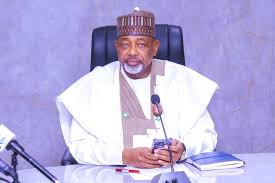
Senator Abubakar Kyari, the Minister of Agriculture and Food Security, made this announcement during the Nigeria-UK Investment Forum held in London. He urged investors, financial institutions, and development partners to collaborate with Nigeria in harnessing the full potential of its agricultural economy.
In a statement released by the ministry through its Director of Information, Ezeaja Ikemefuna, Kyari emphasized that current investment levels in agriculture are inadequate for establishing resilient food systems, implementing climate-smart technologies, and advancing innovation throughout various value chains.
While acknowledging the necessity of public funding, Kyari stated that a stronger influx of private investment and development finance is crucial to unlock the scale of funding required. He pointed out that access to finance is a significant barrier for farmers, limiting their productivity. As of April 2025, the total financing available for agriculture was approximately N3.4 trillion, which accounts for less than 4% of the sector’s contribution to the nation’s gross domestic product (GDP).
Kyari highlighted that nearly 70% of the Nigerian workforce is employed in agriculture, which contributes over 24% to GDP. He identified significant investment opportunities across various crops, such as rice, maize, cassava, cocoa, and horticulture. However, he cautioned that climate change is increasing the risks to agricultural productivity through challenges such as extreme rainfall, flooding, drought, and desertification, all of which threaten food security and rural livelihoods.
To mitigate these risks and enhance investment attractiveness, the Nigerian government is bolstering key institutions, including the Agricultural Bank, the Nigeria Agricultural Development Fund, and the National Agricultural Insurance Corporation. Additionally, it is restructuring the National Agricultural Land Development Authority to facilitate large-scale agricultural investments.
Kyari noted that various government initiatives, such as distributing solar-powered irrigation pumps, developing climate-resilient seeds, advancing a National Agricultural Mechanization Plan, and establishing special agro-industrial processing zones, aim to increase productivity, enhance value addition, and foster private sector engagement.
In light of rising food prices and the need to boost agricultural production, President Bola Tinubu declared a national emergency on food security in July 2023. This declaration led to the creation of the Presidential Food Systems Coordination Unit to streamline interventions across all levels of government.
Kyari reiterated that Nigeria is positioning itself as a competitive destination for agribusiness investment. The opportunities extend to irrigation technology, storage infrastructure, agro-processing, and agricultural logistics. He assured potential investors of the government’s commitment to creating a favorable policy environment that includes reforms to encourage climate-smart agriculture, strengthen land tenure systems, and promote sustainable agribusiness financing.
He encouraged UK investors and global partners to seize the opportunities presented by Nigeria’s large market, favorable agro-ecological conditions, and ongoing reforms that aim to transform the agricultural sector. Kyari emphasized that bridging financing gaps through increased private sector involvement is vital not only for achieving national food security but also for developing resilient food systems capable of enduring the impacts of climate change.
