


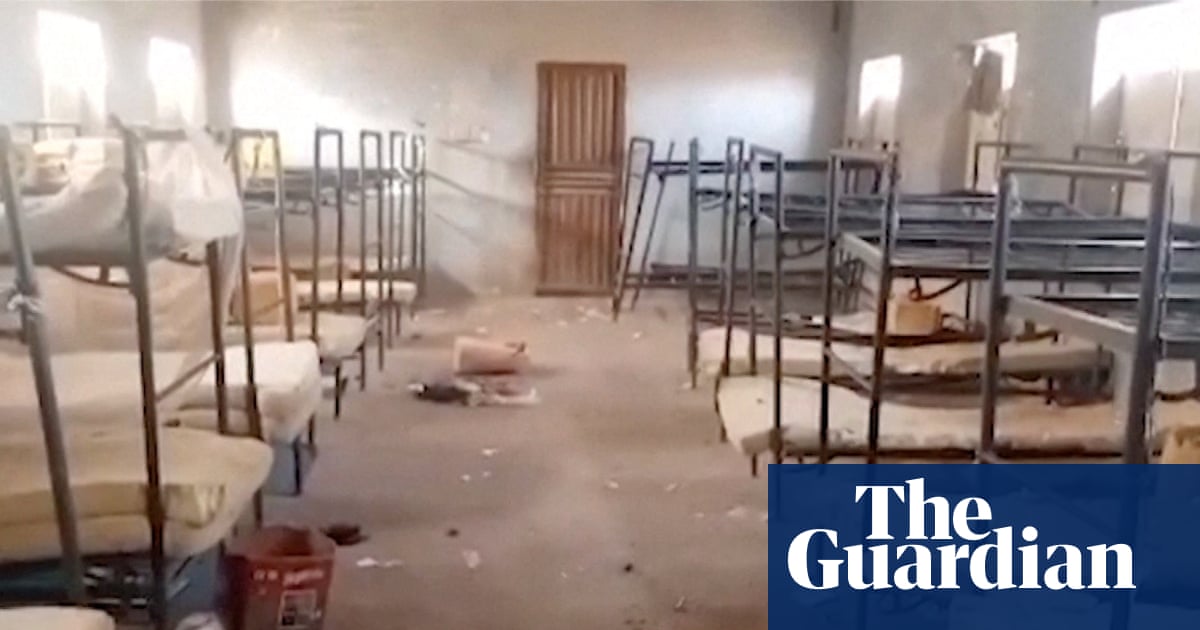
Unidentified gunmen have abducted 215 children and 12 teachers from a Catholic school in central Nigeria, the country’s second mass kidnapping in a week.
The kidnappings in the Papiri community in Niger state occurred against the backdrop of President Donald Trump’s threat to intervene militarily to end a “genocide of Christians” that the Nigerian government denies.
“The Niger State Government has received with deep sadness the disturbing news of the abduction of students from St. Mary’s School in Agwara Local Government Area,” the Secretary to the State Government, Abubakar Usman, said in a statement.
The Niger State Police Command said the abduction occurred in the early morning hours, after which military and security forces were deployed to the community.
Dauda Chekula, 62, said four of her grandchildren, aged between seven and 10, were among the abducted school children.
“I don’t know what’s going on because I haven’t heard anything since this morning,” Chekula told The Associated Press. “Those children who were able to escape have scattered. Some have run home, but the only information we have is that the attackers have moved into the bush with the remaining children.”
Niger is the largest of the country’s 36 states, stretching from the capital Abuja to neighboring Benin to the west. The incident early Friday morning was the third mass school kidnapping case recorded in the state in the past decade. The last attack in Niger State in May 2021 abducted 135 students from an Islamic seminary, six of whom died in custody.
On Monday, gunmen attacked a girls’ boarding school in neighboring Kebbi state, abducting 25 girls and killing the vice principal. According to local reports, security forces were providing information about the plot and guarding the school through the night, but left the scene early.
“Heavily armed security guards spent some time taking photos with the students, but abandoned them 30 minutes before the attack,” the governor said. Nigeria’s President Bola Tinubu then ordered the Undersecretary of Defence, Bello Matawalle, to relocate to the state to assist in rescue operations.
No one claimed responsibility for the attack, but analysts and locals said gangs often target schools, tourists and villagers in remote areas with kidnappings for ransom. Officials say most of the insurgents are former pastoralists who took up arms against rural villages after clashes over tight resources.
Kidnapping for ransom is just one aspect of Africa’s most populous country, which is plagued by multiple security crises across its central and northern provinces.
On Monday, the Islamic West Africa Province (Iswap) militant group claimed responsibility for the death of a Nigerian general in northeastern Borno state. Iswap published footage of his death, as well as WhatsApp chats about the failed rescue efforts.
Earlier this week, gunmen abducted 38 church members and killed at least two in a brutal attack on a church in Niger state’s southern neighbor Kwara state, church officials said. The attack was witnessed by millions of people via a live stream of the service as it took place.
The kidnappers have since demanded a ransom of 100 million naira (£52,662) per person, suggesting the kidnappings may be financially motivated rather than ideologically.
Regardless of the motive, the scale and frequency of attacks and kidnappings has increased pressure on the government to avoid escalating a diplomatic standoff with the Trump administration. The government has classified Nigeria as a Country of Special Concern (CPC). This designation is given to countries whose governments are deemed to have engaged in or condoned serious violations of religious freedom.
US lawmakers, including Ted Cruz, have helped promote claims that a “genocide of Christians” is underway in Nigeria. President Trump later said the U.S. military could “fire in the guns” on Nigeria if it failed to protect Christians. As the situation unfolds, there is a lot going on in the Capitol and in the Vatican.
Jonathan Pratt, a senior official at the U.S. Bureau of African Affairs, told Congress on Thursday that “terrorist, separatist, bandit, and criminal militias are present across the country in Nigeria and continue to carry out attacks, often intentionally targeting Christian communities.”
The Nigerian government denies anti-Christian genocide claims and says the victims of the attacks were of all faiths.
Tinubu announced on Wednesday that he was canceling visits to South Africa and Angola scheduled for this weekend for the G20 and AU/EU summits, respectively.
