


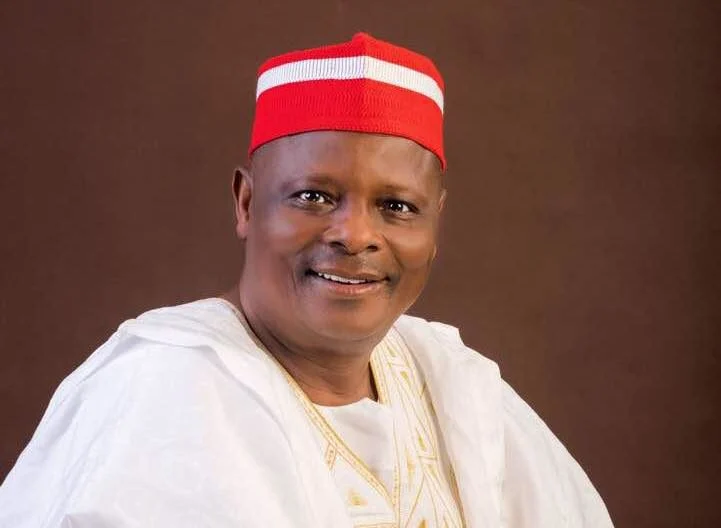
The New Nigeria People’s Party on Wednesday expressed shock at the introduction of a bill in the US Congress that names its leader, Senator Rabiu Musa Kwankwaso, for targeted sanctions over alleged violations of religious freedom in Nigeria.
The bill, entitled the Nigeria Religious Freedom and Responsibility Act of 2026 (HR 7457), was introduced by Rep. Riley Moore (R-West Virginia) and co-sponsored by Chris Smith (R-N.J.).
The bill recommends visa bans and asset freezes under the Global Magnitsky Human Rights Accountability Act for individuals and entities accused of engaging in religious freedom violations.
The list includes Kwankwaso, Fulani herdsmen militia, Miyetti Allah Cattle Breeders Association of Nigeria, Miyetti Allah Kautal Hole, among others.
At a press conference in Abuja, NNPP National Publicity Secretary Ladipo Johnson denied any suggestion that Kwankwaso was involved in violations of religious freedom.
“We view this development as an unnatural action against an innocent man who clearly has nothing to do with religious fundamentalism in Nigeria.
“His records exist in the public domain, both in his official and private life, and it is advisable for people to properly investigate such matters before reaching such conclusions,” he said.
Johnson said Kwankwaso had been reacting months before the incident to US President Donald Trump’s decision to re-designate Nigeria as a country of special concern over allegations of religious persecution.
“Several months before the latest developments, Mr. Kwankwaso publicly reacted when President Donald Trump redesignated Nigeria as a country of special concern over allegations of religious persecution,” he said.
“At the time, Senator Kwankwaso in a statement posted on his X handle warned against what he said was an oversimplification of Nigeria’s internal challenges.
“Mr Kwankwaso said it was important to stress that our country is a sovereign nation and our people face various threats from lawless elements across the country.”
But in a post shared on X, Moore wrote to Kwankwaso: “Governor, would you like to comment on your own complicity in the death of Christians? You instituted Sharia law. You signed a law that makes so-called blasphemy punishable by death.”
Under Kwankwaso’s leadership, Kano State joined other northern states such as Zamfara, Sokoto, Katsina, Yobe, Jigawa, and Borno in implementing the Islamic code of law.
The NNPP questioned this claim, asking, “But is this enough to charge Mr. Kwankwaso with serious violations of religious freedom? Why were other governors who introduced Sharia in their states not charged as well? Is Rep. Moore being impartial or selective?”
“Doesn’t the US have good relations with Qatar and Saudi Arabia (both members of Islamic law)?” Why is this being done so soon after our government has clearly paid for American consultants? Isn’t it strange that opposition leader Kwankwaso is the one who has spoken out over and over again about the insecurity under this regime that the US now appears to be attacking? ”
The party also defended Mr Kwankwaso’s performance as governor.
“We recall that as governor of Kano State, Senator Kwankwaso ensured that Boko Haram sects were wiped out of the state, and his close relationship with Christian leaders in Kano and across the country attests to his credibility as a national leader and statesman.
“Even when pressured to implement Sharia, he still lost the election because predominantly Muslim voters punished him for supporting a Christian presidential candidate in Chief Olusegun Obasanjo.Furthermore, in 2023 he campaigned for president with a Christian bishop, Bishop Isaac Idahosa, as his running mate.
“We believe these facts should lead Congress and its leaders, particularly Congressman Riley Moore and Representative Chris Smith, to conduct a thorough investigation into the credibility of our leader, Senator Rabiu Musa Kwankwaso, so that justice can be done to his noble name and any unwarranted embarrassment removed,” Johnson added.
The bill directs the U.S. Secretary of State to determine whether certain Fulani militias qualify as foreign terrorist organizations under U.S. law and recommends humanitarian assistance to affected communities in Nigeria’s Middle Belt.
Tensions over religious freedom are rising as violence continues in northern Nigeria and parts of the Middle Belt.
In late 2025, President Trump redesignated Nigeria as a country of special concern for serious violations of religious freedom, a measure rejected by the Nigerian government, which maintains the country’s security challenges are multidimensional and not a religious war.
The proposed bill has not yet been considered by the entire U.S. Congress.
