


Stocks Rally Following U.S.-Iran Ceasefire Announcement
On Wednesday, U.S. stocks surged after President Donald Trump declared a two-week ceasefire between the United States and Iran, effectively pausing hostilities that had escalated over the past month. The announcement brought relief to investors, contributing to a significant uptick in market performance.
While the ceasefire has been welcomed, official communications from both Washington and Tehran have not clarified future shipping traffic in the Strait of Hormuz, a crucial route for global oil supplies. Despite lingering uncertainties and mixed messages from officials throughout the day, market sentiment remained largely positive, leading to notable gains across major indices.
Market Performance Reflects Optimism
The S&P 500 closed with a robust 2.5% increase, while the Nasdaq Composite Index rose 2.8%. The Dow Jones Industrial Average saw a dramatic climb, up 1,325 points, marking its largest single-day gain since April 2025, and the Russell 2000 Index also climbed by 2.9%.
JPMorgan Chase & Co. strategists suggested that the S&P 500 could continue to rise as investor sentiment improves. They posited that, assuming the ceasefire does not serve as a mere distraction, markets may view the announcement as a near-end to hostilities, despite the ongoing economic impacts.
Experts Caution Against Over-optimism
However, other financial analysts warned investors to tread carefully. Krishna Guha, vice chairman and head of economics at Evercore, cautioned in a memo that uncertainties remain high. “We are not out of the woods yet,” he stated. Guha noted the possibility of the ceasefire breaking down and mentioned that the initial inflation shock from the conflict would still have repercussions.
Oil Prices Experience Volatility Amid Uncertainty
During early trading, Iran’s semi-state news agency announced the suspension of traffic in the Strait of Hormuz in response to recent escalations, but this did little to halt the decline in oil prices. By the close, U.S. crude oil prices plummeted 16.4%, bringing it down to $94.41 per barrel—its largest single-day drop since 2020. International Brent crude also saw a considerable decline, falling 13.3% to $94.75.
Shipping Activity Diminishes Despite Ceasefire
Despite Iran’s assurances regarding safe passage for certain vessels, it remains uncertain whether oil tankers will navigate through the Strait of Hormuz. The viability of such routes depends significantly on the availability of marine insurance, which serves as a crucial financial safeguard for transporting valuable cargo across perilous waters. According to S&P Global Market Intelligence, only four vessels transited the strait on Wednesday, marking the lowest activity of the week, as ship operators often disable transponders to evade detection in sensitive areas.
Maritime Insurance Concerns Persist
Neil Roberts, chairman of the Lloyds Markets Association, emphasized the ongoing risks in the region, stating that the return of Gulf trade was uncertain, even with the ceasefire in place. He remarked, “The region remains at heightened risk, and none of the underlying tensions have been resolved.” Lloyd’s of London, a key player in shipping and maritime insurance, underscores the industry’s vigilance amidst these developments.
Impact of Falling Oil Prices on U.S. Gasoline Costs
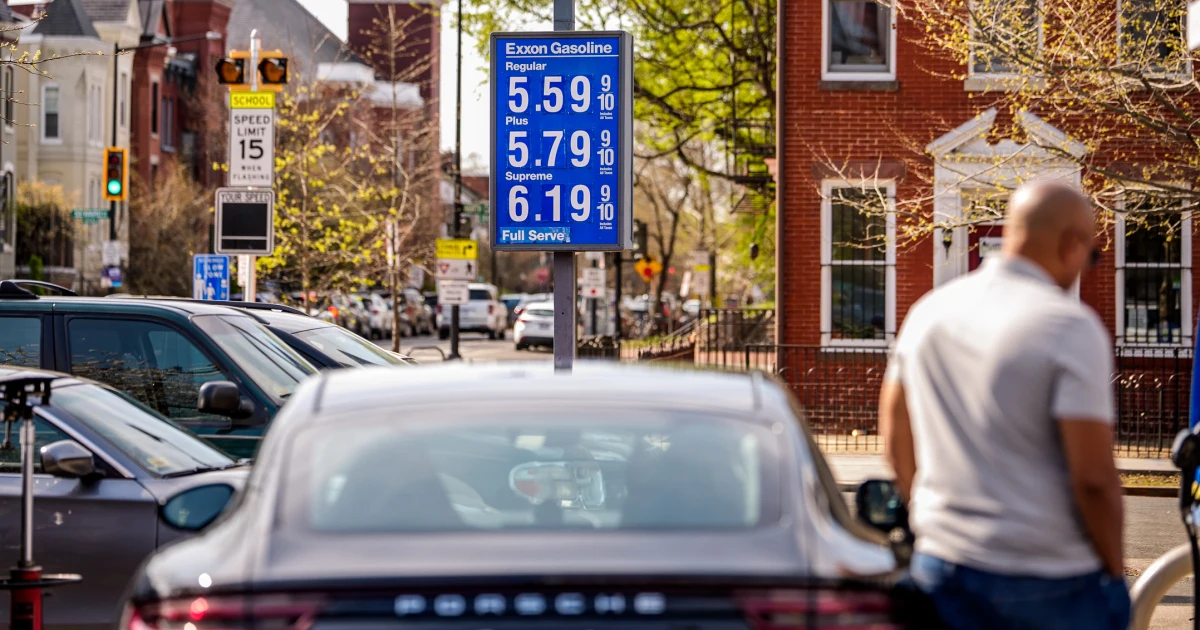
While there is a downward trend in oil prices, gasoline price adjustments may take time to materialize for consumers. GasBuddy analyst Patrick de Haan noted that the effects of Wednesday’s declines might not be felt immediately, predicting that average gas prices could fall by about 1 to 3 cents daily over the week. Since the onset of the conflict, gasoline prices have soared more than $1.20 per gallon, rising from $2.94 to $4.16 as of Wednesday morning.
