


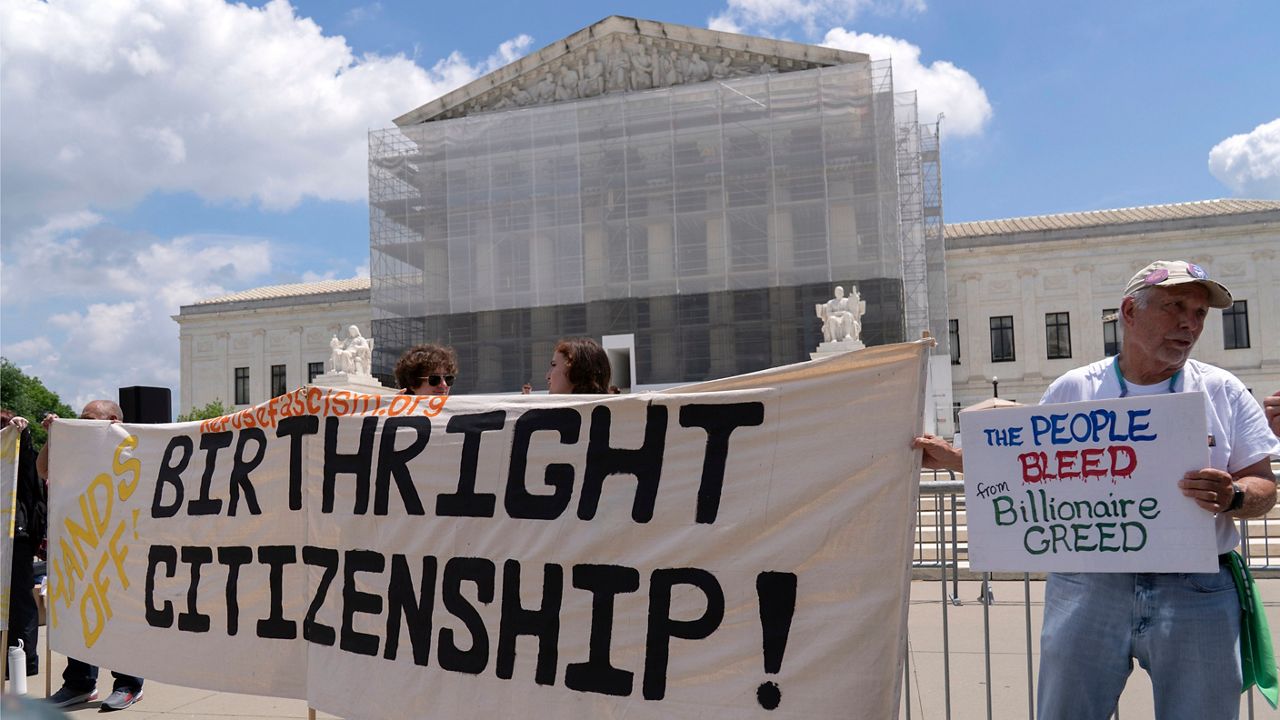
Hundreds to Rally for Birthright Citizenship Outside Supreme Court
In Washington, D.C., hundreds of advocates for birthright citizenship are set to gather outside the U.S. Supreme Court on Wednesday. Their rally coincides with oral arguments in a nationwide class-action lawsuit targeting actions of the Trump administration.
Speakers at the event will include a diverse coalition of immigration and civil rights organizations, legal experts, elected officials, community leaders, and the great-grandson of the Chinese immigrant whose case led to the 14th Amendment being interpreted to grant citizenship to nearly all individuals born in the United States.
Background on Legal Challenges to Birthright Citizenship
On his first day in office for his second term, President Donald Trump signed an executive order that aimed to deny citizenship to children born in the United States to parents who are not permanent residents. This move has sparked a series of lawsuits challenging the constitutionality of such a directive.
The American Civil Liberties Union (ACLU) has plans to highlight the public’s support for birthright citizenship by displaying the names of 343,000 petition signers on Tuesday night. This display will take place at Mount Vernon Place United Methodist Church and is intended to symbolize solidarity among advocates for civil rights.
The Significance of the 14th Amendment
The 14th Amendment to the U.S. Constitution, ratified in 1868, guarantees birthright citizenship to “all persons born or naturalized in the United States.” The amendment was legally reaffirmed in 1898 in the landmark Wong Kim Ark case, which underscored that citizenship is conferred to anyone born in the U.S., irrespective of their parents’ immigration status.
Voices of Advocacy and Historical Context
One notable speaker at the rally will be Norman Wong, the great-grandson of Wong Kim Ark. He emphasized the legacy of his ancestor, stating that Wong “didn’t set the rules; he affirmed the rule.” Alongside Wong, California Senator Alex Padilla, whose parents are Mexican immigrants, will speak, lending further visibility to the issue.
The Broader Impact of Citizenship Challenges
Eileen Ma, director of democracy at Lawyers for Asia, highlighted that the implications of the proposed executive order extend beyond immigrant families. “This isn’t just about immigrant communities; the proposed changes impact everyone in the United States,” she noted. Hospitals would face additional burdens in birth registration processes, affecting all parents, not just immigrants.
Community Solidarity and Awareness
The rally on Wednesday serves as a powerful reminder for the Supreme Court and lawmakers that the public is paying attention to these critical issues surrounding citizenship. As Ma aptly stated, “This is a matter that impacts us all, and it’s important for us to show that we are watching.”
