


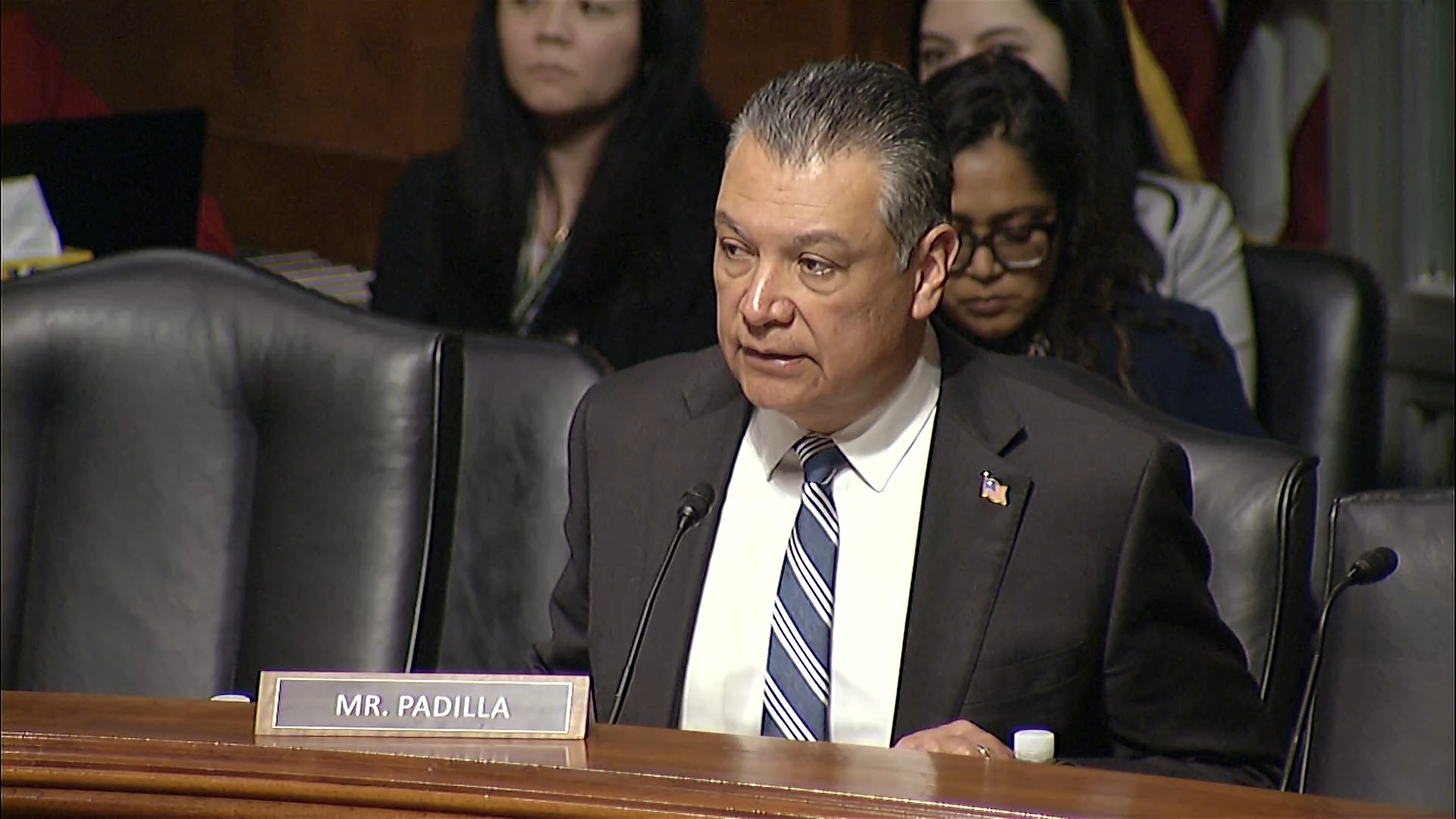
Senator Padilla Addresses Sanctuary City Misconceptions
WASHINGTON, DC — In a recent Senate Judiciary and Immigration Subcommittee hearing, Senator Alex Padilla (D-Calif.) vehemently criticized Republican assertions regarding sanctuary city policies. As the Ranking Member of the subcommittee, Padilla accused his Republican counterparts of spreading falsehoods about the implications of these policies and failing to focus on their promise to target only the most dangerous individuals within the community. He highlighted that Immigration and Customs Enforcement (ICE) and Customs and Border Protection (CBP) officers frequently apprehend individuals without violent criminal histories, undermining claims of focusing enforcement efforts on public safety.
Data Challenges Republican Claims on Public Safety
Padilla further emphasized that contradictory to Republican rhetoric, sanctuary cities enjoy lower rates of crime, poverty, and unemployment, complemented by higher median household incomes. He clarified that sanctuary policies do not obstruct federal authorities from accessing localities; rather, these policies prevent local and state governments from being compelled to enforce immigration laws. Courts consistently uphold sanctuary policies, reinforcing that immigration enforcement is a federal responsibility, not one that falls under local jurisdiction.
Political Motivations Behind Sanctuary City Criticism
“The debate surrounding sanctuary cities is not primarily about public safety; evidence shows that these communities can indeed be safer,” Padilla stated. He suggested that the focus on scapegoating immigrant populations is a political strategy rather than a genuine concern for public safety. In light of the pressing needs expressed by Americans for improved living conditions, Padilla urged lawmakers to prioritize effective solutions instead of recycling misleading narratives.
Debunking Myths About Sanctuary Cities
Earlier this month, during a Senate Budget Committee hearing, Padilla once again defended sanctuary city policies against Republican accusations of fostering lawlessness. He reaffirmed that these policies clarify immigration enforcement as a federal duty and ensure that local governments can dedicate resources to addressing their own communities’ specific public safety needs.
Key Findings Support the Efficacy of Sanctuary Policies
During his address, Padilla urged for deeper investigation into data provided by various academic sources, including the University of Texas at Austin, the University of Arizona, and the Center for American Progress. He noted that sanctuary policies are not indicative of lawlessness but rather promote community well-being, as evidenced by reductions in overall crime rates, increased median incomes, and lower poverty levels in these jurisdictions.
Clarifying the Role of Federal Authorities
Padilla clarified that sanctuary policies do not inhibit ICE from conducting arrests, particularly for individuals convicted of violent crimes upon their release from incarceration. However, he criticized the narrative that ICE only targets “the worst of the worst,” citing evidence that many of those apprehended do not possess violent criminal records. He urged his colleagues to focus on the administration’s shortcomings instead of misrepresenting sanctuary policies.
Emphasizing the Practicality of Sanctuary Policies
In his closing remarks, Padilla reiterated that sanctuary policies are not illegal or unsafe; instead, they empower local jurisdictions to prioritize their resources effectively. He called on Americans to reject fear-based rhetoric and embrace transparent discussions about immigration policies, urging fellow lawmakers to engage in constructive dialogue focused on improving community safety.
“Let’s seek to inform, rather than alarm, and work towards solutions that reflect the needs of our communities,” he stated.
