


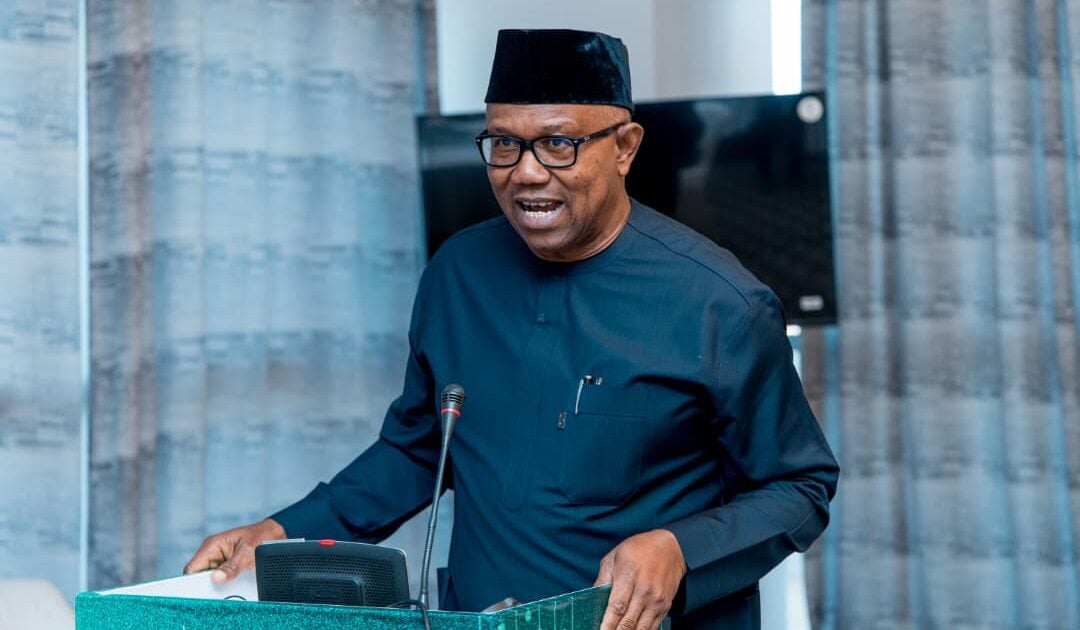
Peter Obi Addresses US Embassy Evacuation Directive
Peter Obi, the former presidential candidate, has characterized the recent US directive to evacuate non-essential staff from the embassy in Abuja as a “bad omen” that warrants immediate national attention. This statement comes in light of a deteriorating security landscape in Nigeria.
US Travel Advisory Highlights Security Concerns
According to Punch Online, the US State Department issued a travel advisory on April 8, permitting non-essential personnel to leave the embassy due to increasing safety concerns. Obi echoed these sentiments by urging American citizens to rethink any plans to travel to Nigeria, citing pervasive issues such as crime, terrorism, kidnapping, and civil unrest.
Travel Advisory Ratings Reveal Severity of Situation
The advisory classifies Nigeria overall at “Level 3: Please reconsider travel,” while particular regions have been designated as “Level 4: Do not travel.” The US government has expanded its list of areas to avoid by adding Plateau, Jigawa, Kwara, Niger, and Taraba states, raising the total number of states where travel is strongly advised against to 23.
Impact on Nigeria’s Investment Climate
Obi expressed alarm over the implications of this advisory for a nation already grappling with the challenge of attracting foreign investment. He stated that the evacuation order should be perceived as a national emergency, especially for a country striving to improve its economic standing.
Nigeria’s Place on the Global Terrorism Index
The former governor of Anambra State pointed out that Nigeria ranks fourth on the Global Terrorism Index, emphasizing that the situation is deteriorating, with an increasing number of casualties and communities facing constant danger. He mentioned a notable deficiency in effective governance, claiming that political agendas seem to take precedence over public safety.
Declining Confidence in National Security
Obi highlighted that the US directive indicates a waning trust in Nigeria’s security framework. He cited the recent killing of an Army brigadier general in Borno by terrorists as a harrowing example of the country’s security challenges. He asserted that a nation where its citizens cannot live, work, worship, or travel safely is unlikely to attract investment and progress.
Government’s Role in Ensuring Safety
Emphasizing the government’s fundamental obligation to protect its citizens, Obi lamented the apparent lack of adequate responses from leaders regarding the security situation. He criticized political figures for seeming more focused on political maneuvering rather than effective governance in the face of growing insecurity. In a poignant analogy, he remarked on the distractions faced by leaders amid Nigeria’s decline, likening them to Emperor Nero during Rome’s fall.
US Mission’s Response and Government Reassurance
In reaction to the advisory, the US Mission in Nigeria announced the suspension of visa reservations at its Abuja embassy, although operations at the US Consulate General in Lagos remain unaffected. On the other hand, Nigeria’s federal government sought to reassure both the public and the international community regarding the country’s stability. Minister of Information and National Orientation, Mohammed Idris, affirmed that public institutions are functioning normally and that governance and daily life are ongoing without disruption. He described the US advisory as a standard precautionary measure, asserting that it does not necessarily represent the overall security situation in the country.
