


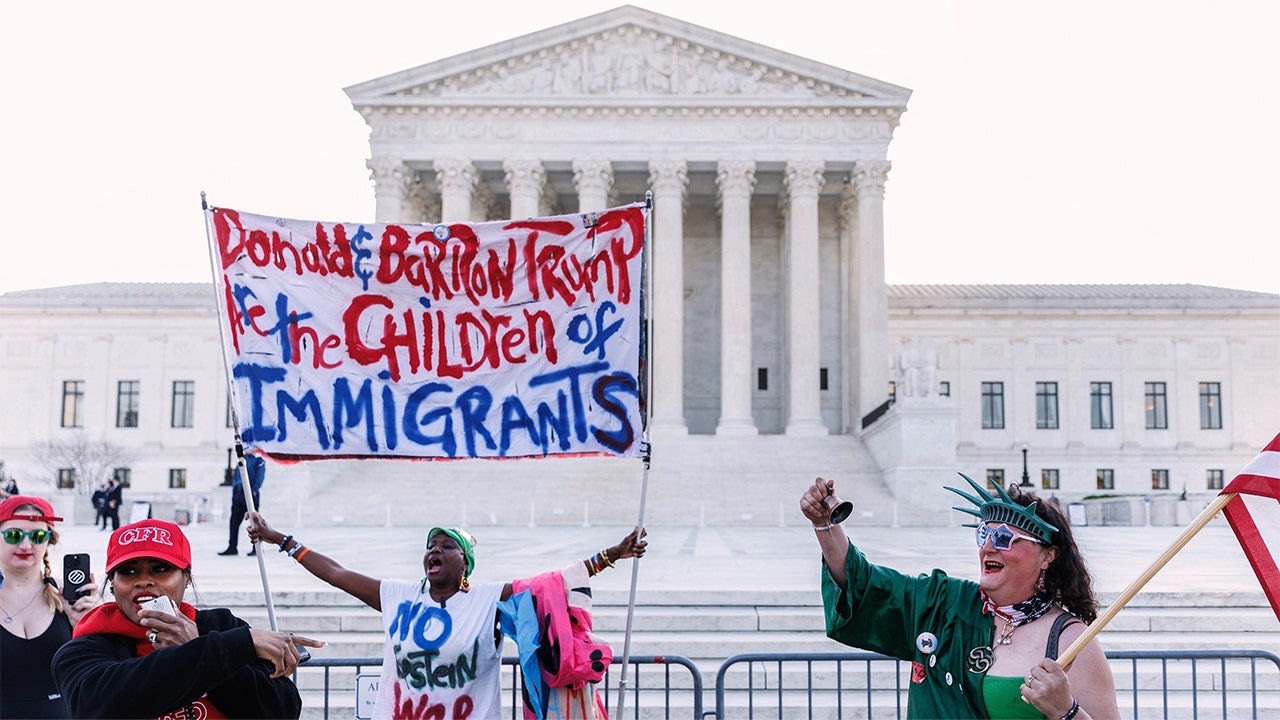
Trump’s Historic Supreme Court Appearance Sparks Debate on Birthright Citizenship
President Donald Trump’s unprecedented presence before the Supreme Court this week has been a focal point in the ongoing discussions surrounding birthright citizenship for undocumented immigrants. While the justices may not sway in favor of the president’s position, their skepticism regarding his proposal highlights significant legal concerns.
Trump’s appearance was historic, as no sitting president has attended oral arguments at the Supreme Court before. This move indicates his deep investment in a legal challenge to over a century of established precedent that grants automatic citizenship to anyone born on U.S. soil.
This moment could invigorate supporters within the MAGA base, providing a political boost ahead of the midterm elections, where Republicans aim to protect their fragile majorities in both the House and Senate.
Immigration Issues Remain Central to Trump’s Political Identity
Colin Reid, a seasoned Republican strategist, stated that immigration has been a defining issue for Trump as a national political figure, with border security being one of the highlights of his administration. Even if the Supreme Court ultimately rejects his arguments, Reid emphasized that Trump is committed to addressing broader immigration challenges.
On his first day back in the White House last year, Trump signed an executive order aimed at preventing U.S. citizenship for children born to undocumented immigrants or those on temporary visas. However, this order faced immediate legal pushback and was subsequently blocked by federal judges, who cited longstanding legal principles against such an action.
Public Sentiment on Birthright Citizenship
As the arguments unfolded, Trump refrained from commenting in the courtroom but later expressed his views on social media, labeling the recognition of “natural-born” citizenship as misguided. This stance, however, does not seem to resonate with the majority of Americans, as a recent FOX News poll indicates that 69% support birthright citizenship for children born to undocumented immigrants.
The partisan divide on this issue is stark; 91% of Democrats and 75% of independents support birthright citizenship, in contrast to only 44% of Republicans. A significant 55% of Republicans oppose it, with that number climbing to 60% among self-identified MAGA supporters.
The Political Implications of Trump’s Advocacy
Tim Murtaugh, a veteran Republican communicator, noted that immigration remains one of Trump’s key challenges. While he has made strides in border security, Murtaugh believes Trump’s involvement with the Supreme Court underscores the importance of addressing birthright citizenship, a topic that could influence midterm election dynamics.
According to Murtaugh, should the courts rule that Congress must tackle issues related to immigration, it could place Democrats in a defensive position regarding their stance on undocumented individuals. Immigration and border security have historically been pivotal issues for the Republican Party, contributing to their success in previous elections.
However, in light of recent political backlash against Trump’s aggressive immigration policies, emerging poll data suggests that immigration could become a divisive issue for Republicans as they head into the midterms.
Democratic National Committee Chairman Ken Martin criticized Trump’s efforts, stating that the push to repeal birthright citizenship aligns with a broader agenda that threatens immigrant families and could result in chaos within communities.
As the implications of Trump’s policies unfold, the ongoing debate surrounding birthright citizenship is expected to play a crucial role in shaping the political landscape in the run-up to the midterm elections.
