


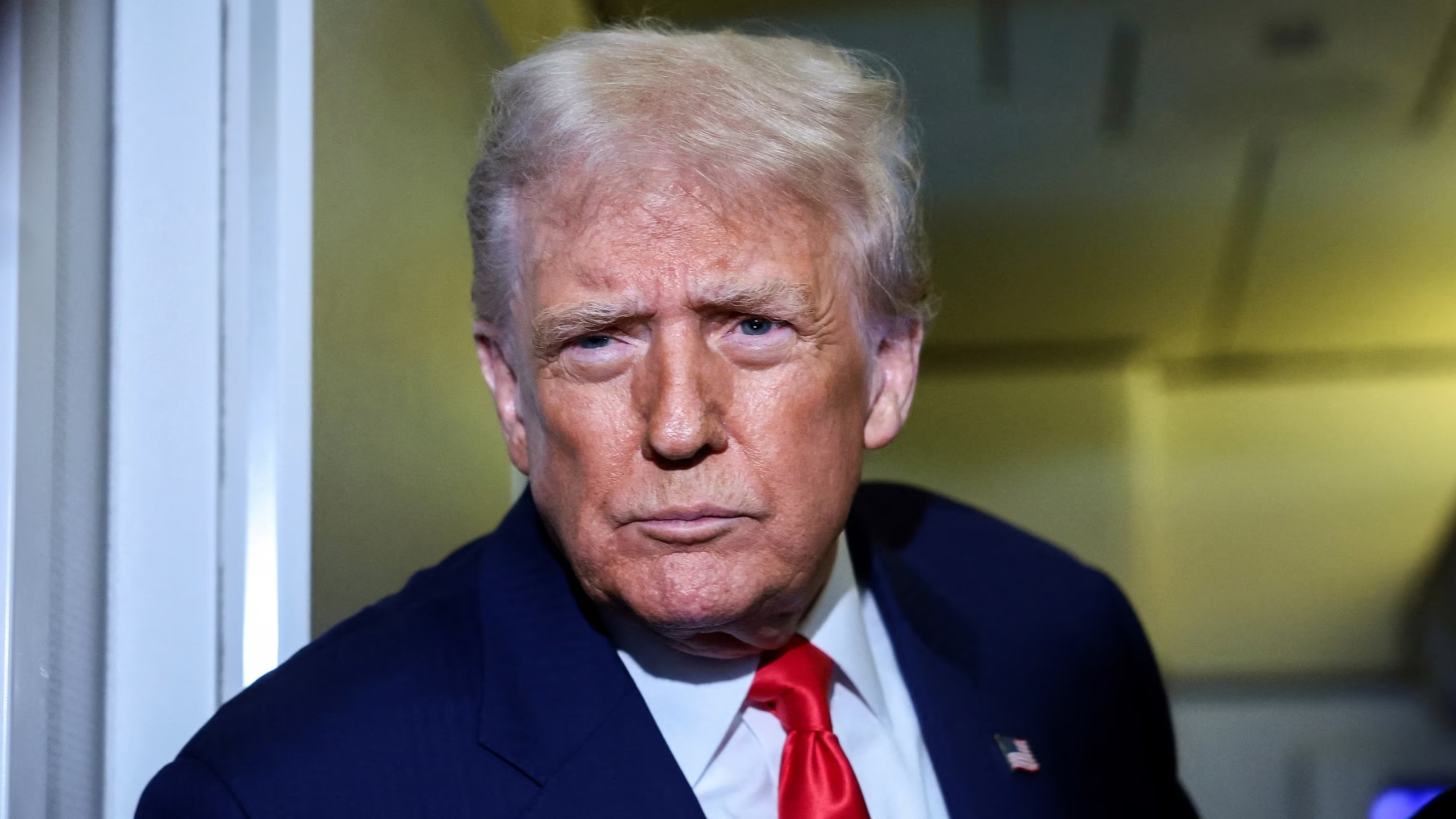
US President Insists on Blockade of Hormuz Strait
US President Donald Trump announced that the US Navy will implement a blockade of all vessels entering or exiting the Strait of Hormuz, effective 10 a.m. this morning. This action follows a breakdown in peace negotiations with Iran over the weekend aimed at reopening this critical shipping lane. Trump further threatened military strikes against Iran’s water treatment facilities, power plants, and bridges if Tehran does not relinquish its nuclear weapons ambitions, a longstanding point of contention between the two nations.
The blockade announcement follows 21 hours of direct discussions between US and Iranian officials in Islamabad, which ended without agreement on Sunday morning. Vice President J.D. Vance, who led the US delegation, stated that Iran remains unwilling to abandon its pursuit of nuclear capabilities. Conversely, Iranian representatives claimed that the US must take further steps to build trust. Trump’s frustration grew after the negotiations collapsed, prompting him to order the Navy to seal off the crucial Strait.
In a detailed statement on his social media platforms, Trump emphasized the importance of clearing the strait of any mines and ensuring it remains open for all shipping. He pointed out that while Iran has been restricting access for certain vessels, they have allowed ships from allies, particularly China, to navigate the waters. There are also unconfirmed suggestions that Iran might start imposing fees for passage through the strategically essential strait.
The president reiterated his threats during an interview with Fox News, warning of potential 50% tariffs on Chinese imports if Beijing supports the Iranian military. This ultimatum seems linked to the failure of the recent diplomatic efforts to conclude a prolonged conflict that escalated following a US-Israel strike that resulted in the death of Iran’s supreme leader, Ali Khamenei.
UK Prime Minister Calls for Continued Ceasefire
In a related development, British Prime Minister Keir Starmer met with Sultan Haitham bin Tariq Al Said of Oman over the weekend to discuss the situation. Both leaders underlined the necessity of maintaining the ongoing ceasefire and sought to promote a peaceful resolution to the crisis. The UK government issued a statement stressing the importance of de-escalating tensions in the region and safeguarding the navigation of ships.
Starmer also reflected on collaborative international efforts to ensure safe maritime routes, mentioning ongoing dialogues facilitated by the UK’s Foreign Secretary and military planners. The Prime Minister reaffirmed the UK’s commitment to Oman’s security and highlighted the significance of coordinating strategies with Ukraine regarding drone technology in response to Iranian aggression.
ADNOC CEO Warns of Oil Route Security Risks
Sultan Al Jaber, the CEO of the United Arab Emirates’ oil giant ADNOC, voiced strong concerns regarding Iran’s control over the Strait of Hormuz, emphasizing that any disruption to navigation poses a significant threat to global energy, food, and health security. Al Jaber noted that Iran has consistently maintained that it would not obstruct the strait, warning against setting dangerous precedents that could have far-reaching global repercussions.
In a statement on social media, Al Jaber remarked that attempts to impede navigation through the Strait of Hormuz are not only a regional issue but a threat to global trade. He reported at least 22 incidents involving commercial vessels targeting since late February, resulting in casualties and thousands of stranded seafarers, highlighting the disruption to vital shipping routes.
Pope Calls for Peace Amid Ongoing Conflict
Pope Leo XIV has issued a strong plea for an end to hostilities between the United States and Iran, condemning the “illusion of omnipotence” that he believes is driving the conflict. During a prayer service at St. Peter’s Basilica coinciding with the start of US-Iran negotiations in Pakistan, the Pope urged political leaders to abandon warfare in favor of dialogue and peace.
While he did not mention President Trump specifically, his comments appeared directly aimed at American and Israeli officials involved in the conflict. He stressed the need for world leaders to prioritize peace over the allure of power and money, calling for them to engage in meaningful negotiations rather than plans for rearmament.
Iran Asserts Control over Strait for Civilian Ships
Iran’s Revolutionary Guards have asserted that the Strait of Hormuz remains open for civilian shipping, while pledging to confront any warships that may attempt to navigate the waters. This statement responds directly to Trump’s blockade announcement, which targets all ships in international waters linked to Iran. Iranian officials, including Parliament Speaker Mohammad Baqer Ghalibaf, have attributed the failure of negotiations to US demands, underscoring the strained relations between the two nations.
Oil Market Uncertainty Persists Amid Diplomatic Tensions
The energy market remains apprehensive regarding the prospects of a peace deal following the collapsed negotiations. With numerous oil tankers stranded in the Gulf, concerns are rising that continued hostilities will drive up oil prices. Reports indicate that crude oil prices are expected to increase, with analysts projecting prices to exceed $100 per barrel in the near future before a possible decline later in the year.
The volatility in oil prices has been notable, with Brent crude oscillating below the $100 mark following the announcement of a two-week ceasefire, while ending last week at a low of $94.26 per barrel – a stark contrast to wartime highs. As of recently, Brent crude and West Texas Intermediate (WTI) are each priced around $95 per barrel, reflecting the ongoing instability in the energy sector.
