


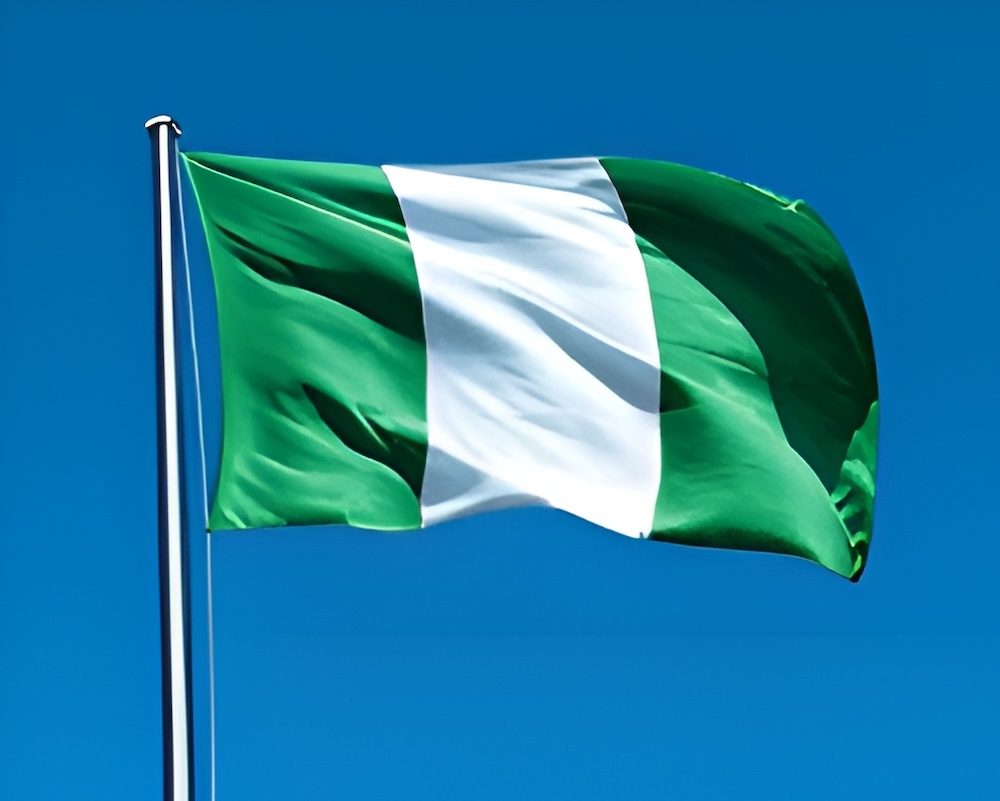
Amid increased scrutiny over the heavily redacted release of Jeffrey Epstein’s files, the White House abruptly shifted focus, with the president using the action as defense of Christianity to announce a U.S. military attack on Nigeria.
The move resonated strongly in the Washington metropolitan area, which has the nation’s largest population of African immigrants.
President Trump claimed the United States had carried out a “powerful and deadly” attack on Islamic State militants in northwestern Nigeria, accusing them of “massacre” Christians. The announcement comes as lawmakers and advocates question why records related to Epstein, which Congress required to make public, were provided with heavy redactions and a lack of context.
“The United States has launched a powerful and deadly attack against the remnants of ISIS terrorists in northwestern Nigeria,” President Trump wrote on Truth Social, adding a Christmas message that included “Merry Christmas to everyone, including the fallen terrorists.”
The Pentagon released a video showing at least one projectile fired from a US warship. U.S. Africa Command later confirmed that the airstrike took place in Sokoto state and said it was carried out in coordination with Nigerian authorities. Defense Secretary Pete Hegseth thanked Nigeria for its cooperation despite President Trump’s public criticism of Nigerian officials.
This rhetoric also had an impact on the Washington, D.C., area, which is home to one of the largest African immigrant populations in the United States. According to the Immigration Institute, there are approximately 372,710 Nigerian immigrants living across the country, of whom approximately 27,570 live locally.
Prince George’s and Charles Counties, Maryland, have the highest percentages of Nigerian-born residents in the region. Many work in medical, service, and technical jobs.
The region’s African population has grown so significantly that Maryland Governor Wes Moore (D) declared September African Heritage Month in 2024, citing the cultural and economic contributions of African immigrants. Census Bureau data ranks the Washington, D.C., area fourth in the nation in terms of population in Africa, but local leaders say those numbers don’t tell the whole story.
“I think we’re saying that probably about 20% of the population is actually not counted correctly,” Prince George’s County Councilman Walla Bregay (D) said last year. “My parents came here as immigrants, but I was born in the United States. Their children are not counted either. So the population of the United States is actually growing significantly.”
Bregay, along with his fellow City Council members Wanika Fisher (D) and Crystal Oriada (D), identify as part of the African diaspora. She said African immigrants are often categorized simply as black Americans, obscuring a distinct identity while still absorbing the influence of racially charged political narratives.
Nigerian authorities have denied a religious framework for President Trump’s attack. Foreign Minister Yusuf Maitama Tugaa told the BBC that the operation targeted terrorists and “has nothing to do with any particular religion.”
Nigeria’s President Bola Ahmed Tinubu echoed that position, stressing that violence in Nigeria affects people of all faiths.
Nigeria, Africa’s most populous country with about 240 million people, has faced attacks from extremist groups and criminal networks for years. Days before President Trump’s statement, an explosion at a mosque in northeastern Nigeria killed five people and injured dozens.
As Nigeria faces new U.S. scrutiny, including travel restrictions and placement on the religious freedom watch list, Washington-area leaders say the U.S. president’s language risks inciting fear among African immigrant families who have built their lives in the DMV for decades.
“I am committed to doing all I can to protect religious freedom in Nigeria and protect Christians, Muslims, and all Nigerians from violence,” Tinubu wrote.
