


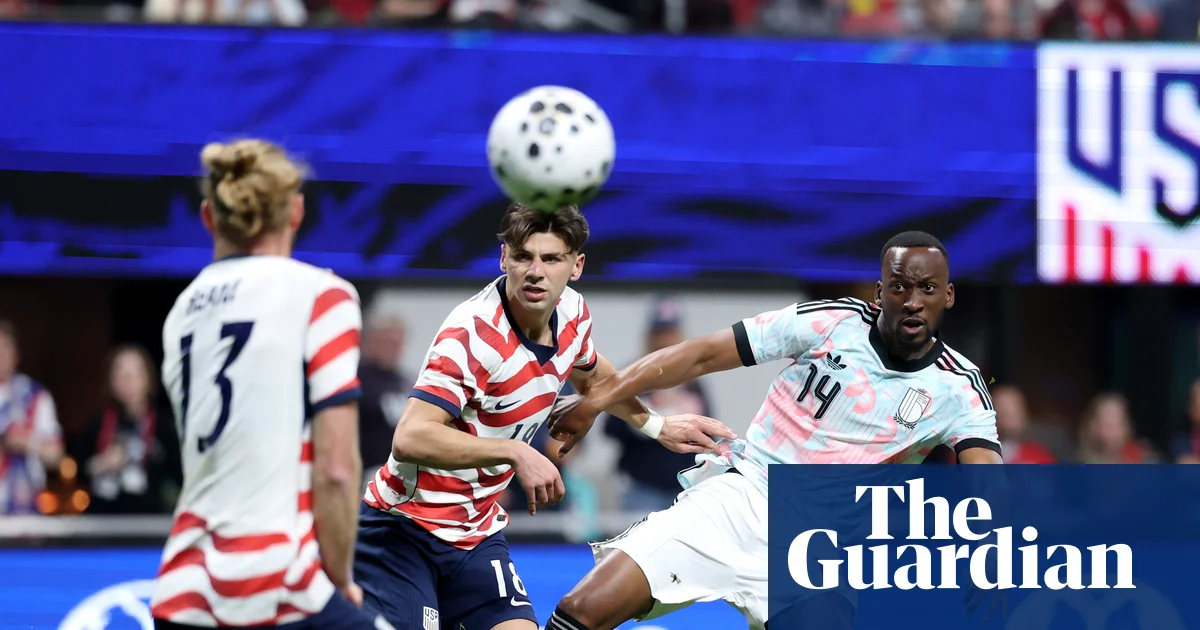
US Men’s National Team Faces Stiff Challenge Against Belgium
The U.S. men’s national soccer team took to the field at Atlanta’s Mercedes-Benz Stadium on Saturday with high expectations. Riding a wave of recent momentum, they aimed to solidify their preparation for this summer’s World Cup, which will be hosted partially on home soil. However, the match against Belgium resulted in a disappointing 5-2 defeat, raising more questions than it answered about the team’s readiness for the tournament.
Struggles in Defense Lead to Heavy Loss
Facing a formidable Belgian side, the USMNT found itself struggling significantly throughout the match. The Belgians scored five unanswered goals after the U.S. opened the scoring, marking this as one of the most disappointing losses during head coach Mauricio Pochettino’s tenure. At times, it appeared the margin could have been even wider.
Upcoming Test Against Portugal
Looking ahead, the U.S. team will have less than three days to regroup before facing Portugal, another top-tier opponent. Both teams entered the match in strong form; the U.S. had not lost in its previous five games, while Belgium was on an unbeaten streak of nine games.
Making Strategic Changes
In light of injuries to key center-backs Chris Richards and Miles Robinson, Pochettino modified his starting lineup, pairing captain Tim Ream with Mark McKenzie. Full-back positions were filled by Anthony Robinson and Tim Weah, the latter of whom recently returned to the squad. Notably, New England Revolution goalkeeper Matt Turner made his first start in nearly a year, stepping in for Pochettino’s usual choice, Matt Freeze.
Challenges on the Field
Both Turner and Weah faced challenges against Belgium’s skillful lineup. Turner was partly at fault for Belgium’s opening goal, while Weah struggled to contain the threatening Manchester City winger Jeremy Doku, who proved to be a constant danger throughout the match.
Belgian Dominance Despite Key Absences
Despite missing notable players like all-time top scorer Romelu Lukaku and Real Madrid goalkeeper Thibaut Courtois, Belgium remains a formidable opponent. Under coach Rudi Garcia, the Red Devils pose a significant challenge for the U.S. team, which is keen to assess its capabilities against high-caliber teams in preparation for the World Cup.
Highlights and Setbacks
Weston McKennie provided a bright moment for the U.S. with a well-executed header from a corner kick, giving the Americans a temporary lead in the 39th minute. However, Belgium quickly responded, equalizing just before halftime thanks to a well-placed strike from Zeno De Basto—a goal Turner likely could have better defended.
Major Adjustments and Rule Changes
The game also marked a first for the U.S. under new FIFA regulations allowing up to eight substitutions in international friendlies, with both teams opting for additional changes. Those substitutions came amid a backdrop of new air conditioning technology implemented for World Cup matches, which was also tested during this friendly.
A Lack of Cohesion in the Second Half
After starting the second half with renewed energy, the U.S. quickly faltered, with Belgium seizing control. A controversy arose in the 55th minute due to a handball by Ream in the penalty area, which led to a goal by Charles de Ketelaere from the spot, extending Belgium’s lead to 3-1.
Final Whistle and Reflections
Belgium’s final two goals came in quick succession from substitutes, showcasing their depth and tactical prowess. The U.S. managed to score a consolation goal just before full-time, courtesy of Derby County’s Patrick Agyeman, capitalizing on a defensive mistake. Historically, the U.S. has not defeated Belgium since their first World Cup encounter in 1930, where they enjoyed a narrow victory. To advance in this summer’s tournament, a performance of similar caliber against such an elite team will be essential.
