


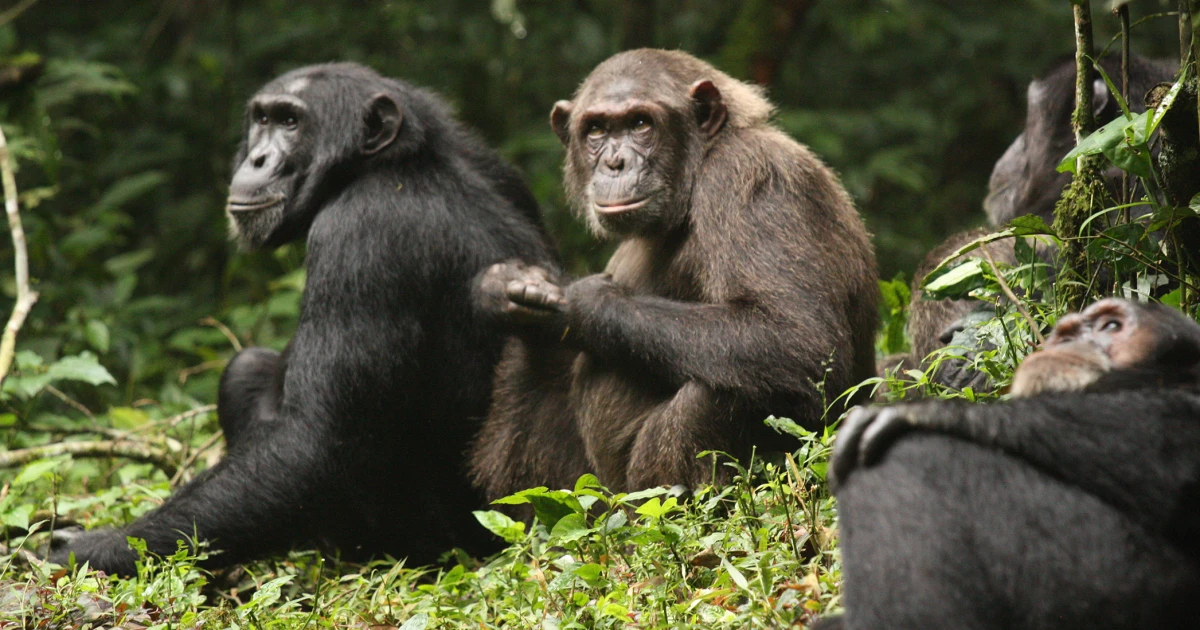
Violent Shifts Observed Among Chimpanzee Groups in Uganda
For years, two pairs of chimpanzees coexisted in Kibale National Park, Uganda, fostering social bonds through grooming, communal activities, and territory patrols. This harmonious setup abruptly transformed when aggression erupted, leading researchers to describe the ensuing conflict as akin to a human civil war.
The violence began in 2015, a chaotic period marked by aggressive behaviors and chaotic outbursts. John Mitani, a professor emeritus of anthropology at the University of Michigan who had tracked these chimpanzees for two decades, recalls the scene: intense screaming and frantic chasing ensued as the chimpanzees turned against one another, fundamentally altering their social structures.
In the aftermath, Mitani and colleague Aaron Sandel, an associate professor of anthropology at the University of Texas, meticulously documented the fracturing of social bonds among the chimpanzees for three years. By 2018, the two subgroups, known as Western Ngogo and Central Ngogo chimpanzees, had ceased sharing their territory, turning instead to aggression with deadly consequences.
According to a recent study published in the journal Science, at least 28 chimpanzees, including 19 infants, have lost their lives since the onset of violence. Mitani notes a disturbing shift in perception, stating that former allies now view each other as enemies.
This incident marks the second observed instance of chimpanzee factions splitting and resorting to violence. Given the close genetic relationship between chimpanzees and humans, Mitani and Sandel believe there are significant implications for human behavior and social conflict. Sandel draws parallels between civil unrest among humans and the aggression exhibited in chimpanzee groups, suggesting that the dynamics of group identity can lead to lethal confrontations.
Infant Mortality Highlights Brutality of Chimpanzee Conflict
In this severely disrupted social structure, one-sided violence has been a hallmark of the ongoing conflict. The Western chimpanzees, now an aggressive minority, have been responsible for all reported attacks since the split in 2018. Despite their rising numbers from 76 to 108 individuals, the Central group has seen a steady decline in its population.
The violence has often been brutal. A notable incident involved a Western chimpanzee attacking a Central infant, cruelly tearing it from its mother before delivering a fatal blow. Sandel notes that chimpanzees, when executing such acts, often engage in coordinated group violence against males, with overwhelming force from multiple attackers.
Mitani expressed the deep emotional toll of witnessing such violence, stating, “It’s painful to watch,” a sentiment that reflects the broader implications of this research. With the ongoing conflict, researchers are striving to understand the social dynamics that led to the breakdown.
The Ngogo chimpanzees have been under detailed observation since 1995, with researchers utilizing GPS tracking, demographic analysis, and extensive field studies. This comprehensive research reveals shifting social circles and can provide insight into why conflict escalated to such devastating levels.
Historical Parallels and Modern Implications
This situation is reminiscent of events documented over 50 years ago by Jane Goodall in Tanzania’s Gombe National Park, where a similar pattern of violence emerged between splitting chimpanzee groups. Researchers dubbed that episode the “Four Years’ War,” a period defined by killings and increasing animosity.
Anne Pusey, an evolutionary anthropology professor with Gombe research experience, noted striking similarities between the two instances, marking a significant breakdown in social bonds that transformed into hostility. Joseph Feldblum, who studied the Gombe conflict, noted that such behaviors, although rare, are intrinsic to chimpanzee nature.
Mitani expressed concerns about the fate of the Ngogo Central group, suggesting that, based on historical patterns, they might be heading toward a critical decline. “I think we may be witnessing an extinction event,” he warned, given the alarming rates of infant mortality and female exile.
Insights into Human Conflict from Chimpanzee Behavior
The findings reflect broader questions about human conflict. While cultural differences are often cited as drivers of human warfare, Sandel argues that chimpanzees demonstrate that similar escalations can occur without those societal constructs. Instead, the violence seems rooted in deteriorating friendships and rising factional tensions.
Mitani reminds us that humans diverged from chimpanzees millions of years ago, highlighting that we are more cooperative and prosocial compared to our primate cousins. Understanding this distinction is crucial; violence does not have to be an inherent aspect of human nature, as evidenced by our capacity for compassion and cooperation.
