


Ogun State Launches Enhanced Pension Program for Civil Servants and Retirees
A transformative chapter is unfolding for civil servants and retirees in Ogun State with the full implementation of the Additional Pension Benefit (APB) program. This initiative promises to deliver increased gratuities to pensioners while eliminating the longstanding delays in monthly allowances that have affected their financial stability. Spearheaded by President Bola Ahmed Tinubu, the APB program is designed to provide pensioners with benefits equivalent to 100% of their final annual salary. However, Ogun State has chosen to elevate this standard drastically, offering benefits ranging from a minimum of 116% to as high as 280%, contingent on years of service.
The introduction of this new pension policy signifies a watershed moment, moving away from the traditional defined benefit systems that have long burdened the public sector. By establishing benchmarks that surpass federal requirements, Ogun State is taking significant strides toward strengthening the social safety net for its aging workforce. The APB serves as a crucial mechanism to smooth the transition from active duty to retirement, ensuring that retirees do not face a sudden drop in purchasing power.
Importantly, the APB implementation features a tiered system that acknowledges and rewards long-term dedication and service among the workforce. The most notable aspect of this reform lies not only in the elevated percentages but in the structural changes to payment schedules that are designed to put an end to the prolonged nightmare of arrears. Historically, pensioners have grappled with delayed payments, often waiting months or even years to receive their benefits. The new APB framework promises to automate these payments, providing retirees with timely financial support that accounts for inflation and allows them greater financial freedom.
For the Ogun State government, this shift necessitates a disciplined approach to Pension Fund Administration, positioning the state as a leader in offering public employee benefits. This initiative aligns with a broader national trend to reassess labor compensation in light of subsidy removals and currency fluctuations. By enhancing retirement benefits, the government is effectively stimulating liquidity within the local economy, channeling funds directly into the hands of retirees.
Moreover, the implementation of the APB goes beyond mere increases in benefits; it represents a crucial fiscal strategy within the N1.67 trillion budget for sustainable development in 2026. By opting for a model that addresses the tensions between extensive infrastructure projects and long-term human debt, the state can provide APBs as one-time payments without compounding interest that burdens recurrent budgets. This means retirees are no longer required to withdraw 25% of their Retirement Savings Account (RSA) since the APB will serve as their primary benefit, allowing more private capital to remain within pension fund administrators (PFAs) and be invested in state-backed infrastructure projects.
To underpin these long-term obligations, Congress has recently approved a funding request of N300 billion dedicated to addressing partial budget funding and long-term pension commitments. This reform also brings with it two additional benefits for Ogun State, which is recognized as Nigeria’s industrial hub: increased consumer spending and reduced labor liabilities. By disbursing up to 280% of their annual salaries to thousands of retirees, the program provides a substantial boost to the local economy while ensuring smooth operational continuity for government and industrial partners.
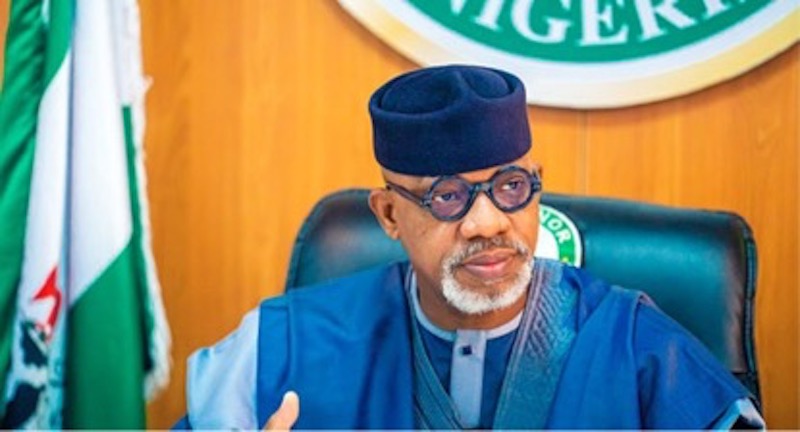
Governor Dapo Abiodun detailed the implementation of this new policy during a recent event, where he presented checks to retirees at the Obazu Complex in Abeokuta. The Secretary to the State Government, Tokunbo Talabi, noted that between 70% and 80% of retired workers are expected to receive enhanced allowances under this new framework, a significant improvement over past payments. “What this means is that retirees can now receive improved and timely benefits, with a minimum level set at 116% and a maximum at 280%, which is markedly higher than the previous 100% benchmark,” Abiodun remarked. He emphasized that the administration is committed to addressing the substantial pension and gratuity obligations inherited from previous administrations.
Labor representatives, including Comrade Ahmed Benko of the Nigeria Labour Congress (NLC) and Comrade Hakeem Lasisi of the Trade Union Congress (TUC), have lauded the initiative as a groundbreaking model for other states. The President of the Nigeria Union of Pensioners, Waheed Oloyede, acknowledged the program as a vital step towards enhancing retiree welfare and called for transparency in its execution. Pension fund managers and officials from the National Pension Commission have also recognized this scheme as an innovative reform aimed at bolstering retirement security.
In the first phase of disbursement, checks worth between Rs 17 million and Rs 22 million were awarded to 111 beneficiaries, based on the agreed rate applied to total annual compensation (TAE). The APB initiative emerged from stakeholder discussions spurred by the implementation of the Contributory Pension Scheme (CPS) in Ogun State, and has been embraced following thorough consultations with organized labor, pension administrators, and government officials. Stakeholders view the APB as a sustainable solution to reconcile the CPS with older defined benefit plans, effectively addressing longstanding concerns related to pension disbursements.
In addition to these changes, the Ogun State government has made significant interventions in its pension sector, allocating Rs 26.35 billion to offset outstanding gratuity liabilities, Rs 5.89 billion for CPS deduction arrears, Rs 500 million as death benefits, and Rs 3.19 billion for CPS remittances as of January 2026.
