


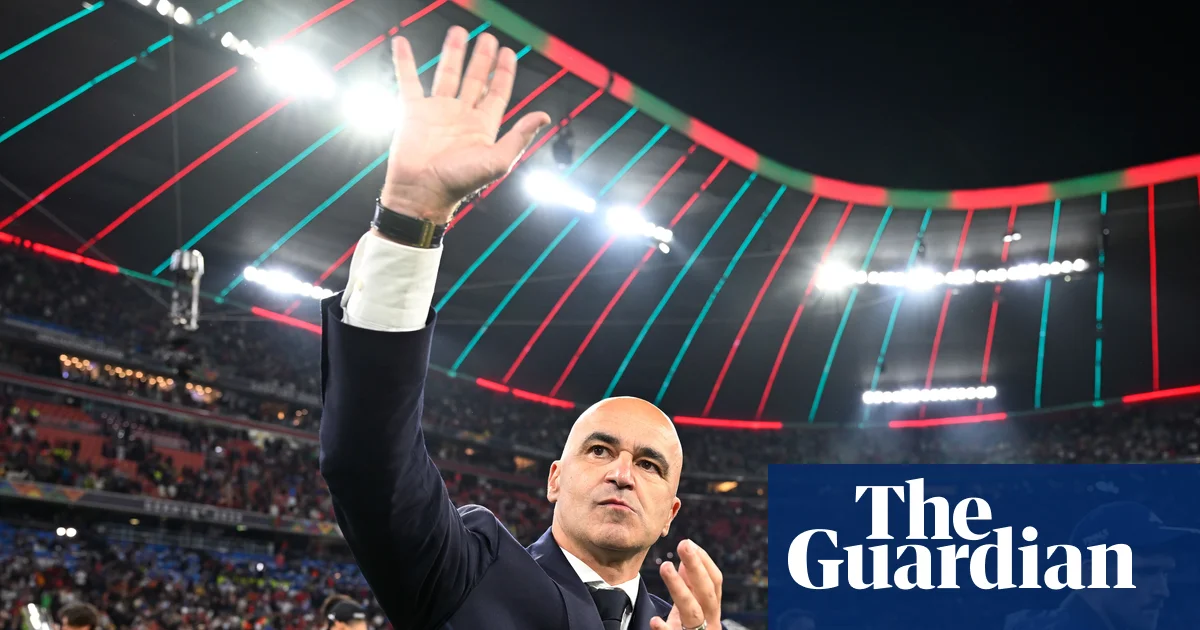
Martínez Reflects on His Journey and Team’s Aspirations
In the summer of 1995, 21-year-old Roberto Martínez embarked on a journey that would forever change his life. After completing his military service and a brief stint with Real Zaragoza, he found himself heading to Wigan, a town he knew little about and where he would soon struggle to communicate in English. Initially stepping into the third division, Martínez faced a new, unfamiliar brand of football. “There’s a fear of saying no,” he recalls, “but my mindset has always been, ‘Why not give it a try?’” Today, he stands as the manager of Portugal, ready to lead the national team on the brink of the World Cup, which takes place in just 75 days.
Building on Experience and Dreaming Big
Martínez’s tenure with Portugal is marked by optimism and ambition. “When I started, I had no role models, just my determination,” he reflects. Despite being thrown into a culture that prioritized different strategies, he remained resolute in his goal to adapt. The challenge was profound, but he never considered giving up. “I wanted to learn English within two years, though I fell short of that goal,” he admits.
Fortifying Team Spirit and Challenging Expectations
Now leading one of the greatest players in football history, Cristiano Ronaldo, Martínez embraces the responsibilities of expectations. He recalls the words of Otto Gloria from 1966, who simply said, “Let’s dream.” Martínez aims to instill hope in the team and its supporters, encouraging them to embrace the belief that greatness is within reach. His journey from Wigan to the international stage illustrates a rich tapestry of experience that he brings to Portugal.
Emphasizing Development and Team Cohesion
Martínez emphasizes the importance of a cohesive team culture, reflecting on the unique talent pool within Portugal. “This is a school of soccer,” he asserts, referring to the nation’s wealth of skilled players and global ambitions. With a diverse lineup featuring emerging talents like Pedro Neto and João Neves, he underscores the significance of a strong developmental framework, one that aligns with elite methodologies to ensure competitiveness on the world stage.
Strategic Planning for the World Cup
As the World Cup approaches, Martínez has meticulously crafted a preparation plan that focuses on the national team’s dynamics. This includes playing matches against Mexico and the United States in high-altitude venues to simulate the conditions they may face. “The penultimate phase begins this week,” he notes. The aim is to fine-tune abilities and foster synergy among team members, crucial for navigating the challenges of a rigorous tournament.
Addressing Legacy and Ronaldo’s Impact
Martínez recognizes the significance of Ronaldo’s legacy, highlighting his unparalleled contributions to Portuguese football over two decades. “Players like Carlos Forbes have grown up watching him excel, drawing inspiration from his commitment,” he explains. Even as Ronaldo deals with a hamstring injury, Martínez expresses confidence in his captain’s enduring dedication to the national team.
Navigating the Challenges of Team Selection
With the World Cup nearing, Martínez faces the difficult task of team selection. “It’s challenging to decide who makes the roster, especially when deserving players might be left out,” he admits. Instead of following conventional methods, he approaches roster decisions with a nuanced perspective, preparing both the selected players and those on standby, creating an environment of readiness for unforeseen circumstances.
Optimism Amidst Historical Challenges
As the World Cup approaches, Martínez acknowledges the difficult realities that lie ahead. He offers a refreshingly candid perspective on the pressures that accompany national representation. “We know that talent alone doesn’t guarantee success; it’s about building a cohesive unit that can navigate high-stakes moments.” He champions a mindset of resilience and ambition, finally concluding with an encouraging note: “Let’s dream. Why not?”
