


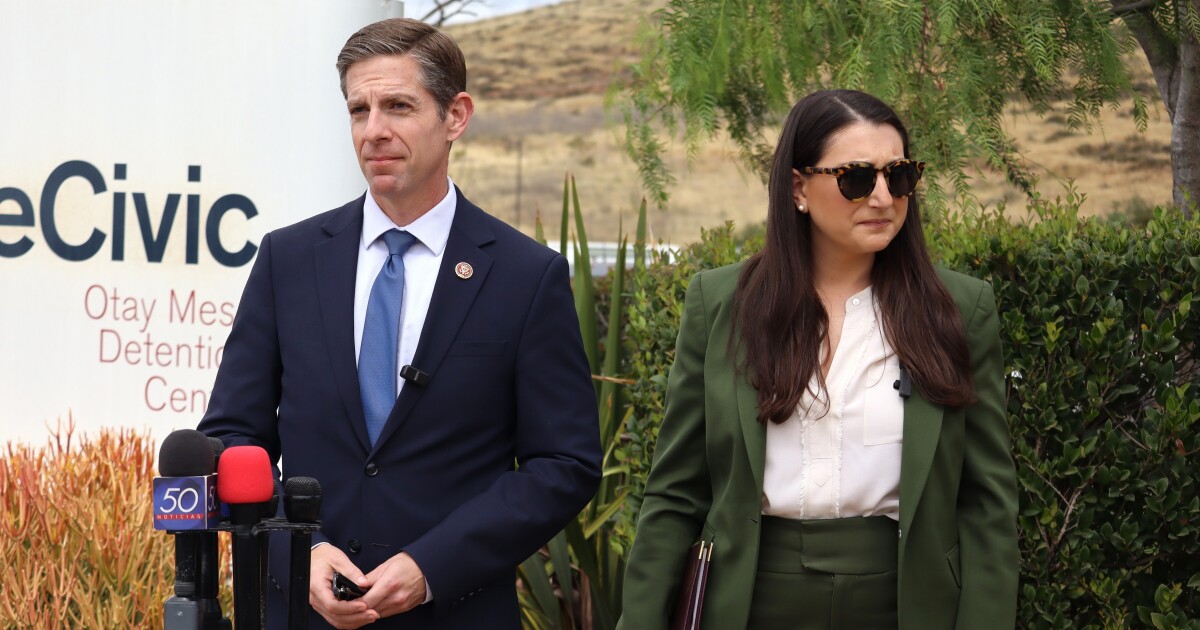
Congressional Visit to Otay Mesa Detention Center Highlights Concerns
On Thursday, two San Diego representatives, Sarah Jacobs and Mike Levin, toured the Otay Mesa Detention Center, responding to numerous complaints about inadequate access to medical care and the lack of fresh food for detainees.
Assessing Day-to-Day Conditions
During their visit, Jacobs and Levin explored various areas within the facility, including medical units, law libraries, and community spaces associated with the detention center. Levin expressed concern about whether the conditions they observed were indicative of normal operations, as the facility is managed by private prison operator CoreCivic. He stated, “It’s crucial to understand how much of what we saw was for our benefit versus the regular standard of operations.”
Unannounced Access Denied
In February, California Senator Alex Padilla faced similar restrictions when he attempted an unannounced visit to the detention center. His efforts coincided with those of San Diego County Supervisors Paloma Aguirre and Tera Lawson-Remar, both of whom were also denied entry. Following these challenges, the county recently filed a lawsuit against the Department of Homeland Security, asserting that California law permits local jurisdictions to conduct public health inspections at private detention facilities.
Quality of Medical Facilities
Levin noted that the cleanliness and overall quality of medical facilities in the detention center appeared largely comparable to those found in private institutions. He commented, “I believe the staff is doing their best given the circumstances, and the resources available to them.” The Department of Homeland Security claims that the facility is equipped with comprehensive medical services, including 24-hour emergency care.
Medication Management Practices
During the tour, Levin learned that detention center staff actively follow up on medication management, particularly when detainees miss scheduled doses. “There seems to be a genuine effort to ensure that individuals are taking their necessary medications,” he observed. He acknowledged that while detainees reported receiving needed medication, the overall experience of dining in the facility raised concerns.
Food Quality Observations
Levin, who has made several oversight visits to the center, recounted conversations with detainees regarding their meal options. One detainee mentioned receiving necessary medications but commented on the repetitive and unappetizing nature of the food. Levin and Jacobs sampled cafeteria offerings themselves, describing the meal—pork, beans, and hot dogs—as “relatively fresh and edible,” though not particularly appealing.
Future Monitoring Plans
Both Jacobs and Levin expressed their commitment to conducting unannounced visits in the coming months, emphasizing the importance of directly engaging with detainees to better understand their experiences. Jacobs mentioned that due to miscommunication, their initial plans to speak with detainees did not materialize, but she vowed to return to facilitate those critical conversations. “It’s essential for us to hear directly from the individuals affected and gain insight into their daily realities,” she affirmed.
