


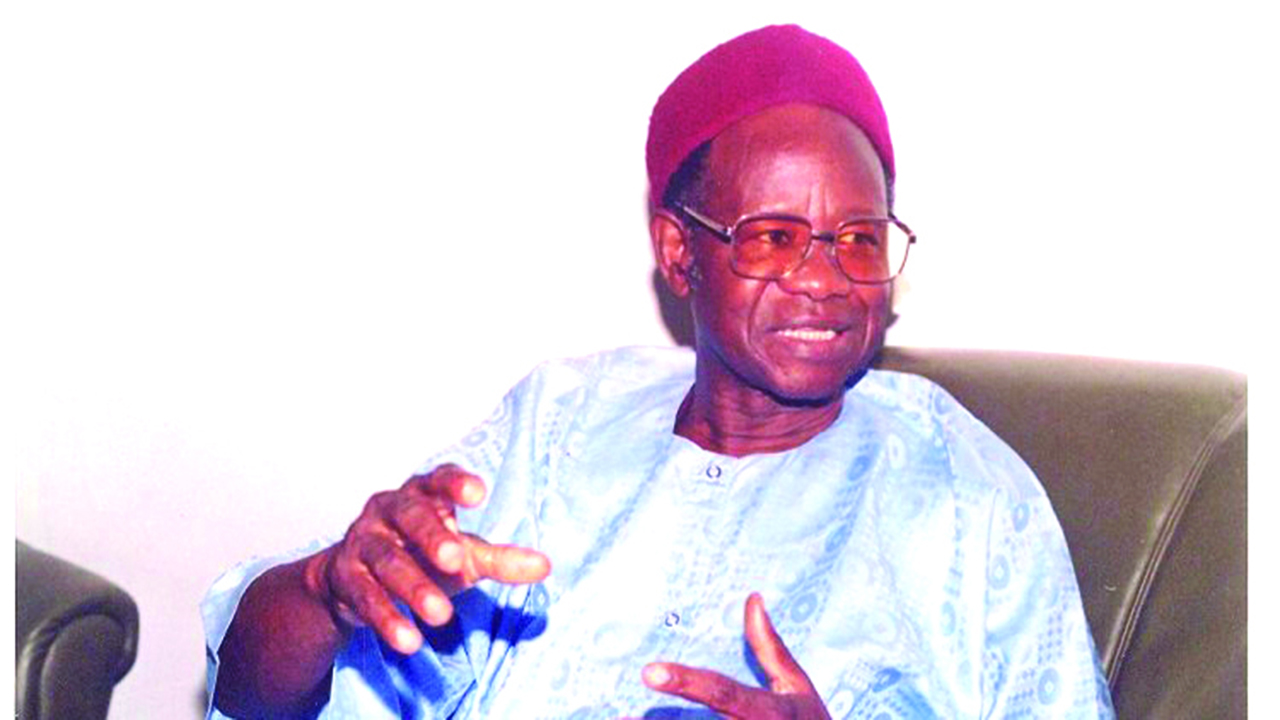
Reflecting on the Legacy of Chief Sunday Bolorunduro Awoniyi
It has been a decade since the passing of Chief Sunday Bolorunduro Awoniyi, the esteemed Aro of Mopa. His death marked a significant loss for those who believed that language should unite rather than divide Nigerians. A passionate politician, Awoniyi viewed politics as a vocation of service rather than a mercenary pursuit, contrasting sharply with current leaders whom many see as opportunists holding the populace hostage. Throughout his life, he exemplified what it meant to be a detribalized Nigerian, rising above ethnic divisions even as a member of the Yoruba ethnic group, separated from their brethren by colonial borders.
A Journey Through the Civil Service
Chief Awoniyi hailed from the Okun Yoruba region in what is now Kogi State, and he was among the first educated individuals in Northern Nigeria. His career in the civil service began with the Northern Nigeria Civil Service, where he ascended to the esteemed position of Permanent Secretary. Later, he transitioned to the Federal Civil Service, ultimately serving as Super Permanent Secretary and as Private Secretary to the esteemed Alhaji Ahmadu Bello, a prominent figure in Nigeria’s history and the late Sardauna of Sokoto.
A Politician of Principle
While I never had the opportunity to meet Awoniyi personally, I have followed his political journey closely and admired his loyalty, love for the nation, self-discipline, and integrity. He was an ardent student of the late Sardauna’s philosophies, bringing principled virtues into the political arena. Unfortunately, contemporary Nigerian politics has attracted individuals that often prioritize self-interest over the welfare of the populace, echoing sentiments expressed by William Smith in his reflections on Nelson Mandela’s vision of leadership.
Opposition to Corruption and Authoritarianism
Awoniyi was a leading figure in the fight against General Sani Abacha’s controversial self-succession plan. He also played a pivotal role in uniting like-minded politicians for the formation of the People’s Democratic Party (PDP) at the commencement of Nigeria’s Fourth Republic. Despite his immense contributions, Awoniyi faced political marginalization, a reality highlighted during a Sunday newspaper interview with former oil minister Jubril Aminu, who pointed out that not all efforts yield immediate rewards. This encapsulates Awoniyi’s experience in the political landscape of the Fourth Republic, where he chaired the national convention that nominated Chief Olusegun Obasanjo as the PDP’s presidential candidate.
The Erosion of Party Ideals
The rise of internal party discord and a lack of democracy within the PDP led to significant challenges, ultimately resulting in the party’s defeat in the 2015 presidential election. Many attribute the deterioration of party values and discipline to these developments, effectively undermining Awoniyi’s earlier efforts to restore integrity to political practices. His relationship with President Obasanjo soured, culminating in Awoniyi’s leadership of the influential Arewa Consultative Forum, where he rallied allies to oppose Obasanjo’s quest for a third term.
A Vision Unfulfilled
Tragically, Chief Awoniyi passed away without realizing his ambition to establish a political party that would truly represent ordinary Nigerians. His hopes may have been dampened by the deteriorating political environment, witnessing the collapse of the achievements garnered during the First and Second Republics under inept leadership. However, his legacy continues through his family, as his son, Yomi Awoniyi, has been appointed Deputy Governor of Kogi State, carrying forward his father’s vision.
A Comparison to Mandela’s Legacy
The impact of Awoniyi’s death resonates deeply, reminiscent of the loss felt with Nelson Mandela’s passing. Mandela often highlighted the importance of unity and discourse, stating that loyalty was built not merely on agreement but from the willingness to listen to differing opinions. Chief Awoniyi embodied these ideals, and his legacy serves as a poignant reminder of the principles needed for sustainable political governance in Nigeria.
Adewi Adegbite.
