


Search Continues for US Fighter Pilot in Iran
The search for the pilot of a U.S. fighter jet that crashed in Iran has entered its second day, with Iranian authorities denying allegations of capturing an American crew member.
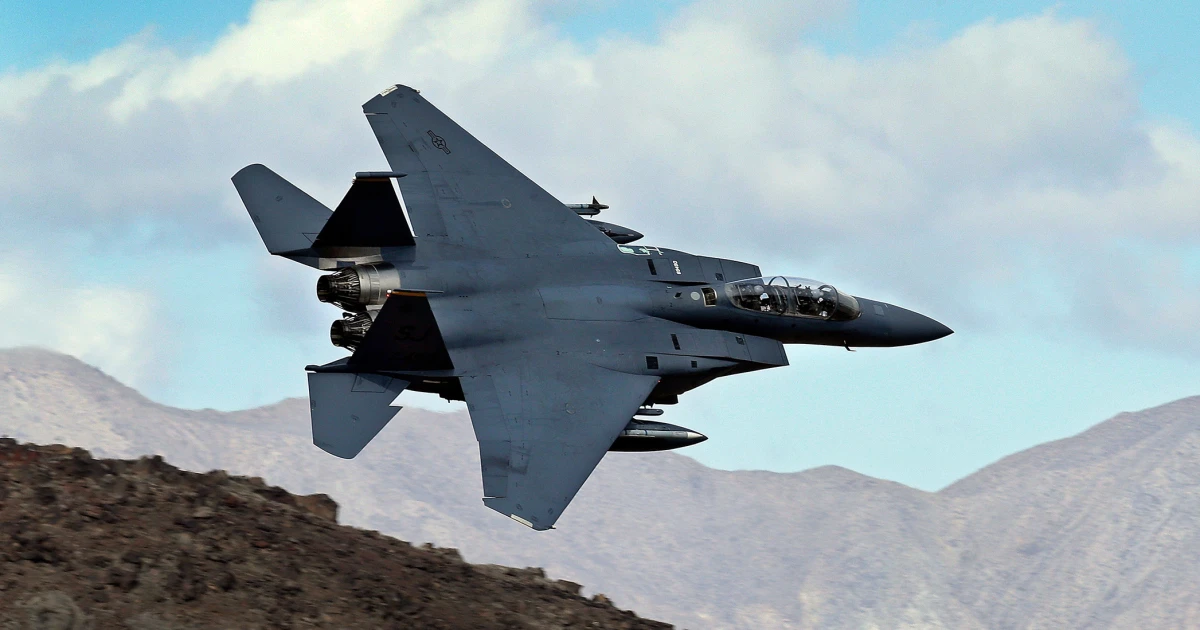
According to U.S. officials, the military successfully rescued the pilot of a two-seat F-15E Strike Eagle shot down over Iran on Friday, but one crew member is still missing. Local officials in southern Iran, along with the leadership of the Islamic Revolutionary Guard Corps, refuted claims that a second pilot had been located and detained. Iran’s semi-official Mehr news agency reported that Iranian authorities issued a public call to residents for assistance in locating the missing crew member, even offering a reward of $60,000.
This incident marks a significant moment in U.S.-Iran relations, being the first instance in decades that a U.S. fighter jet has been downed in active combat. It challenges previous assertions by the Pentagon and the White House regarding the effectiveness of U.S. and Israeli strikes in neutralizing Iran’s missile capabilities.
In a concerning twist, Iranian firepower also targeted U.S. military aircraft dispatched for search and rescue operations. A single-seat A-10 Thunderbolt, known as the Igbohog, crashed into Kuwaiti airspace after the pilot successfully ejected. Additionally, Iranian forces launched attacks on a U.S. military helicopter; fortunately, no personnel aboard were injured.
Images reportedly depicting debris from the downed F-15E were shared by Iranian media on Telegram. However, the Pentagon has yet to confirm the loss of the aircraft.
In a brief phone conversation on Friday, President Trump declined to provide details about the rescue efforts. When asked about the potential impact of the incident on negotiations aimed at ending the conflict, he indicated that it would not have any negative consequences. The President stated, “No, not at all. No, this is a war.”
While President Trump has remained largely silent on the crash itself, he took to Truth Social on Saturday to remind Iran of a deadline he imposed last week regarding U.S. demands. He wrote, “Remember when I gave Iran 10 days to reach a deal or open the Strait of Hormuz? Time is running out – 48 hours until hell gets their hands on them.”
Renewed Scrutiny on U.S. Claims
The events on Friday have reignited discussion about the veracity of President Trump’s assertions that U.S. and Israeli military operations have effectively incapacitated Iran’s missile capabilities and secured airspace dominance. Responding to the incident, Iranian officials emphasized the resilience of their military capabilities. An Iranian military spokesperson stated, “Our adversaries should know that our country possesses advanced air defense systems.” They further expressed confidence in their ability to maintain control of the skies, showcasing their competitive strengths against foreign adversaries.
In a nationally televised address on Wednesday, President Trump stated that the ongoing conflict could conclude within two to three weeks, asserting that the U.S. would retaliate strongly if there were no negotiated solution regarding the Strait of Hormuz. Meanwhile, thousands of additional U.S. troops have been mobilized to the region.
Notably, Iran has declared that there are no direct negotiations with the United States at this time. The dynamics have only intensified as U.S. and Israeli forces have tactically altered Iran’s governmental and military leadership landscape, including significant figures like Supreme Leader Ayatollah Khamenei, raising uncertainties about who will represent Iran in any potential discussions.
As of Saturday, the conflict has now extended into its 36th day, with reports indicating that over a dozen American service members have lost their lives since the initiation of the joint U.S. and Israeli offensive against Iran.
