


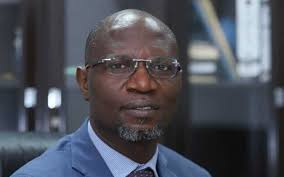
Nigeria’s SEC Advocates for Enhanced Collaboration in Financial System
Dr. Emomotimi Agama, the Director-General of Nigeria’s Securities and Exchange Commission (SEC), has called for greater collaboration among all stakeholders in the nation’s financial system. This initiative is part of a broader regulatory effort aimed at unlocking the full potential of the investment sector, which is crucial for Nigeria’s sustainable development.
Progress through Regulatory Reforms
Speaking at the Emerging Africa Capital Limited Investor Summit & Awards event, Agama delivered a keynote address titled “Deploying and Mobilizing Capital and Investment Strategies in a Changing Global Economy.” He noted that the recent reforms spearheaded by the Commission are beginning to show promising results in transforming Nigeria’s capital markets.
A Call for Collective Action
Agama emphasized the need for a collective approach to capitalize on these reforms, suggesting that this strategy could elevate Nigeria’s position as a premier destination for global investment. He acknowledged the challenges posed by current macroeconomic uncertainties globally, pointing out that while many investors favor certain countries for quick returns, Nigeria offers significant long-term opportunities that remain largely untapped.
Capital Markets Showing Resilience
The SEC Director-General highlighted the gradual benefits emerging from the Nigerian capital market. Recent regulatory advancements, such as the introduction of electronic offerings and the deepening of the debt market, are attracting renewed investor interest. He noted that the market is evolving and demonstrating resilience, even amid economic headwinds.
Unleashing Market Potential
Despite these advancements, Agama acknowledged that the full capabilities of Nigeria’s capital market are yet to be realized. He pointed out that retail investor participation remains low, and the derivatives market is still in its infancy. Moreover, market capitalization, when compared to Nigeria’s GDP, continues to fall below the nation’s economic benchmarks.
Importance of Stakeholder Engagement
To transform potential into tangible benefits for investors and the national economy, Agama stressed the importance of collective responsibility. He urged stakeholders in the capital markets—regulators, exchanges, and investors alike—to fulfill their roles with integrity and a long-term focus. Domestic corporate issuers, in particular, should utilize capital markets as a key financing route by enhancing governance, increasing transparency, and improving investor relations to attract institutional investors.
Encouragement for Domestic and Foreign Investors
Agama also advised domestic institutional investors, including pension fund managers and insurance companies, to engage more deeply with local capital market instruments. He encouraged them to actively participate in price discovery processes and develop robust analytical abilities for investing across various asset classes, recognizing the strategic importance of Nigeria’s savings pool. Furthermore, he reassured foreign investors and development finance institutions that Nigeria is committed to creating a regulatory framework that is principled, transparent, and aligned with global best practices.
Highlighting the Need for Unified Policies
The Director-General appealed to his counterparts at key financial institutions including the Central Bank of Nigeria and the Pension Commission to foster inter-agency cooperation. He argued for harmonized policies that present a cohesive, investor-friendly image to the global market, noting that the sophistication of Nigeria’s capital markets hinges on a coherent regulatory framework. Agama underscored that economic development relies on effective capital deployment and resource optimization, asserting that Nigeria stands at a pivotal moment where strategic decisions made in the coming years could substantially influence its financial future.
