


WASHINGTON (AP) — Early Friday, the Senate unanimously approved funding for the Department of Homeland Security, aiming to pay Transportation Security Administration (TSA) employees and other agencies. However, immigration enforcement operations remain unfunded, contributing to a budget deadlock that is creating congestion at airports, disrupting travel, and posing economic challenges for affected workers.
This agreement, which passed without a roll call, is set to be sent to the House for consideration later today.
Senate Majority Leader John Thune commented on the situation, stating, “We can open up at least a large portion of the government again, and then we can move forward from there.” He also acknowledged that “we still have work to do.”
As efforts mounted to conclude a 42-day impasse over funding for Homeland Security, the urgency increased when it appeared that TSA employees were about to miss additional pay. President Donald Trump expressed his intent to rapidly resolve the “chaos at airports,” promising to sign an order for immediate payment of TSA employees. Notably, the deal does not include stricter limitations on the immigration policies that Democrats have consistently advocated for, particularly in response to President Trump’s mass deportation initiatives.
Senate Democratic Leader Chuck Schumer criticized the timeline, asserting that a resolution could have been reached weeks earlier. He pledged that his party would persist in efforts to prevent further funding for what he termed President Trump’s “corrupt” immigration operation without substantial reforms.
Details of the Funding Package
Senators engaged in prolonged negotiations to develop a package that would finance the majority of remaining departments, such as the Federal Emergency Management Agency, the Coast Guard, and the TSA; however, it did not allocate funds for Immigration and Customs Enforcement (ICE). While Customs received funding, the Border Patrol was excluded.
The package introduces no new immigration restrictions and largely operates outside the government shutdown’s effects. The significant tax cut legislation enacted last year by President Trump infused billions into the Department of Homeland Security, including $75 billion earmarked for ICE operations, thus ensuring continuous remuneration for immigration officials despite funding lapses.
The path forward in the House is uncertain, especially with Speaker Mike Johnson (R-Louisiana) overseeing a slim majority. Passage is anticipated to necessitate bipartisan collaboration, as factions from both parties express discontent with the current proposal.
Some conservative Republicans have openly criticized their party’s approach, demanding comprehensive funding for immigration measures. Several lawmakers have vowed to secure the necessary resources for ICE in the upcoming budget to sustain President Trump’s policies.
Earlier Thursday, Thune made what he termed a “last and final” offer to Democrats, yet discussions stalled as time passed. Democrats argued that the Republican proposal failed to implement adequate safeguards for ICE, Customs and Border Protection, and other agencies involved in immigration actions, particularly in light of recent protests and fatalities in Minneapolis.
Challenges in Negotiations
Democrats have urged federal agents to wear identification, utilize do-not-execute warrants, and limit operations near schools, churches, and other sensitive locations. They are advocating for reforms that would require judicial oversight before home raids can occur—an idea Homeland Security Secretary Markwayne Mullin has indicated he may consider.
While President Trump has largely delegated the matter to Congress, he threatened to deploy the National Guard to airports and emphasized his readiness to take necessary action. The administration has taken the uncommon step of invoking a national emergency to ensure TSA employee salaries, although this tactic raises both political and legal concerns. Trump’s order would reportedly draw on funds from the 2025 tax bill to cover TSA salaries, according to an administration official who requested anonymity.
If the Senate’s package gains approval in the House and is signed into law, the measure authorizing TSA payments may ultimately render Trump’s emergency order either temporary or unnecessary.
Impact of Funding Cuts on Travel
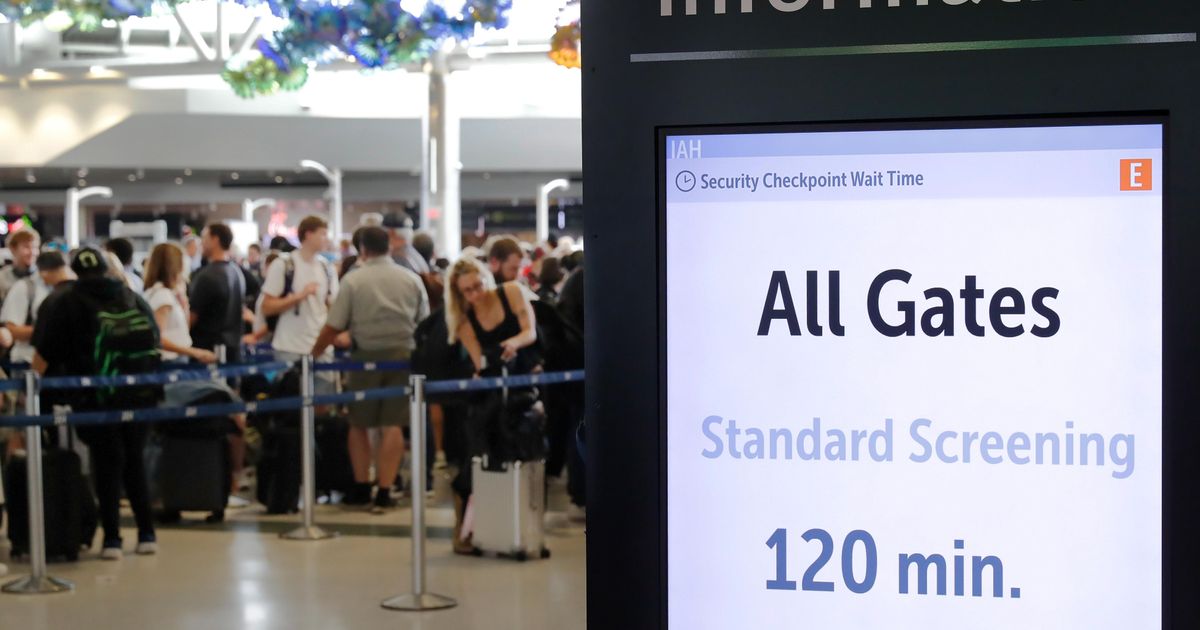
The lack of funding has led to travel delays and even warnings of potential airport closures as unpaid TSA employees are unable to report for duty. At various airports, TSA staff availability has fallen below optimal levels, with nearly 500 of the agency’s 50,000 employees opting for retirement during the shutdown. Reports indicate that more than 11% of scheduled TSA employees were absent from work on Wednesday, translating to over 3,120 callouts.
Everett Kelly, president of the American Federation of Public Employees, expressed gratitude that TSA workers will receive pay but emphasized the necessity for Congress to remain engaged in passing a comprehensive funding agreement that supports all DHS employees, ensuring critical agency operations continue.
Travel disruptions are increasingly evident, with many travelers feeling the impact of workforce shortages. For instance, at Houston’s George Bush Intercontinental Airport, Melissa Gates decided against boarding a flight after enduring over two and a half hours of waiting to clear security, noting that no other flights were available until Friday.
“You could just drive, right?” Gates remarked, highlighting the inconvenience. “It would have been fun if it had lasted five hours.”
___
Associated Press reporters contributed to this report from multiple locations, including Washington, Houston, and New York, detailing ongoing developments in this significant legislative matter.
