


As the Western U.S. experiences its most severe snow drought in modern history, ski resorts are exploring innovative strategies to store artificial snow and preserve it for future seasons.
This technique, termed “snow farming,” involves generating snow under favorable conditions—specifically, during cold, dry weather—then stacking it into towering piles between two to three stories high. These piles are subsequently covered with large insulating mats designed to shield them from sunlight and precipitation. This approach allows ski areas to rely less on unpredictable weather, enabling earlier openings in the fall.
While this technology has gained traction in Europe, it is increasingly being adopted by smaller ski areas across the United States as snowfall becomes less dependable. Across Wisconsin, Idaho, and Utah, several resorts are experimenting with snow farming, indicating that the ski industry is taking proactive, labor-intensive measures to mitigate the impacts of climate change.
Nate Sheik, director of mountain operations at Bogus Basin Ski Resort in Idaho, noted that warmer winters and diminished snowfall could enhance the sustainability of skiing operations. The resort is currently implementing snow farming for the second consecutive year.
The Soldier Hollow Nordic Center, located near Salt Lake City and originally constructed for the 2002 Winter Olympics, is notably the first U.S. facility to adopt this method. As Salt Lake City prepares to host the Winter Olympics again in 2034, ensuring a reliable snow supply has become increasingly vital for the region’s winter sports landscape.
With alarming conditions this season, Soldier Hollow General Manager Luke Bodensteiner highlighted the importance of snow management, especially with a major cross-country skiing event again on the agenda. He stated that this snow farming initiative serves as a strategic contingency for the upcoming Olympics.
Innovative Snow Preservation Techniques
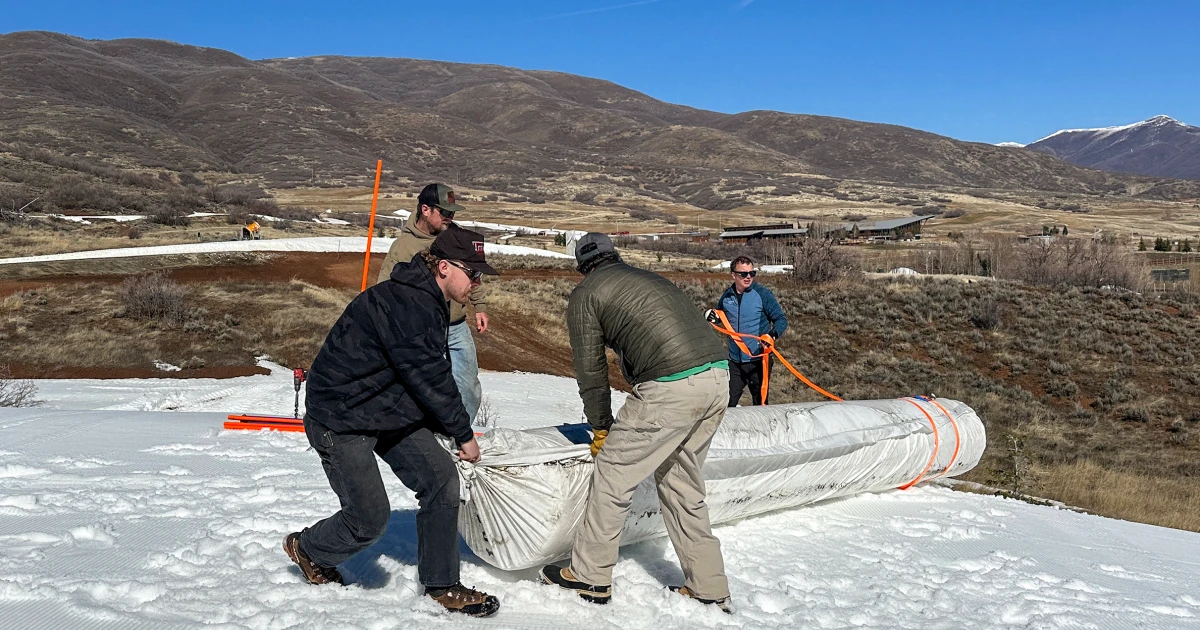
Bodensteiner’s team has invested approximately $300,000 in a snow preservation system provided by the Finnish company Snow Secure. This technology utilizes accordion-folded white polystyrene mats, each about 2.5 inches thick, that can be installed quickly. Designed to cover extensive piles of snow from top to bottom, these mats act as effective insulation, similar to that used in home construction.
Operated primarily under cold, dry conditions, customers of Snow Secure utilize snow guns to create snow, build it into large piles, and then cover the piles completely with mats, secured with weights. Sheik described the method as akin to a battery, with the insulation helping to retain cold air as long as possible.
The CEO of Snow Secure, Antti Rauslati, explained that although stored snow generally loses about 20% of its mass over the summer, the system helps maintain snow quality even in marginal conditions. He emphasized that producing high-quality snow in colder weather not only enhances quality but also conserves energy.
Although snowmaking has been an industry staple since the 1970s, Rauslati noted it can be an inefficient use of water during milder temperatures typical at the onset and conclusion of the season. In fact, snow production under suboptimal conditions may require significantly more energy—up to 80% more—compared to colder temperatures.
Despite concerns regarding extreme summer temperatures potentially undermining the effectiveness of snow farming, early findings are promising. Bogus Basin, for instance, participated as a pilot site for the Snow Secure initiative last season. Monitoring systems reported outside temperatures reaching as high as 119 degrees Fahrenheit while the snow beneath the insulating system maintained a stable average of 37 degrees. Remarkably, around 80% of the snow persisted when the mats were removed in October, allowing the resort to open in what was recorded as its warmest November ever.
Impact of Record Snow Drought
This winter has proven to be particularly devastating for the Western states, with major drought monitoring agencies reporting record-high temperatures and unprecedented lack of snowfall. The recent heatwave has further exacerbated conditions, diminishing remaining snowpack levels and triggering concerns regarding wildfires, particularly in areas such as Denver. Many states, including Colorado and Utah, have noted their lowest snowfall totals on record.
The impact on ski resorts has been palpable, with many facing early closures or limited operations before the season’s end. Bodensteiner confirmed a shared recognition in the industry of the trend toward shorter, warmer winters. Soldier Hollow’s unique altitude—approximately 5,600 feet above sea level—renders it more susceptible to these climatic shifts, intensifying reliance on artificial snow production.
To adapt, Soldier Hollow has invested significantly in advanced snow-making technologies, including mobile fan guns and stationary snow-producing equipment. Approximately half of their operational season now depends on these artificial methods. Bodensteiner expressed optimism regarding the potential of the snow farming experiment, aiming for Soldier Hollow to be the first Nordic ski venue to open in the forthcoming fall. If successful, he envisions expanding the snow farming system significantly by 2033.
