


Population Growth in U.S. Metropolitan Areas Stalls Amid Declining Immigration
Recent census data reveals a significant slowdown in population growth rates across metropolitan areas in the United States, primarily attributed to a steep decline in international net immigration. The figures show that, as of July 1, 2025, net international migration has plummeted to about half of what it was in the previous year.
According to the data released in January, net international migration spiked by approximately 2.7 million people by July 1, 2024, but fell to only 1.3 million in the following year. These vintage estimates, which were unveiled Thursday, elaborate on earlier projections and shed light on demographic trends at the metro and county levels, including key factors such as births, deaths, and migration patterns.
Net international migration refers to the difference between the number of people relocating to a region from another country and those departing from a region to a destination outside of the United States. A positive net migration figure indicates growth resulting from an influx of people into an area.
This downward trend is especially pronounced in metropolitan regions, which generally experience higher immigration rates compared to less populated areas. From 2023 to 2024, the net outmigration rate within metropolitan areas was around 8.9 individuals per 1,000 residents. However, this rate saw a drastic reduction, halving to 4.1 per 1,000 from 2024 to 2025.
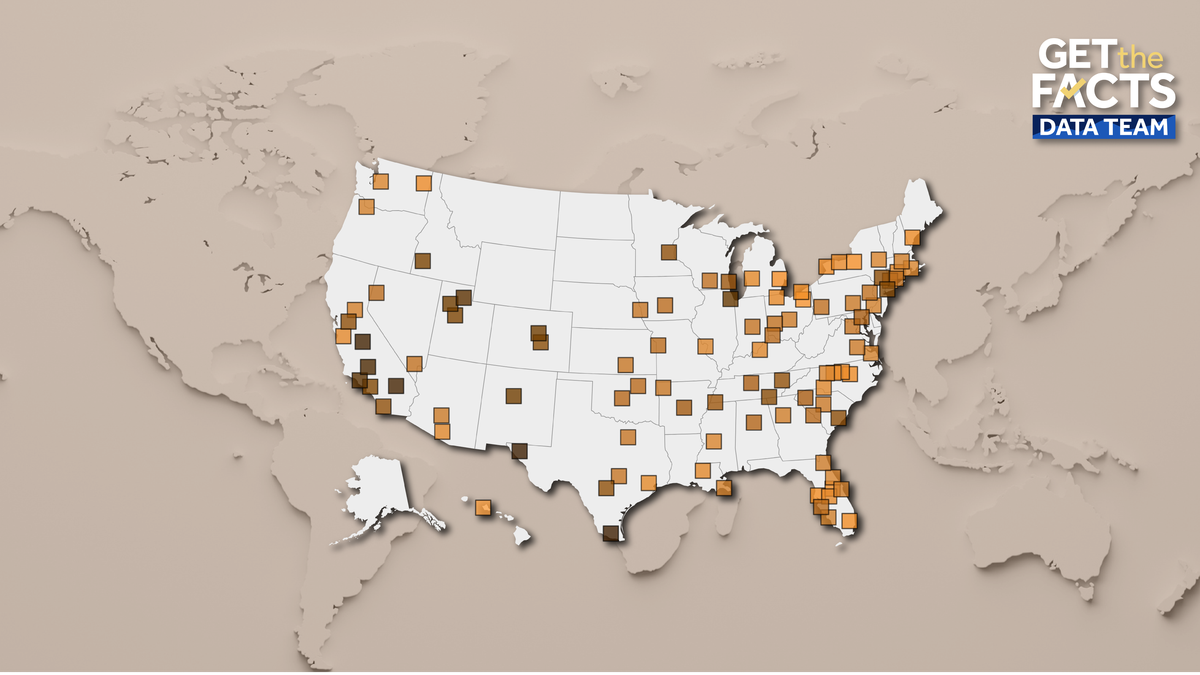
The data analysis by the Get the Facts Data team for the 100 most populous metropolitan areas revealed a staggering decrease in net international migration, ranging from 26% to 95% across all regions between 2024 and 2025.
El Paso, Texas, recognized as one of the largest ports of entry on the southern border, experienced the most substantial drop in net international migration, declining nearly 95% from the previous year. It is important to note that the current data does not consider any changes that may have occurred after July 1, 2025.
Other major urban centers, particularly in Texas and California, similarly reported significant declines in international net migration. Notably, the metropolitan area encompassing Chicago recorded the eighth-largest decrease in international migration rates; however, U.S. Census Bureau data does not account for population changes in the latter half of 2025.
