


Stakeholders Advocate for A Comprehensive Development Agenda in Ibadan
In Ibadan, a coalition of stakeholders is increasingly advocating for an expansive development agenda known as “Ibadan 4.0.” This initiative emphasizes immediate actions in job creation and infrastructure renewal as critical steps to reposition the historic city for sustainable growth.
Dialogue at the 2026 Ibadan Conference
This imperative was the focal point of discussions at the 2026 Ibadan Conference, organized by the Central Council of Indigenous Peoples of Ibadan (CCII) in honor of Oba Rashidi Ladoja, the Olubadan of Ibadanland.
Exploring the Conference Theme
The conference, themed “Ibadan: Remembering our past, understanding our present, designing our future,” took place at the Bode Amao Hall, Ibadan House in Okaremo. It drew participants from traditional institutions, academia, and various professional sectors.
Urgent Need for Strategic Action
Dr. Adesola Adeduntan, the Chairman of the event and Rector of Abiola Ajimobi University of Technology, highlighted that the idea of “Ibadan 4.0” signifies an essential shift from mere rhetoric to decisive action. He cautioned that without strategic planning, the city risks falling into stagnation.
Collective Ownership of the Future
Adeduntan articulated that Ibadan should be viewed not just as a city, but as a civilization deeply rooted in structure, discipline, and communal responsibility. He asserted that successful urban environments do not develop by chance. Instead, they must be purposefully constructed, regularly updated, and aligned with a collective vision.
A Call for Collaborative Efforts
He emphasized that securing a prosperous future for Ibadan demands unity, coordinated efforts, and shared commitment among all stakeholders. Isolated actions will only delay progress, he warned.
Acknowledging the City’s Challenges
Professor Abiodun Aibinu, Vice-Chancellor of Summit University, Offa, remarked that Ibadan stands at a “critical tipping point.” He urged the city to adopt a systematic approach toward transitioning to a knowledge-driven economy focused on innovation, skills, and institutional collaboration.
Addressing Economic and Social Inequalities
Aibinu elaborated on the challenges facing Ibadan, including unemployment, inadequate infrastructure, and dwindling social services. He cautioned that failing to tackle economic and social disparities could exacerbate these issues.
Prioritizing Job Security and Urban Renewal
Highlighting essential priorities, Aibinu stated that job security, infrastructure improvement, and skills development must come first. Without these foundational elements, the vision of “Ibadan 4.0” risks remaining merely theoretical. He called for initiatives targeting urban renewal, revitalizing educational institutions, and shifting from a resource-based economy to one driven by knowledge and human capital.
Integrating Traditional Governance Structures
Additionally, he advocated for strengthening grassroots governance by incorporating traditional systems like the Mogaji into formal governance structures to enhance community coordination and accountability.
Celebrating Cultural Heritage and Leadership
During his welcome address, Alhaji Moshood Akere, Chairman of the Ibadan Cultural Festival Planning Committee, noted that the addition of this conference to the annual cultural festival aims to foster an open platform for policy dialogue and forward-thinking discussions about Ibadan’s future. Since 1990, the festival has served as a vehicle for cultural expression and community reunion, and this year’s conference pays tribute to Oba Ladoja, whose leadership symbolizes the bridge between Ibadan’s historical heritage and its modern aspirations.
Acknowledgment of Contributions to Ibadan’s Development
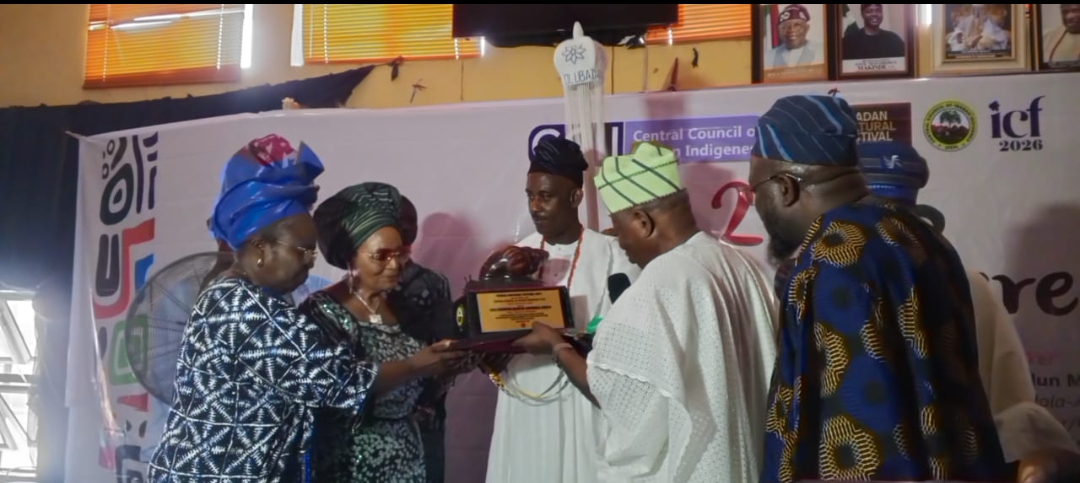
The event concluded with awards presented to prominent figures for their contributions to the growth and development of Ibadanland, including Oba Ladoja. Notable honorees included Mrs. Florence Ajimobi, now appointed as Nigeria’s Ambassador to Austria, and other influential leaders committed to the city’s future.
