


Shifts in Immigration Patterns Driven by Student Housing Developments
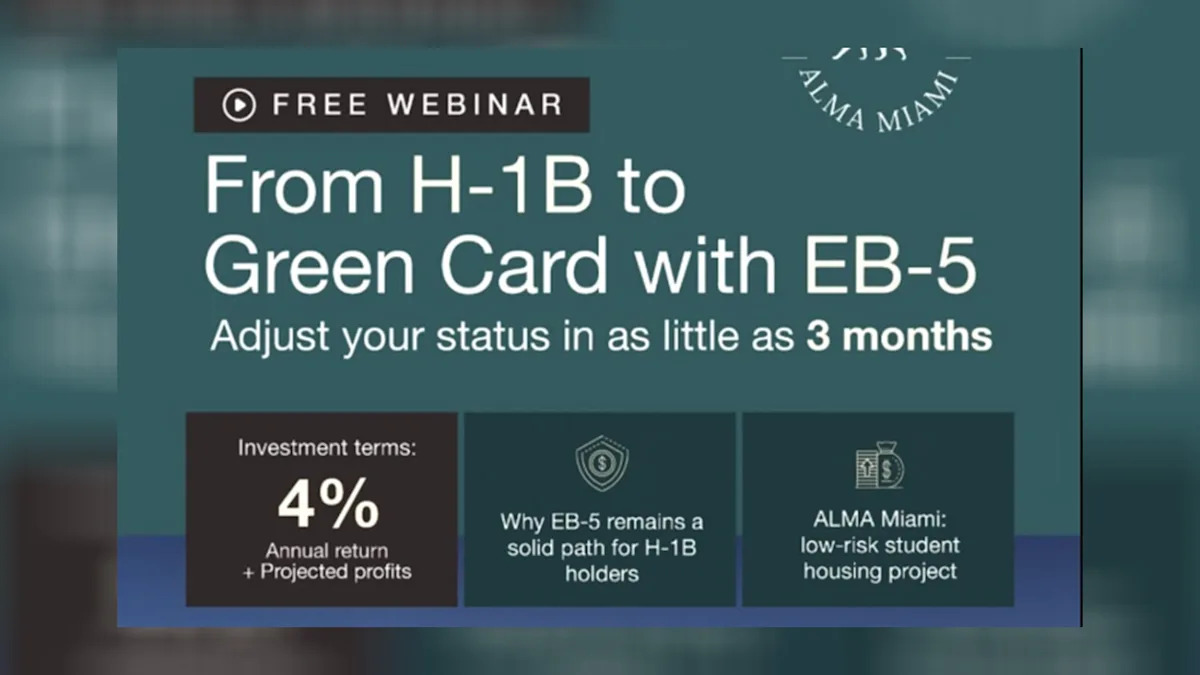
Student housing investments tied to investor visa programs are emerging as a potential shortcut to U.S. residency, prompting a reevaluation of how universities influence immigration trends. Recent advertisements on platforms like Instagram have begun to tout EB-5 visa investments in student housing as viable alternatives for foreigners, particularly those currently in the U.S. on H-1B visas, to secure green cards without navigating traditional employment avenues.
Prominent Offers Highlight Investment Opportunities
One advertisement from Bai Capital promotes ALMA Miami, a student housing project located near Florida International University, enticing investors with claims of “low-risk” investments that yield a “4% annual return” alongside expedited residency options, with an adjustment of status promised in as little as three months. Another campaign invites prospective investors to “secure U.S. residency through student housing,” showcasing the EB-5 Immigrant Investor Program as an alternative to employer-sponsored visas.
Investment Strategies in Housing and Job Creation
The student housing project, featuring 644 beds within walking distance of campus, is being promoted as both a real estate opportunity and an immigration pathway. Through the EB-5 program, foreign investors can become lawful permanent residents by committing at least $800,000 in designated employment areas or $1.05 million in other qualifying U.S. projects aimed at job creation.
Growing Popularity of EB-5 Investments
This marketing strategy reflects a broader trend highlighted in a recent report by the Dallas Express, where companies are increasingly positioning the EB-5 visa as a feasible escape from the competitive H-1B lottery, emphasizing certainty and reduced dependency on employer sponsorships.
Economic Arguments and Criticisms of the Program
Supporters assert that the EB-5 program stimulates economic growth. Texas Senator John Cornyn emphasized its importance, citing EB-5 investments as a significant driver of economic activity that generates jobs for thousands of Americans and injects billions into both urban and rural areas. However, critics highlight ongoing concerns about transparency and accountability, such as a 2026 Justice Department case that resulted in a prison sentence for a woman who misled investors, promising green cards through EB-5 projects. Previous federal reviews have raised national security issues and questioned the adequacy of oversight.
Investigating Job Creation Claims and Oversight Deficiencies
When evaluating the purported job creation stemming from EB-5 investments, a 2013 report by the DHS Inspector General concluded that USCIS had not effectively demonstrated the benefits of such foreign investment to the U.S. economy. More recently, a 2023 GAO report indicated that while USCIS has made strides in addressing fraud and national security risks, there remains a lack of accessible data on fraud trends and the reasons for visa denials.
The Role of Student Housing in Immigration Dynamics
The focus on student housing introduces a new layer to the discussion of immigration patterns. Unlike university admissions and employment policies that directly facilitate the entry of foreign students and workers, these investment opportunities illustrate how universities can indirectly influence immigration by fostering demand for housing in neighborhoods marketed globally as gateways for immigrants—without directly participating in the investment process.
Similar Projects and Scrutiny of Employment Practices
Other projects echo this trend, such as a development near the University of Texas at Austin, which, funded through EB-5 capital, will create 466 beds close to the campus. Similarly, federal records indicate that EB-5 funding also supported the North Point Crossing student housing project located near Texas A&M University. An approval letter from 2014 projected that 99 immigrant investors would invest $500,000 each, cumulatively providing $49.5 million for the project.
From 2016 to 2021, data from the GAO revealed that the majority of foreign nationals granted EB-5 visas hailed from China and India. As this trend continues, Texas universities are coming under increased scrutiny regarding their involvement in immigration-related programs. Reports have noted that Texas A&M University has spent over $3.25 million on H-1B visa sponsorships since 2020, raising questions about its hiring practices and labor priorities.
Increased Debate surrounding Visa Policies
Recent months have seen escalating debates around foreign worker pathways in the U.S. Young Republicans in Texas have voiced their opposition to optional practical training programs that allow international graduates to work in the U.S., while Governor Greg Abbott initiated a statewide freeze on new H-1B visa applications to public universities and government agencies, citing concerns about potential abuses impacting the workforce.
Long-Term Implications of Investments in Student Housing
The rise in student housing marketing linked to EB-5 suggests that parallel channels are emerging alongside more visible programs. Although universities do not directly endorse these investments, they contribute to the sustained demand from domestic and international students, making surrounding real estate projects attractive options for immigrant-driven capital. The potential outcomes may reshape demographic landscapes, as EB-5 approval translates to green cards, allowing investors and their families two years of residency, ultimately leading to U.S. citizenship after five years.
Despite the criticisms, influential business organizations continue to advocate for the EB-5 program, asserting that it has the potential to generate billions in capital to establish new enterprises, expand existing ones, and foster job creation for American workers. A legal brief from the National Chamber of Commerce in 2022 encapsulated these sentiments, promoting the long-term benefits of such visa programs to the U.S. economy.
