


The right to apply for asylum is safeguarded by both U.S. and international law. During the first term of the Trump administration, however, border officials obstructed hundreds of thousands of migrants from reaching ports of entry to seek asylum.
The government’s “turnback policy,” referred to as “metering,” allowed U.S. Customs and Border Protection (CBP) officials to deny entry to asylum seekers. In many cases, officials incorrectly claimed they lacked the capacity to process these individuals, resulting in many being sent back to Mexico. Countless migrants were forced to endure harsh living conditions, becoming easy targets for cartel violence, including kidnapping, assault, and murder, while they waited for the chance to exercise their legal right to asylum.
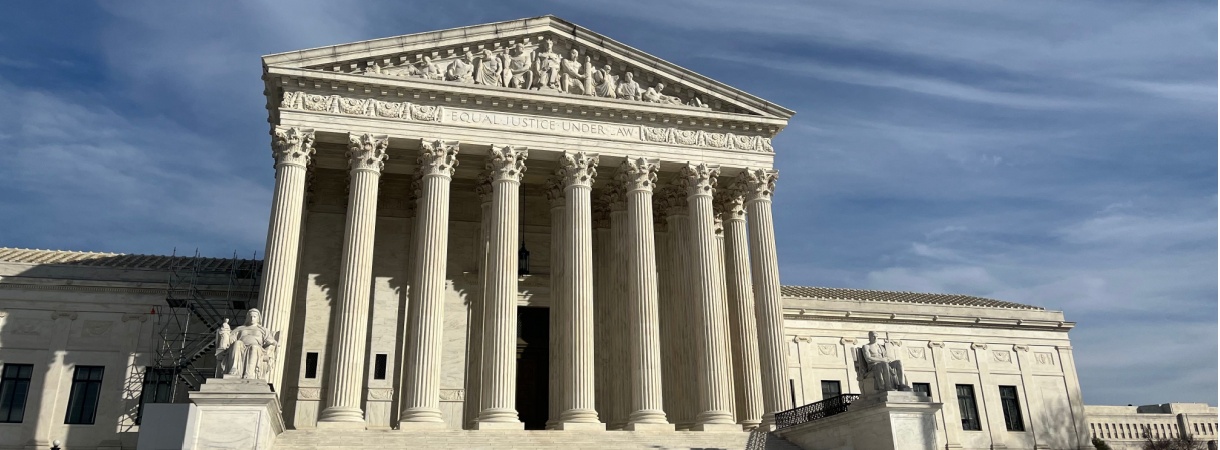
On March 24, the American Immigration Council and its partners stood before the Supreme Court to defend the right to seek asylum in the case of Noem v. Al Otro Lado. Although the turnback policy has not been in effect since 2021, the Trump administration requested that the Supreme Court overturn a Ninth Circuit Court of Appeals ruling declaring the policy illegal.
Pathway to the Supreme Court
This lawsuit began in July 2017 and has evolved over the past three presidential terms. The plaintiffs, including Al Otro Lado—a binational legal and humanitarian services organization based in California and Mexico—challenge the government’s repatriation practices along with other asylum seekers affected by the policy. The case is supported by multiple partners, including the Center for Constitutional Rights, the Center for Gender and Refugee Studies, Democracy Forward, and the Georgetown Law Institute for Constitutional Advocacy and Protection.
In 2016, for the first time in U.S. history, authorities under President Obama began sporadically blocking access to asylum screening at ports of entry for migrants coming from Mexico. Following the 2016 election, CBP increased efforts to deny asylum seekers entry at various southern border points.
By July 2017, the American Immigration Council and its partners initiated a lawsuit asserting that turning asylum seekers away after they entered the U.S. violated their rights. The situation escalated between April and June 2018 when the Trump administration formalized the turnback policy, positioning CBP officers just north of the border to prevent individuals seeking asylum from stepping foot on U.S. soil.
In October 2018, the Council modified its complaint to challenge the new approach of blocking asylum seekers at ports of entry. By May 2019, the lawsuit uncovered a secret government directive instructing officials to turn individuals away based on their port of entry status. The government contended that while it was unlawful to expel asylum seekers once they entered the U.S., it was permissible to deny entry as long as they were prevented from reaching U.S. soil.
Key Developments in the Legal Battle
In July 2019, a district court rejected the government’s motion to dismiss the amended complaint, ruling that their practices were in violation of U.S. law. The administration also introduced the Asylum Transit Ban Order, disqualifying those who did not apply for asylum in a country they transited before arriving in the U.S.
By September 2019, with legal withdrawals ongoing, the plaintiffs sought an injunction preventing the implementation of the asylum ban for individuals blocked by existing withdrawals. In November 2019, the court recognized a class of non-Mexican asylum seekers who were unable to apply by the effective date of the transit ban and ordered that their claims be processed under the earlier rules.
In March 2020, as the COVID-19 pandemic prompted more changes, the government suspended the “metering” policy and introduced a new border control system under Title 42. Subsequent months saw the district court grant full class certification, allowing the lawsuit to represent all asylum seekers who faced barriers due to the turnback policy.
After a series of legal maneuvers, including a necessary appeal by the Biden administration and multiple motions from plaintiffs citing government non-compliance, the district court ruled in favor of the plaintiffs in September 2021. The ruling emphasized the illegality of denying access to asylum seekers and reaffirmed U.S. obligations to screen individuals at ports of entry. While a permanent injunction was issued in August 2022, the appeal process continued with the Ninth Circuit weighing the federal government’s arguments.
Future Implications
The Supreme Court typically releases its decisions in June and July, prior to the summer recess. Although the current turnback policy is not active at the southern border, the implications of the Supreme Court’s ruling remain significant. A reversal of the Ninth Circuit’s decision could allow the U.S. government to reinstate turnbacks, leading to further complications and suffering at the border. On the other hand, if the court upholds the earlier ruling, CBP would be required to process all asylum seekers at ports of entry, maintaining America’s legacy as a refuge for those in need.
