


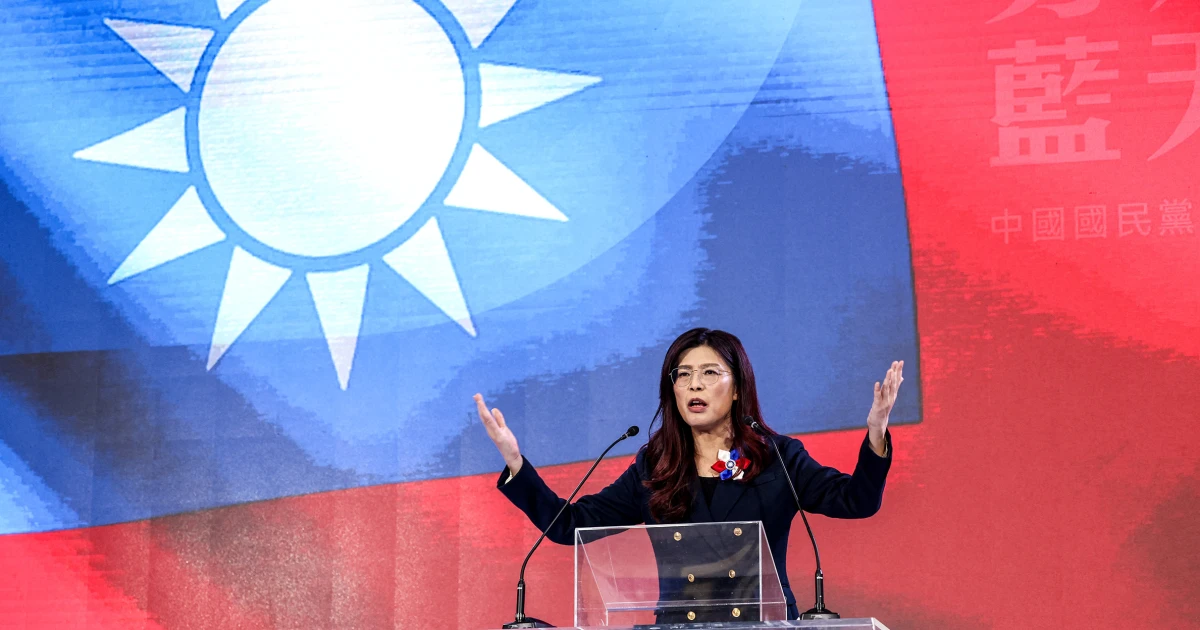
Taiwan’s Opposition Leader Visits China Ahead of Trump’s Arrival
TAIPEI, Taiwan — Just weeks before President Donald Trump’s imminent visit to China, Taiwanese opposition leader Cheng Liyun is set to meet with Chinese President Xi Jinping. This marks a significant development as it is the first visit by a party leader from Taiwan’s Nationalist Party, also known as the Kuomintang, to the mainland in a decade.
Cheng’s arrival in China represents a pivotal moment for the 56-year-old, who assumed the leadership of her party in November. Her election coincides with a notable political transformation in Taiwan, where she has emerged as a controversial figure, particularly as the island resists Beijing’s claims of sovereignty.
Cheng advocates for proactive engagement with China, arguing that Taiwan, home to 23 million residents, should strengthen relations to avert conflict. She emphasizes the importance of national identity, encouraging citizens to express their pride in being Taiwanese while acknowledging their Chinese heritage.
The Kuomintang has long fostered amicable relations with China. However, Cheng’s current stance marks a dramatic departure from her earlier years as a vocal advocate for Taiwanese independence during the late 1980s and early 1990s. As party leader, she has opted for a reconciliatory approach even as China intensifies military pressure on Taiwan.
Cheng noted the precariousness of the Taiwan Strait, which many perceive as a volatile flashpoint. In her words, both Taiwan and China should strive to stabilize the situation through diplomatic means rather than viewing it as a zero-sum struggle. She calls for peaceful coexistence, asserting that significant respect for both sides is essential.
Xi Jinping has consistently pushed for the “unification” of Taiwan with the mainland, often stating that military action remains an option. He has also opposed U.S. arms sales to Taiwan. This contentious issue is likely to be a top priority during his discussions with President Trump when they meet in Beijing on May 14 and 15.
The timing of Cheng’s meeting with Xi is noteworthy, as it coincides with a pending review of Taiwan’s defense budget, which has faced delays due to the opposition’s resistance to President Lai Ching-de’s proposed $40 billion increase over the next eight years. Cheng dismissed concerns that her outreach to China indicates a decrease in Taiwan’s U.S. support, suggesting that improved relations with Beijing do not threaten Taiwan’s ties with Washington.
As news of Cheng’s upcoming trip circulates, a bipartisan U.S. Senate delegation is in Taipei, urging local lawmakers to address the deadlock on defense spending. Senators emphasize the urgent need for Taiwan to enhance its military capabilities, underscoring escalating threats from China.
While acknowledging the importance of balancing defense needs and budget constraints, Cheng called for transparency regarding the allocation of military funds, particularly in light of the U.S. backlog on defense orders. She reiterated the crucial need for Taiwan to maintain its preparedness to avoid conflict in the Taiwan Strait, emphasizing that missteps could have dire consequences for the island’s security.
In light of the political landscape, the public’s reception of Cheng’s pro-China stance remains uncertain. Polling data shows diminished confidence among Taiwanese citizens regarding U.S. support in case of a military escalation, reflecting the complexities that lie ahead for Taiwan’s governance and international standings.
