


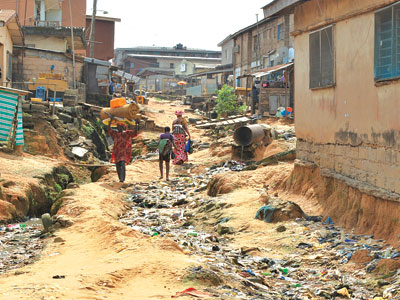
Flooding Challenges in Lagos Amid Rainy Season
The rainy season evokes memories of melodies like Majek Fashek’s Rainmaker, which once celebrated the life-giving essence of rain in Nigeria. When this album debuted in 1997, its lyrics resonated with many, painting a vivid picture of nature’s revival. However, the sentiment has shifted dramatically for residents in coastal cities like Lagos, where rain now increasingly symbolizes havoc and disruption rather than renewal.
Recent Heavy Rains Cause Disruption
Last week’s torrential downpours served as a stark reminder of the challenges faced by Lagosians, as widespread flooding ravaged neighborhoods, bringing life in some areas to a standstill. The intensity of the rains caused significant damage, resulting in impassable streets and prolonged traffic delays on major roads.
Geographical Challenges of Lagos
Several neighborhoods in Lagos, including Ajegunle, Owode Onirin, and Kuramo Beach, are situated below sea level. Local governments often urge residents in these vulnerable areas to manage their waste properly to mitigate flood risks. Ironically, many voices of warning go unheeded as life returns to pre-rainy season habits, perpetuating a cycle that leads to flooding.
A Reluctance to Learn from Experience
It is perplexing that, despite the personal and economic toll of past floods, residents often neglect basic preventive measures. For them, it appears as though they possess an unfounded belief in their ability to manage the risks linked to poor sanitation and environmental practices. Past experiences have left lasting scars, yet history seems destined to repeat itself.
Wider Impacts Beyond Lagos
While Lagos may be the focal point of flooding discussions, similar incidents have affected Ogun State and other neighboring areas along the coast. Yet, little progress has been made to seek effective solutions, raising pivotal questions about Nigeria’s preparedness for future rainy seasons.
Inadequate Infrastructure and Poor Preparedness
In many parts of Lagos, the infrastructure designed to manage rainwater is in disrepair. Clogged drainage systems, filled with everything from plastic waste to debris, hinder the flow of water, leading to widespread flooding. Last year, Lagos State Environment Commissioner Tunji Bello expressed optimism about improved drainage systems, yet residents have been advised to consider relocation during heavy rains—a troubling indication of the extent of the problem.
The Role of Community Initiatives
Experts, such as Hakeem Amusa, assert that despite government initiatives, proactive measures should be taken year-round, rather than waiting for the rainy season to desilt drainage channels. In neighborhoods like Surulere, community members are taking responsibility by adhering to monthly environmental clean-up exercises. However, the need for civic engagement cannot be overstated, as residents collectively strive to preserve their surroundings.
Governmental Responsibility and Regional Disparities
Architect Hafiz Balogun echoed sentiments of discontent regarding the unpreparedness witnessed during recent rains, emphasizing the importance of efficient drainage systems. He noted that some communities, fueled by a deep sense of urgency, are resorting to self-funded initiatives, including the construction of walkways to facilitate movement during floods. Yet, broader solutions from local governments remain lagging.
The Lagos State Environment Commission has identified the inherent geographical challenges of a coastal city, where intense rainfall can easily overwhelm drainage systems. Although the Lagos government pursues various flood management projects, this proactive stance is not mirrored nationwide, as many states appear to await the onset of disasters before taking action.
