


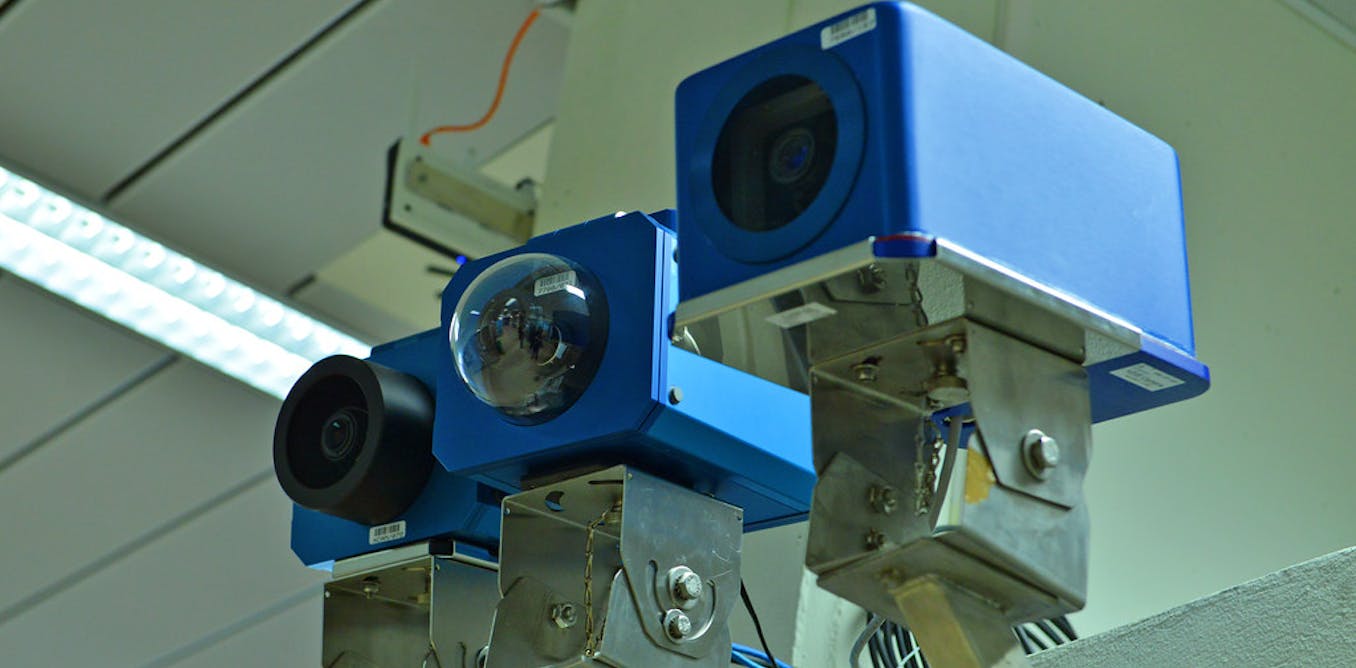
West Africa has historically maintained one of the world’s most mobile populations. Since 1979, the Economic Community of West African States (Ecowas) has facilitated visa-free travel for nationals of its member states across regional borders. This freedom has significantly bolstered regional trade, labor movement, and social ties. However, evolving technologies are transforming border operations, raising critical concerns about human rights.
Governments across West Africa are increasingly adopting biometric systems, facial recognition cameras, and artificial intelligence tools at airports and border crossings. As a researcher focused on international law, human rights, and technology governance, I have conducted a study on these advancements. My findings indicate that the growing reliance on AI-driven border surveillance may jeopardize the rights of migrants, while simultaneously weakening data protection and pressuring commitments to free movement in the region.
Although these systems are intended to combat terrorism, human trafficking, and irregular migration, they also pose significant challenges regarding privacy, discrimination, and the future of regional mobility.
Transformation of West African Borders
Traditionally, West African borders were characterized by loose controls and the absence of advanced security technology. Interactions were often governed by trust and travel documentation. However, this landscape is changing swiftly.
Over the past decade, governments in West Africa have increasingly turned to technology to enhance border security and identification processes. Surveillance tools such as cameras and digital tracking systems are being deployed to monitor and record individuals’ movements.
Border checkpoints are now being upgraded with biometric scanners, centralized databases, and automated control systems. For instance, Nigeria has begun issuing biometric passports, requiring citizens to register for a national identification number that includes fingerprint and facial data. Immigration authorities have also implemented biometric checks at key airports and land borders.
AI systems are being utilized to analyze travel data, flagging suspicious patterns for further investigation. This technology aids in identifying fraudulent documents and potential security threats. However, it also gives rise to what can be described as “digital borders,” where access within a state depends on data held in digital databases rather than solely on physical checkpoints.
Influence of European Migration Policy
The adoption of digital border systems in West Africa is influenced significantly by European migration policies. For over a decade, the European Union has focused on curbing immigration before it reaches European soil, a strategy termed “transitional externalization.” This approach has included funding border control initiatives in migrant origin and transit countries.
European institutions have supported the establishment of management systems throughout West Africa via programs like the EU Emergency Trust Fund for Africa. While these projects are often labeled as development aid aimed at improving governance, they also assist European governments in identifying and deporting migrants by verifying nationality through biometric data collected in their home nations. Critics argue that this effectively shifts European border security to the African continent.
Divergent Paths in Nigeria and Niger
The impact of these technologies is evident in Nigeria and Niger. Nigeria is gradually incorporating biometrics and digital technologies into its immigration framework. Although these advancements can modernize border controls, they raise valid concerns regarding data collection, storage, and sharing practices. Despite having implemented a data protection law, enforcement remains inconsistent, leaving immigrants with limited recourse regarding the use of their biometric information.
Niger, in contrast, has taken a different approach. For years, it has served as a significant transit point for migrants en route through the Sahara Desert toward North Africa and Europe. Following pressure from the European Union, Niger introduced stringent anti-smuggling laws in 2015 and intensified surveillance along migration routes. However, after a military coup in 2023, the new government repealed these laws and distanced itself from EU immigration directives, thereby reopening migration routes.
Privacy and Immigrant Rights at Risk
While AI technologies promise enhanced efficiency and stronger border controls, they also introduce considerable privacy risks. Biometric data such as fingerprints and facial scans are exceptionally sensitive. Once collected, this data can be retained indefinitely and shared across multiple databases, leaving migrants with minimal understanding of its usage or potential sharing with foreign governments.
Another pressing concern is algorithmic discrimination. AI systems used for border security often rely on patterns derived from historical data. If previous enforcement actions disproportionately targeted specific nationalities or ethnic groups, these biases could be embedded within automated decision-making processes, resulting in some travelers facing additional scrutiny or denial of entry.
The potential to undermine the Ecowas free movement protocol is significant if digital border technologies are leveraged more for restriction than facilitation.
The Need for Regional Regulatory Frameworks
A legal framework already exists in West Africa to regulate these technologies. The 1979 Ecowas Protocol on Free Movement grants nationals of member states the right to free movement, while the African Charter on Human Rights protects this freedom and prohibits discrimination. However, these laws were established prior to the emergence of artificial intelligence and biometric surveillance. In the absence of revised regulations, governments could introduce powerful surveillance technologies without adequate safeguards.
Ecowas has a pivotal opportunity to establish regional guidelines for AI and border management. This could align with frameworks such as the African Union’s Continental Artificial Intelligence Strategy or the G20 AI Principles, potentially addressing data protection, algorithmic transparency, and independent oversight of surveillance mechanisms. Safeguards akin to those in the European Union’s Artificial Intelligence Law could also be introduced.
As AI plays an increasingly critical role in global border control, the focus in West Africa should not be on whether these technologies will be adopted, but rather on how they will be governed. The region is well-positioned to set a precedent centered on human rights and the dignity of all individuals.
