


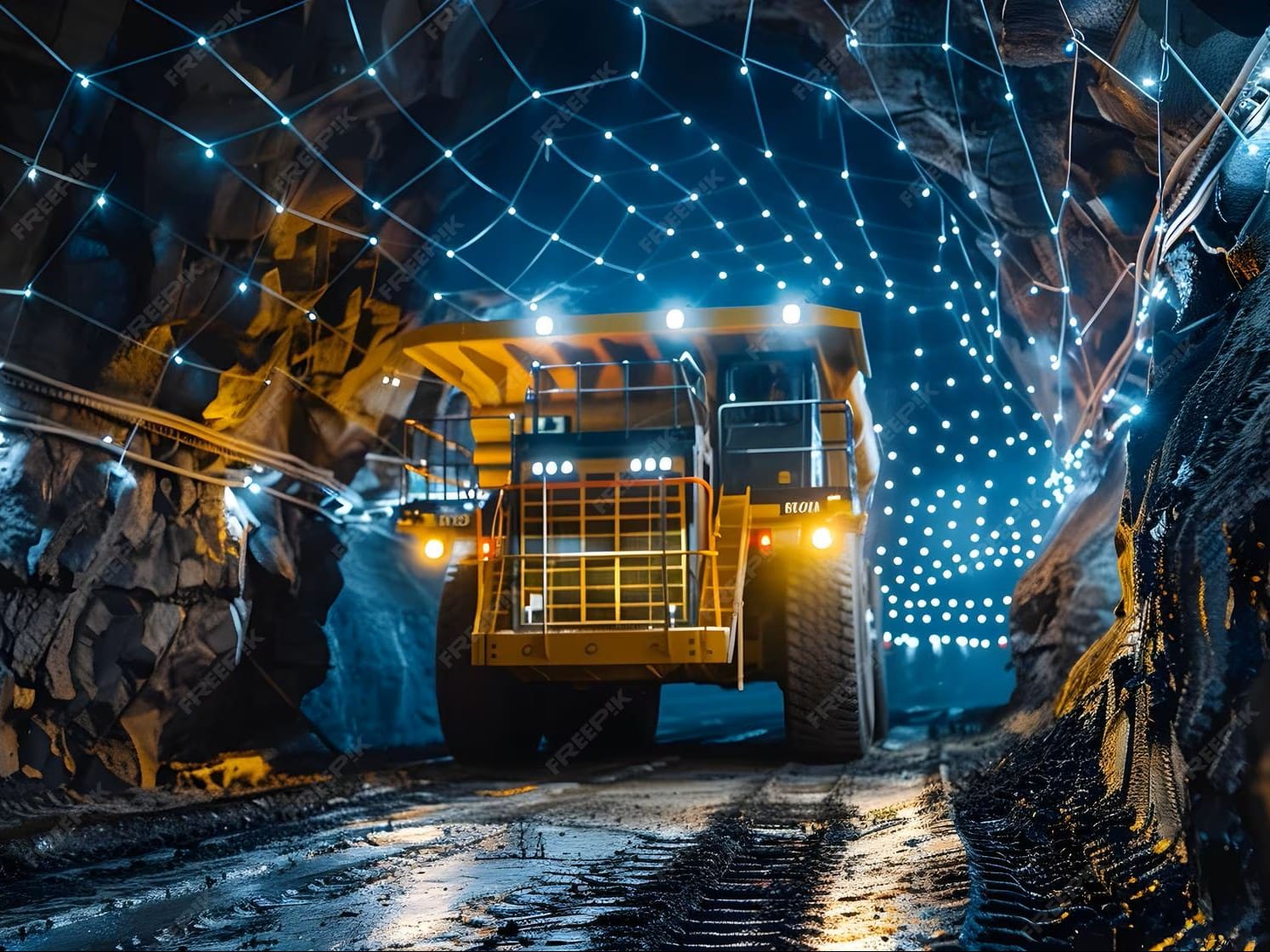
South Africa’s mining industry stands at a crucial juncture, shaped by escalating global demand for critical minerals and the imperative to leverage knowledge, skills, and research capabilities. The focus is on responsibly, efficiently, and competitively mining these resources. As artificial intelligence, automation, and digital systems reshape the global mining landscape, South Africa is vying to become a key driver of 21st-century economic growth.
The recent investment in the African Mining Indaba in Cape Town notably signaled a resurgence of confidence in the sector. Attracting a record attendance of 10,500 participants, this event showcased a remarkably optimistic sentiment surrounding South Africa’s mining prospects.
It is increasingly evident that the global economy is pivoting towards resilient supply chains for essential metals needed in power systems, defense technologies, digital infrastructure, mobility, and manufacturing. South Africa is well-positioned to capitalize on this shift, provided that mineral development is aligned with comprehensive industrial policy, infrastructure investments, and human capital strategies.
Strategic Importance of Mining in Economic Policy
While Finance Minister Enoch Godongwana’s recent budget speech did not explicitly mention mining, the industry’s strategic importance was highlighted in President Cyril Ramaphosa’s State of the Union Address in February 2026. He described the mining sector as a “sunrise industry” and noted that South Africa is home to significant reserves of critical minerals, with new mines set to open in the near future.
President Ramaphosa emphasized that South Africa’s mineral reserves are valued at over R40 trillion. After a prolonged period of dwindling exploration investments, the country is now allocating substantial resources towards geological mapping and exploration to maximize its mineral assets. He revealed that the Industrial Development Corporation has recently committed over R300 million to the Frontier Rare Earths Project in the Northern Cape, a venture projected to emerge as one of the world’s largest and most economical sources of critical minerals essential for modern technologies and the green transition.
Despite these positive developments, South African Minerals Council CEO Mzila Mtenzhane lamented the lack of acknowledgment regarding the mining sector’s contributions to public finances and taxes, calling it a “missed opportunity.” He underscored the industry’s vital role in ensuring the nation’s socio-economic security.
Innovation Through AI in Mining
The integration of disruptive technologies such as artificial intelligence (AI) and advanced analytics is proving to be not just experimental but essential for transforming mining operations. The Mining Indaba highlighted how technology can enhance human capabilities in the sector.
AI-driven innovation is revolutionizing mining through several key approaches:
- Precision Exploration: AI models are utilized to target exploration efforts, significantly minimizing unproductive drilling while also conserving water, reducing time to market, and lowering capital expenses.
- Remote Control and Robotics: The advent of remote control centers for monitoring and operating underground machinery will enable enhanced safety and real-time decision-making, allowing for operations to be managed from afar.
- Digital Twins and Technological Sandboxes: Institutions like Wits University are increasingly serving as experimental grounds, enabling mining companies to quickly prototype and refine technologies, thus avoiding costly mistakes.
Addressing the Digital Skills Deficit
South Africa ironically possesses vast mineral wealth yet faces a stark shortage of advanced technical and digital skills necessary for sustainable extraction. Educational institutions like Wits are proactively seeking to close this gap by forming strategic global partnerships.
Negotiations are underway between the Wits School of Geosciences and a major software company to establish a Digital Mining Innovation Center. Collaborations with international researchers from the UK and the US are also enhancing students’ exposure to best practices in critical mineral research and digital geology.
Moreover, talent pipelines must evolve to satisfy future workforce requirements. Current graduates possess a “game mindset,” making them ideal candidates for training focused on gamification and simulation. Advanced training frameworks that use simulated environments allow workers to master complex machinery risk-free before stepping into real-world scenarios.
Shifting Focus toward Geoeconomics
The mining landscape is witnessing a transition from geopolitics to geoeconomics, affecting investment decisions, project risk assessments, and partnerships. Increasingly, investments hinge on environmental, social, and governance (ESG) considerations. Issues such as water scarcity and environmental impacts are paramount for stakeholders, and here, technology plays a crucial role. Automated water management systems and AI-driven waste reduction initiatives are making “green mining” a necessity for capital investments.
Moreover, adding value is of utmost importance. As reiterated in this year’s State of the Nation Address, South Africa’s proposal to enhance local beneficiation and the export of finished products gained traction during last November’s G20 Leaders’ Summit. This local processing generates significant economic benefits as opposed to merely exporting raw materials.
Collaborative Progress Towards Mining Innovation
To sustain the current momentum, the mining sector must accept social legitimacy as an economic necessity. This involves:
- Localized Talent Development: Mining firms should establish community skill development centers to nurture local talent tailored to specific mine requirements.
- Enhanced R&D Funding: Development finance institutions must regard academic infrastructure as a high-yield investment, as backing research in fields like metallurgy and AI-enabled mining can cultivate a skilled workforce.
- Collaborative Governance: The most effective project models include early coordination among government bodies, operators, technology partners, and researchers.
If South Africa successfully integrates its extensive mineral resources with cutting-edge AI technologies and a well-prepared workforce, its mining sector could take a leading role in the global energy transition.
Professor Glenn Nwaila, Director of the Center for African Ore Systems Science Research (CORES) at the Wits Institute of Mining, holds an Associate Professorship in Geometallurgy and Machine Learning. Dr. Leonidas Vonopartis, an economic geologist and mineralogist at the Wits School of Geosciences, leads the process mineralogy stream at CORES. Gobona Lizzie Tau, a geologist and visiting researcher at CORES, specializes in strategic minerals, energy transition, and natural resource governance in Africa.
