


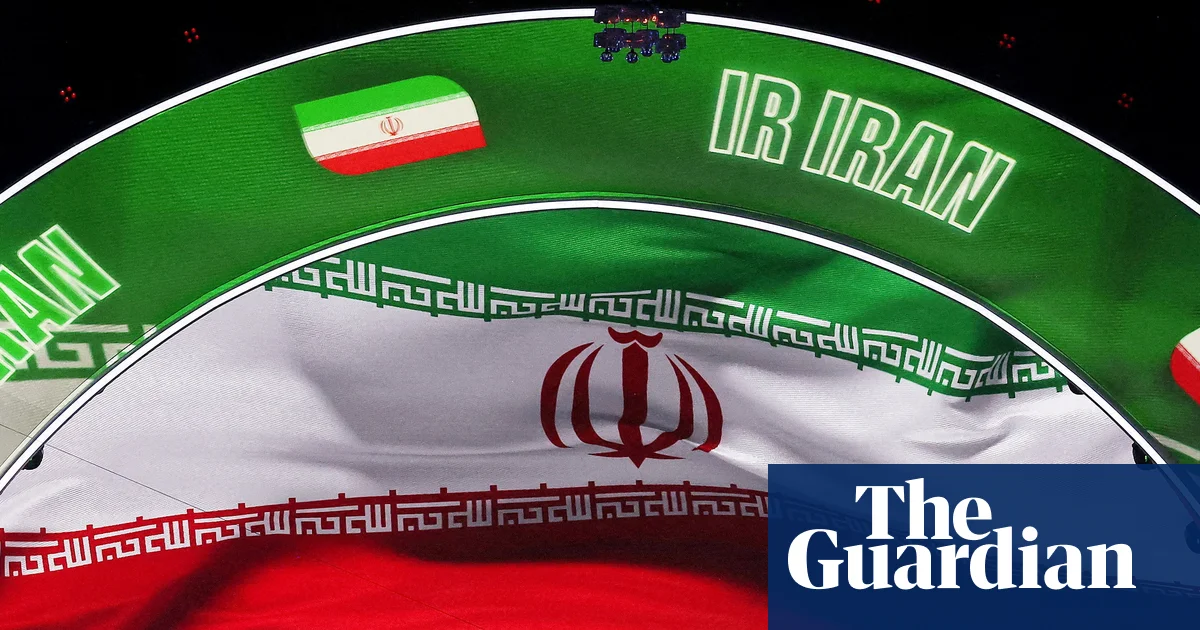
In the wake of recent military confrontations between the United States, Israel, and Iran, the evolving situation has significantly impacted various sectors, including the world of sports. As the conflict escalates in the Middle East, the Iranian soccer community faces substantial challenges as it navigates the consequences of ongoing unrest.
Disruption of World Cup Plans for Iran
Despite the turmoil in Tehran, the Iranian national soccer team continues its preparations for the upcoming World Cup. However, prospects for their participation remain uncertain. The team has scheduled friendly matches against Nigeria and Costa Rica, both to be held in Antalya, Turkey.
One of the most contentious topics surrounding the national squad is the exclusion of forward Sardar Azmoun. Known for his impressive record of 57 goals in 91 international matches, Azmoun was reportedly omitted from the lineup following his controversial Instagram post featuring a meeting with Mohammed bin Rashid Al-Maktoum, the vice president of the UAE, which was perceived as an act of disloyalty. Even if conditions were favorable for Iran to travel to the United States this summer, participation now seems questionable.
Ongoing Challenges for the Champions League
In recent years, the number of high-stakes matches hosted in Saudi Arabia has sparked discontent within the Asian soccer community. A notable instance was the decision to hold the AFC Champions League quarter-finals and beyond in Jeddah, a development that has drawn criticism.
The tournament begins in the port city on April 16, with the final scheduled for nine days later. However, uncertainty looms due to the incomplete status of the Round of 16. While four matches from the East Zone have been played, winning teams from Japan, Malaysia, and Thailand are still awaiting their opponents. Furthermore, four other matches in the West Zone, which have been reduced from two to one match, are yet to be contested. The Asian Football Confederation has announced that additional matches will take place in Jeddah on April 13 and 14, leaving stakeholders questioning the tournament’s future.
Impact of the Conflict on Qatar
The ongoing conflict has severely affected the 2026 Qatar Football Festival, leading to its cancellation. This event was set to feature six teams – Qatar, Argentina, Spain, Saudi Arabia, Egypt, and Serbia – competing in three different stadiums from March 26 to 31.
Among the most significant losses is the Finalissima 2026, a match that was intended to showcase a face-off between Spain and Argentina, the champions of Europe and South America, respectively. Complications arose as the teams could not agree on an alternative venue after most original match sites were relocated. The cancellation of this event is a considerable setback for Qatar, which has aimed to establish itself as a hub for global sports.
Uzbek Players Return Amid Turmoil
Many of Uzbekistan’s prominent soccer players have historically played club soccer in Iran, but the ongoing unrest has led them to return to their homeland.
Midfielder Odil Hamrobekov was the first to make the journey back to Tashkent, followed by defender Rustam Ashurmatov, winger Oston Urnov, and veteran striker Igor Sergeyev. Another winger, Jarolidin Masharipov, traveled to Italy for medical treatment. While the lack of match practice may pose a challenge for Uzbekistan as it approaches the World Cup, having more players back home could be beneficial for head coach Fabio Cannavaro.
Lebanon Faces Additional Setbacks
The situation in Lebanon has also deteriorated, exacerbated by another wave of Israeli attacks, which has resulted in the postponement of all league matches until at least the end of April. While broader issues loom, this development presents a clear obstacle for the national team. Lebanon is scheduled to play a critical qualifier against Yemen on March 31, where a draw would secure their place in the 2027 Asian Cup, set to take place in Saudi Arabia next January.
Although the match was originally not intended to be held in Lebanon, the ongoing instability raises questions about its feasibility, with rumors of potential postponement circulating. Compounding these troubles, Iraq’s efforts to qualify for the World Cup face major hurdles as many players struggle to travel from the region. The nation harbors hopes of qualifying for soccer’s premier tournament for the first time since 1986, yet logistical challenges persist amidst a tumultuous landscape.
FIFA had proposed a 25-hour overland journey to Turkey as a solution, but that option was swiftly rejected. After numerous discussions, a more viable plan involving a shorter trip to Jordan followed by a private flight to Mexico emerged. While the preparations continue under uncertain circumstances, the complexities of organizing international play amidst geopolitical tensions cannot be overstated.
