


A Unique AI Star in Digital Romance
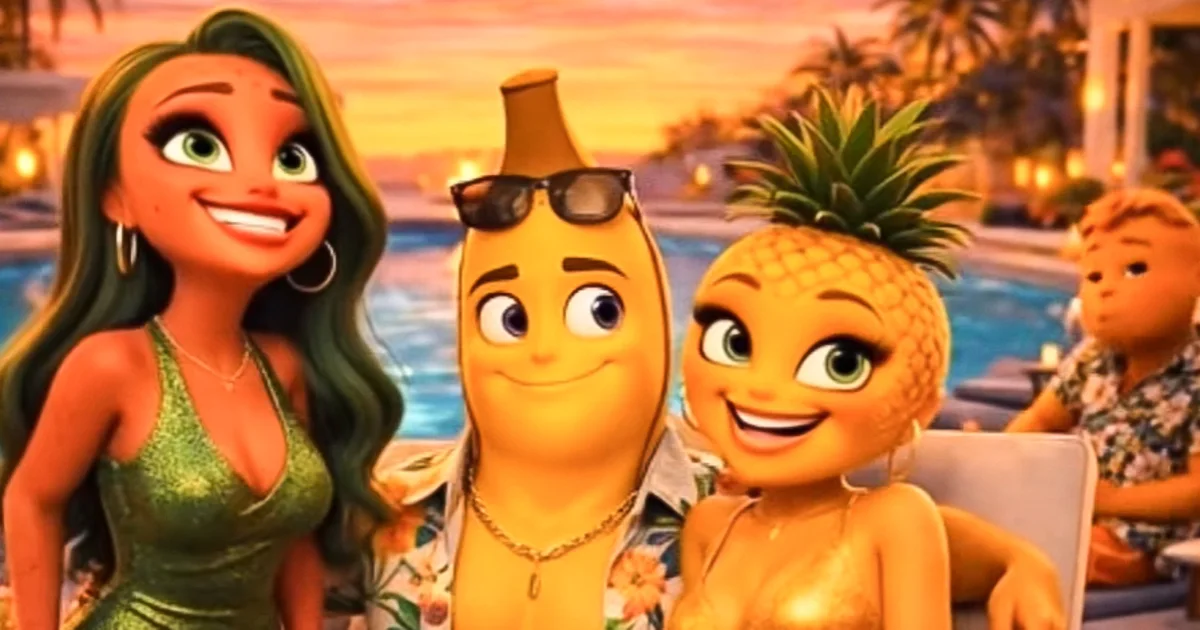
Captivating viewers in the latest reality romance series is no ordinary contestant—it’s Bananaat, an artificial intelligence personality brought to life as a talking banana. This whimsical character is at the center of the TikTok phenomenon known as “Fruit Love Island,” inspired by the popular Peacock series “Love Island.”
A Rapid Ascent on Social Media
These anthropomorphic fruits have taken TikTok by storm, garnering over 3.3 million followers on the AI.Cinema021 account within just ten days. The series offers bite-sized scripted episodes formatted as microdramas, appealing to a mobile-centric audience. Their popularity can be attributed to the creators’ utilization of “AI slop,” a term defined by Merriam-Webster as low-quality digital content produced in large quantities by artificial intelligence.
The Viral Nature of AI Fruit Content
Since debuting in February, the AI fruit videos have gained significant traction on social media, as highlighted by the database Know Your Meme. The TikTok account trombonechef kicked off a storyline involving characters Ichigo and Nasu entangled in a romantic scandal with their boss, prompting a wave of similar content featuring various fruits embroiled in outrageous scenarios.
Striking Popularity Amid Criticism
In addition to the antics of Bananaat, millions are also intrigued by PG AI’s fruit and vegetable videos, designed to share nutrition tips and cooking hacks. Some TikTok users have even attempted to recreate the humor of AI Fruit with human participants, as exemplified by former “Love Island USA” contestants Kaylar Martin and Jana Craig, who released reaction videos to the faux-reality series.
Concerns About AI-Generated Content
Not everyone is enamored with this trend; critics argue that the absence of genuine human creativity leads to disjointed narratives and lackluster production quality. Pop star Zara Larsson faced backlash after posting a TikTok video mentioning her attraction to AI fruit content, with fans accusing her of endorsing generative AI. Although she later defended her interest, the video was subsequently deleted from her social media accounts.
Voices from the Community
Former Love Island contestant Amaya Espinal expressed her skepticism during a TikTok Live session, remarking that the surreal trend could lead to viewers encountering duplicates of themselves. On platforms like Reddit, users have voiced their confusion and disappointment regarding the appeal of these AI-generated videos, questioning whether such content qualifies as entertaining or simply reflects a cultural regression.
Expert Opinions on AI’s Role in Entertainment
Experts remain cautious about the long-term implications of this trend. Michael Grabowski, a professor of communication, characterized the AI Fruit phenomenon as a form of fan fiction, noting that the simplistic archetypes present in shows like Love Island provide fertile ground for large-scale AI replication. He believes there will always be a need for human storytellers to deliver nuanced narratives.
Future Prospects of “Fruit Love Island”
Jessica Maddox, a media studies professor, acknowledges the potential for Hollywood to adapt such AI content for broader audiences. Given the engagement levels of the fruit videos, she suggests that the normalization of generative AI, for better or worse, is already underway. Meanwhile, AI.Cinema021 continues to release new installments, with the latest episode titled “Boys Casa Amor Part 1,” featuring additional fruit characters, further solidifying the series’ presence. Although TikTok users reported that some videos will soon be removed, the entire series will also be accessible on YouTube.
