


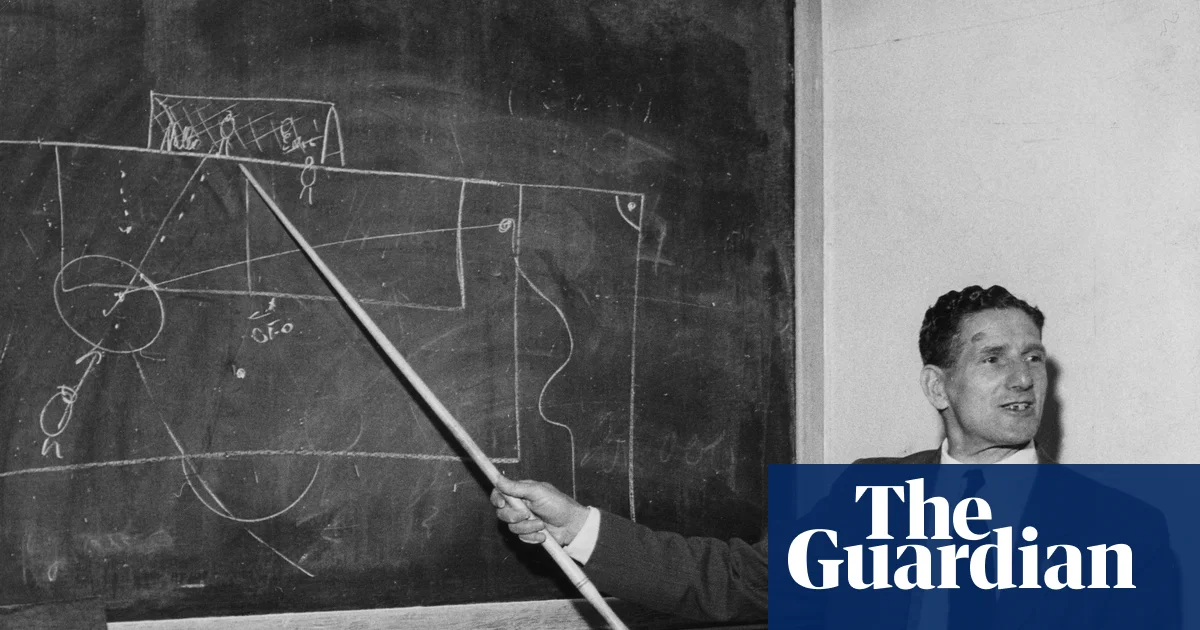
The Journey of George Rayner: A Forgotten Football Visionary
An ambitious young English coach, full of innovative ideas, found himself frustrated after numerous unsuccessful attempts to secure a managerial position in his home country. Despite applying multiple times, he seldom received responses, largely due to his reputation as a lower-league player. However, a glimmer of hope emerged as new opportunities materialized in Sweden. This relatively obscure soccer market would provide the much-needed foothold for George Rayner as he embarked on his career as a football manager.
Parallels with Graham Potter’s Rise
Rayner’s breakthrough in 1946 shares notable similarities with the career path of contemporary manager Graham Potter. While it may be unlikely that Potter will clinch a gold medal at the Olympics or lead Sweden to the World Cup finals as Rayner did, success in their respective journeys was not an initial goal. During Rayner’s time, the landscape of Swedish football differed vastly, steeped in a staunch amateur philosophy that permeated the national team as well.
A Unique Coaching Structure
At 39, Rayner would need to navigate the processes of the Swedish Football Association’s selection committee. While he retained some influence over team selection, the ultimate decision lay with Putte Koch, a former Swedish winger and bronze medalist from the 1924 Olympics, who also played ice hockey. This arrangement was common in that era; England manager Walter Winterbottom operated under similar constraints until Alf Ramsey’s tenure began in 1963.
Rayner’s Innovative Approach
Despite the limitations, Rayner exerted significant influence during his tenure. His previous experience primarily as a physical training instructor in Iraq and his role in the Reserves at Aldershot did not hinder his ability to innovate. His capabilities caught the attention of FA Secretary Stanley Rous, who endorsed Rayner for the Swedish national team.
Success Against All Odds
Partnering with Putte Koch, Rayner put his self-taught coaching principles into practice. He galvanised a competitive Swedish squad that managed to defeat England 4-2 in a friendly match at Wembley in November 1947. The following year, he returned to his homeland, leading the Swedish team to Olympic gold in 1948, a testament to the nation’s burgeoning football prowess.
Challenges and Achievements on the World Stage
Rayner’s success came with its own challenges. The strict amateurism in Sweden meant that star players opting for professional careers abroad faced exclusion from the national team. Nevertheless, following qualification for the 1950 World Cup in Brazil, Rayner guided a makeshift squad through a tough group stage that included Italy and Paraguay, ultimately reaching a final group stage despite a heavy defeat to the hosts and narrow losses to Uruguay and Spain, finishing in third place overall.
A Legacy of Learning and Innovation
In 1956, Rayner’s squad secured a third-place finish at the Olympics, narrowly losing to a formidable Hungarian team led by Ferenc Puskas. His keen ability to analyze opponents and adapt strategies was evident when he managed to draw 2-2 against the Magyars the following year, just days before Hungary’s famous 6-3 victory over England. Despite his contributions, Rayner’s success went largely unrecognized at home, leading to a series of brief managerial stints and his eventual retirement.
A Forgotten Yet Influential Figure
Rayner remains a pivotal figure in football history, achieving a level of international success paralleled only by Alf Ramsey. His efforts brought Sweden to the World Cup final in 1958, yet he returned home to minimal interest and coaching opportunities. Although revered in Sweden, with royal recognition and induction into the Swedish Football Hall of Fame, the impact of his career was largely overlooked outside the country. In an era resistant to progressive coaching methods, Rayner found himself a forgotten man, despite his substantial contributions to the sport.
Chris Evans is the author of How to Win the World Cup.
