


Nigeria’s Telecommunications Transformation
In the year 2000, Nigeria’s population stood at 125 million, yet the country had only 700,000 landline telephone lines, with merely 500,000 operational. This stark reality positioned Nigeria as a communications desert, characterized by a communications density of just 0.4 lines per 100 inhabitants. For comparison, the United States boasted a density of 68.4 lines per 100 people.
Mobile Connections on the Rise
Fast forward 25 years, Nigeria now ranks as the world’s sixth most populous nation and serves as a notable example of how emerging economies can leap directly to mobile technology. By 2025, estimates suggest that the country will maintain around 200 million mobile connections, corresponding to a population of 237 million.
Insights from MTN’s CEO
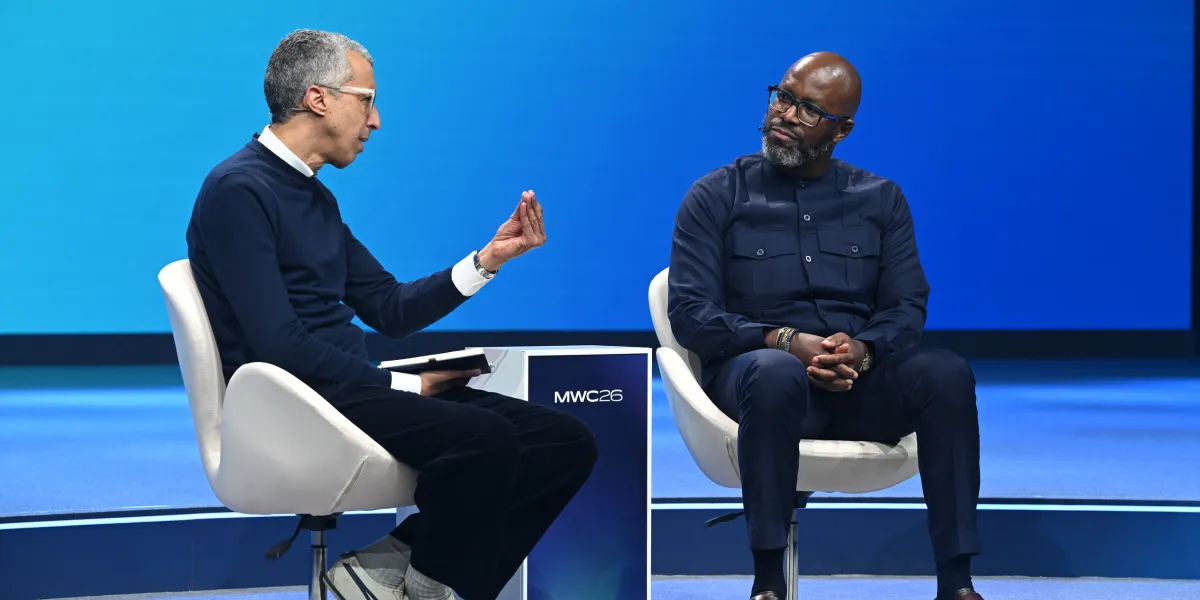
“There has been a massive wireless revolution,” stated Ralph Mupita, CEO of MTN, Africa’s leading mobile provider, during the Mobile World Congress in Barcelona. He highlighted the shift towards mobile payment systems, noting that banks and other financial services are rapidly following this trend. Mupita emphasized the importance of technology as a tool for advancement, pointing to Africa’s median age of 19 by 2040 as a critical driver for unlocking the continent’s full potential.
Future Directions in Telecommunications
As analysts ponder the future, many find answers in the evolving landscape around them. MTN has diversified its offerings significantly by venturing into digital services like gaming and music, enhancing infrastructure with fiber and data centers, and developing mobile money products, often in collaboration with partners such as Microsoft, Mastercard, and the African Development Bank. This evolution reflects a shift from traditional telecommunications towards an all-encompassing service model.
Bridging the Digital Divide
However, Mupita cautioned against getting ahead of expectations. He noted that 40% of MTN’s 300 million customers remain reliant on voice services and have yet to experience the internet. The discussions surrounding 6G technology may be premature as carriers continue to focus on strengthening their 4G and 5G capabilities. Mupita raised an important question regarding the Global South’s inclusion in this technological revolution, arguing that its success hinges on affordable products, global partnerships, and adherence to shared standards.
Youth and Energy as Catalysts for Growth
A youthful demographic combined with the absence of outdated mindsets presents emerging economies with a unique advantage. For instance, when Alphabet CEO Sundar Pichai attended the India AI Impact Summit in February, he witnessed a palpable excitement in a crowd of over 70,000, comparable to that reserved for Bollywood celebrities. Such enthusiasm translates into economic momentum.
India’s Rapid 5G Rollout
Indian Communications Minister Jyotiraditya Scindia proclaimed at MWC that while India initially followed global trends in 4G, it has kept pace with the world in the 5G rollout. The country achieved one of the swiftest 5G deployments globally, supported by an investment nearing $4 billion. Today, approximately 99.9% of districts are covered, while mobile data costs have plummeted by 97%, from $3 per gigabyte a decade ago to just 9 cents.
The Role of Intelligence in Economic Development
Matthew Oommen, CEO of Jio Platforms, described the current era as the “intelligence economy.” The focus has shifted from industrial dominance in the 20th century to technology in the present century. He stressed a need for a comprehensive reset, advocating for the incorporation of intelligence across sectors including energy, transport, finance, and security. Oommen underscored the foundational role of communication infrastructure in developing large-scale intelligence, emphasizing the collective responsibility to manage vital resources sustainably and effectively.
Technological advancements, including artificial intelligence, are set to influence various sectors such as water management, sustainable energy, and food production. While some experts herald a new era of abundance, others express skepticism about AI’s potential, reminding us of existing failures and the pressing reality of the digital divide. These technological revolutions possess the capacity to drive economic transformation, particularly in nations and regions that have historically been marginalized.
