


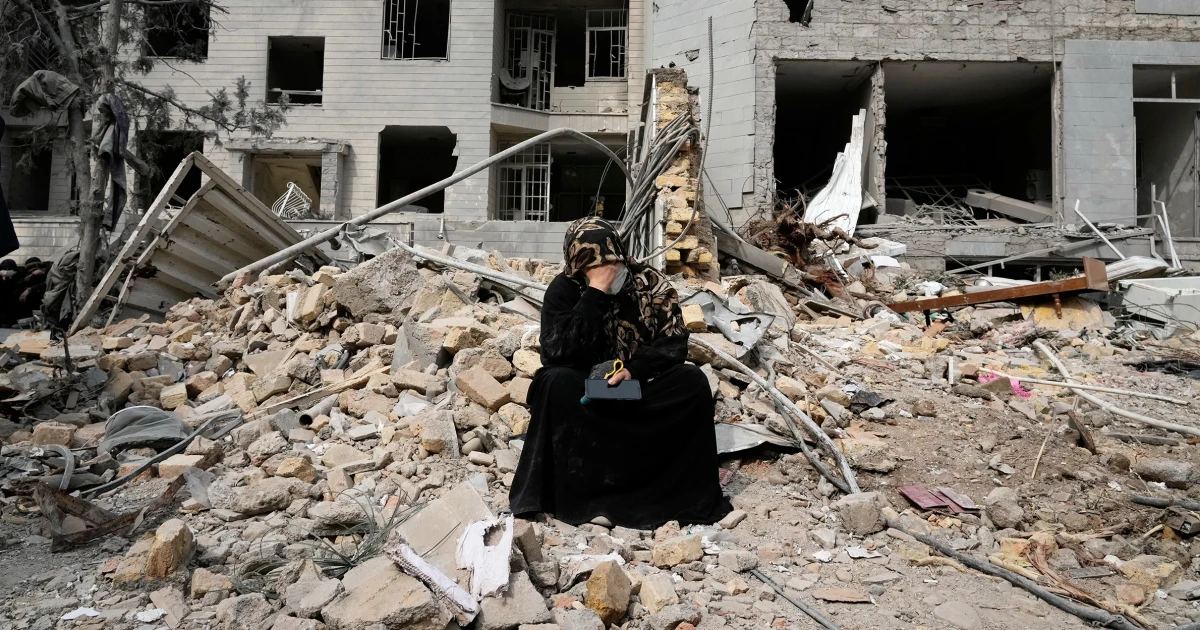
Since the war began, U.S. and Israeli forces have targeted multiple locations in the country, but the hardest-hit city was Tehran, a bustling, densely populated metropolis of 10 million people. As of Thursday, Israeli and American airstrikes had killed more than 1,200 people, according to the Iranian Red Crescent.
In addition to heavy damage to Tehran’s historic and cultural sites, including the ornate Golestan Palace, residents say the targeting of oil facilities has added a surreal element to life in the capital, with thick smoke in the air and black rain leaving a slimy residue on cars. Before the war, it was common to spend two to three hours in traffic jams just crossing the street, so many people avoided going to the streets.
Hoda lives in a house in central Tehran with her 45-year-old brother Hadi and their elderly parents. In recent days, toxic fires from the bombing have left a foul odor and oil slick on the windows, she said.
She is now worried about the long-term economic effects of the war. She said her business, importing carpet weaving machines, has taken a huge hit over the past year, making it difficult to even make ends meet. Banks have limited opening hours and ATMs have a daily withdrawal limit of 500,000 tomans, or approximately $3. Many people now use debit cards whenever possible. Residents say prices for basic goods have increased by about 10% since the war began.
Hadi, who asked that his last name be withheld due to safety concerns, also saw his tourism company go bankrupt after last summer’s war, protests and persistent internet shutdowns last year. His 13-year-old daughter and ex-wife have moved to northern Iran’s Caspian Sea coast, while many Tehran residents have fled to their parents’ homes or short-term rentals in recent weeks. Hadi paid for her daughter to attend a private school herself, but said she is now questioning that choice after her daughter has missed more than 100 days this school year.
Hoda and her brother spend most of their days watching satellite news channels and checking news on the Internet via a VPN, which they pay 3.8 million tomans a month, or about $23.
Hoda said he watched satellite TV channels as members of the Iranian diaspora talked about former Crown Prince Reza Pahlavi’s chances of leading the country, but he said it was out of touch with the reality on the ground.
“They don’t understand what it’s like to have jets come over your house and think you’re dead every day,” she says.
Not far away, Kianoush, 46, said he was fearful and struggling to cope with the profound changes that could be coming to Iran, which has lived under a strict theocracy for years. Several sports complexes in central Tehran and other areas near him were damaged.
“I hear explosions constantly,” he said. “How long will this last?”
Kianoush, a documentary filmmaker, moved in with his parents after the war began to keep them safe. Despite some power outages, there is still no sign of the large-scale power outages or water shortages that plagued Tehran last year, he said. For him, daily life is a strange rhythm of boredom, and he said that lately he has been watching the movie “Interstellar” to kill time. Interrupted by the sound of an explosion.
But Kianoush often finds himself thinking about an entire generation, the millions of Iranians who were never given the chance to live a normal life. He said that as much as he is concerned about the bomb, he is also concerned that both sides will declare victory and walk away, leaving the country in a state of uncertainty.
