


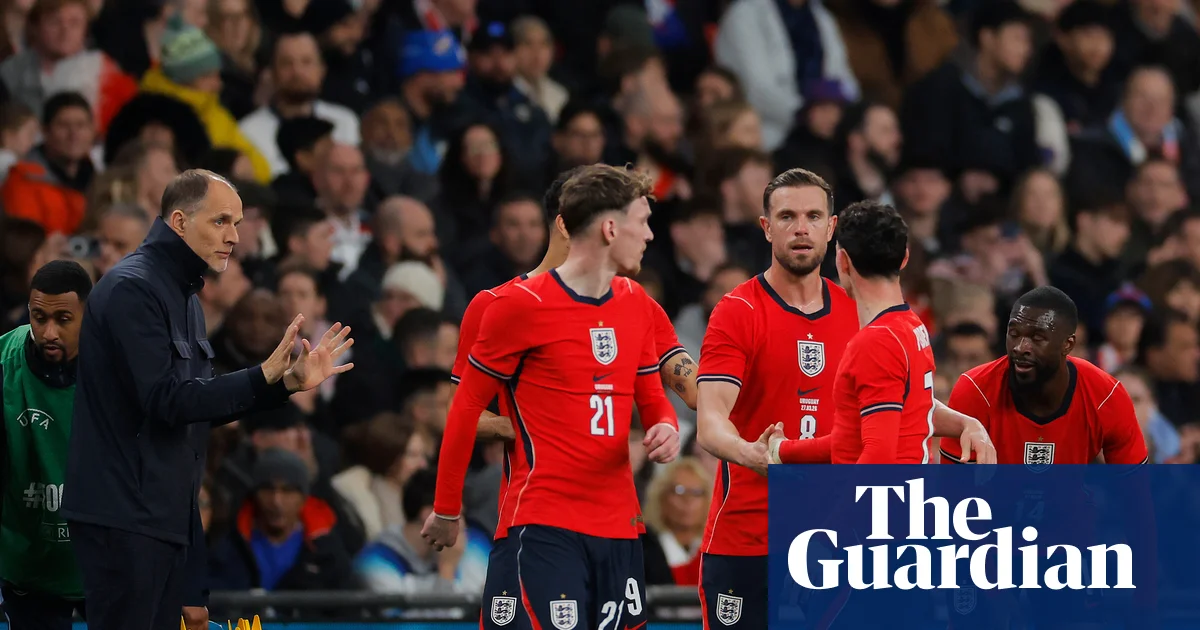
Tuchel’s Lineup Choices Raise Eyebrows
As the match approached, manager Thomas Tuchel indicated that player selection would depend heavily on training performances. Observing the events unfold at Wembley Stadium, one could only wonder what transpired during training that led to the exclusion of certain players from the England squad. Did they arrive inappropriately dressed? Commit comical blunders? Such speculations seemed almost necessary given the lackluster performance on display.
A Dismal 80 Minutes of Football
For the majority of the match, it felt as though a void had enveloped the field. What should have been an exciting contest devolved into a showcase of inactivity, devoid of any real action. The traditional Wembley atmosphere, however, provided a stark contrast, highlighting the peculiar silence that can engulf tens of thousands of spectators.
England Breaks the Deadlock, But Not Without Whispers of Discontent
Eventually, a pivotal moment arrived when England managed to score the first goal—a mere inch-perfect tap. Celebrations quickly turned to boos for the player involved, hinting at an underlying discontent within the home crowd. Shortly afterward, Ben White’s soft foul gifted Uruguay an equalizer, leaving spectators buzzing with mixed emotions about the referee’s decision.
A Historical Perspective on Match Performance
While it may seem overly harsh to label this encounter as potentially the worst football match in history, the circumstances bear consideration. With such talent on the field and a packed venue, expectations were high. Tuchel had spent months crafting a strategy for this night, yet the result felt more aligned with disarray than execution. The match lacked rhythm and coherence, a stark contrast to what one would expect from a world-class squad.
The Impact of Squad Selection and Team Dynamics
The 1-1 draw encapsulated a game where one could almost forget the action itself. Among the starting players, only Harry Maguire and Marcus Rashford appeared to be genuine World Cup contenders. The rest seemed mired in competition rather than collaboration, raising questions about the overall effectiveness of the selected players. Critics noted that 35 call-ups for this match might have projected a sense of planning, but in reality, it created a fragmented atmosphere devoid of team spirit.
Team Composition Raises Questions
The presence of two Spurs players among those who started, alongside less established teammates, did not foster the best conditions for performance. The midfield pairing of Henderson and Garner failed to capitalize on their potential, while those in the stands, seemingly disengaged, reflected the lack of enthusiasm permeating the match.
Reflections on International Obligations and Future Prospects
Contrasting England’s approach with that of other national teams, such as Spain and France, who fielded their star players ahead of the World Cup, raises the question: What has England truly learned from this outing? The pre-match ambiance felt more like a general public event than a competitive football match, further underlining the disconnect that permeated through the evening.
Despite occasional flashes of brilliance from players like Phil Foden, who struggled to make an impact, England’s overall gameplay resembled a collection of random efforts rather than a cohesive unit. Adam Wharton’s halftime introduction improved team dynamics, indicating that his forward-passing capabilities could serve the squad well. Yet, the overarching takeaway is clear—Tuchel’s challenges become even more apparent as England approaches the World Cup amid swirling tensions between clubs and national interests.
