


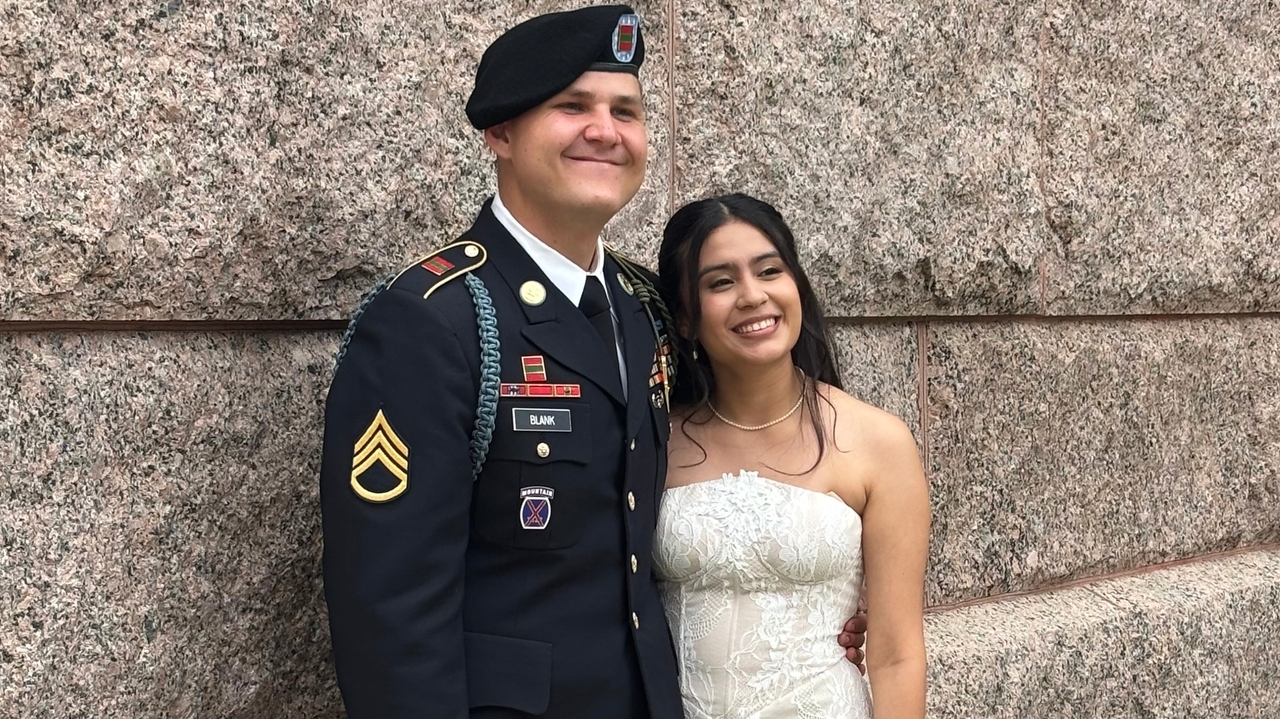
U.S. Army Staff Sergeant Seeks to Halt Deportation of His Wife
NEW ORLEANS — A U.S. Army staff sergeant is making urgent efforts to prevent the deportation of his wife, who was detained at a military base in Louisiana. The couple had intended to start their life together just days after their recent wedding.
Backlash from Military Family Advocates
The detention of Annie Ramos, the wife of Honduran-born soldier Staff Sergeant Matthew Blank, has sparked significant criticism from military family advocates. They argue that wartime detentions can undermine morale and caution that the deportation of military spouses could adversely affect recruitment efforts for the armed forces.
Wife’s Detention Amid Immigration Policy Changes
On Thursday, Blank took Ramos, 22, to Fort Polk, Louisiana, to collect her military benefits and initiate her green card application process. The couple, married in March, faced unexpected challenges when federal immigration officials detained her as part of the Trump administration’s controversial mass deportation strategy, which has been criticized for sidelining leniencies previously extended to military families by the Department of Homeland Security (DHS).
Legal Status Complications
Ramos entered the United States in 2005, when she was under two years old. Following a court-ordered final deportation due to her family’s failure to attend a scheduled immigration hearing, her status became precarious. DHS indicated in a recent statement that she does not have legal status to remain in the country, emphasizing the administration’s commitment to enforcement of immigration laws.
Impact of DACA and Policy Revisions
In 2020, Ramos applied for Deferred Action for Childhood Arrivals (DACA), but her application remains unresolved amid ongoing legal disputes over the program’s future. The situation has been further complicated by the DHS’s repeal of a 2022 policy that previously allowed the military service of a spouse to serve as a crucial factor in determining immigration enforcement actions. Under the current policy, military service alone does not exempt individuals from the consequences of immigration law violations.
Concerns Over Military Families
Margaret Stock, an expert in military immigration law, noted that Ramos’s case could have been resolved more easily in earlier years, given the previous leniencies offered to military families. She criticized the current administration for focusing on detaining military families during attempts to secure legal status, noting that such actions are detrimental to morale and soldier readiness.
Congressional Response and Advocacy Efforts
In September, more than 60 Congressional members addressed letters to DHS and the Pentagon, raising alarms about the impact of detaining military and veteran families on national security. They argued that these practices undermine commitments made to service members who are essential to safeguarding the nation.
Advocacy Groups Address Growing Concerns
Lydia Owiti-Otieno, head of the Foreign-Born Military Spouses Network, highlighted a troubling rise in incidents affecting military families due to stricter immigration rules. She believes that deportations jeopardize both family stability and national security. Blank’s mother, Jen Rickling, expressed strong support for Ramos, describing her as a dedicated partner who shares deep love for her son. Blank remains resolute in his commitment to secure his wife’s return. “I want my wife to come home,” he stated emphatically, vowing to fight until she is reunited with him.
