


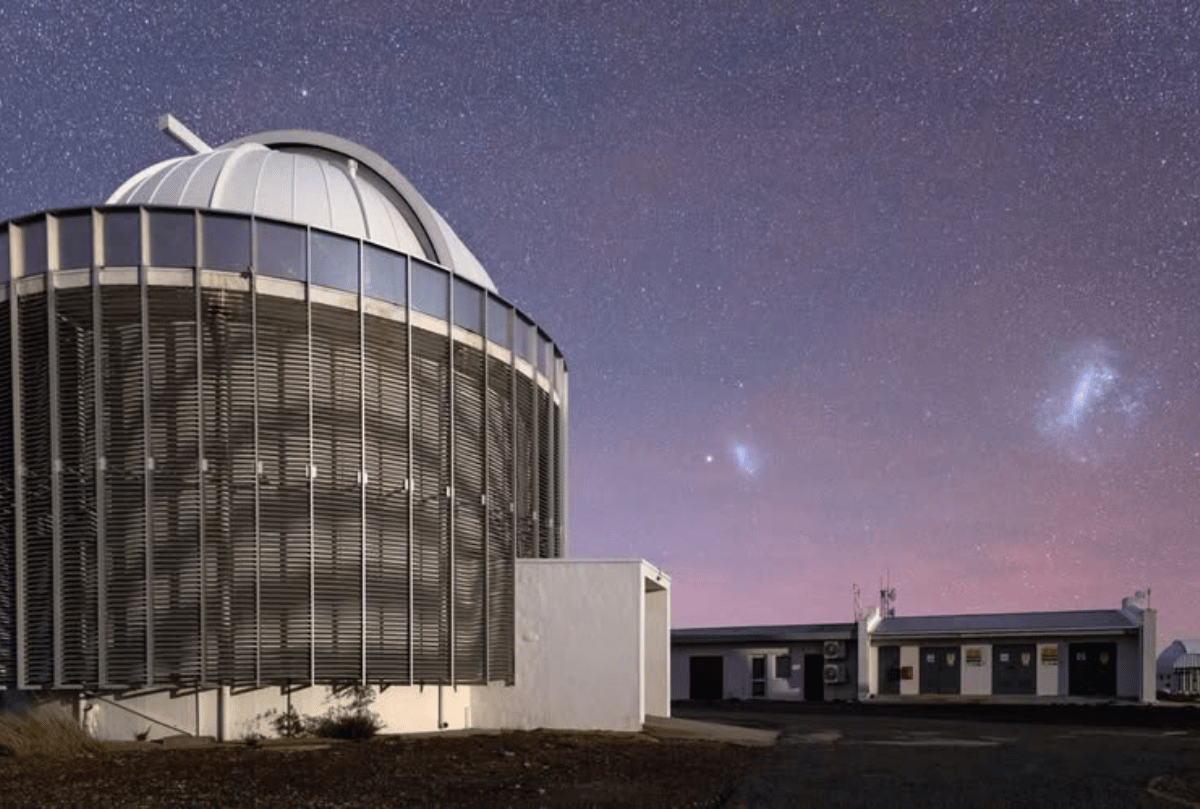
The initiative, known as the Intelligent Observatory Program, is being implemented through a collaboration between the Science and Technology Facilities Council (STFC) Hartley Center and the South African Astronomical Observatory (NRF-SAAO), a leading facility for optical and infrared astronomy.
The UK-South Africa partnership is harnessing artificial intelligence (AI) to transform the way observatories operate, enabling telescopes to become smarter and more automated. The initiative, known as the Intelligent Observatory Program, is being implemented through a collaboration between the Science and Technology Facilities Council (STFC), the Hartley Center and the South African Astronomical Observatory (NRF-SAAO), a leading facility for optical and infrared astronomy.
The program will integrate AI and advanced digital technologies into observatory operations, allowing telescopes to monitor their systems, instantly process observational data, and detect sudden astronomical events such as star explosions in real time. This effort aims to improve efficiency and data quality while allowing astronomers to focus on scientific discovery rather than manual system monitoring.
Operating an observatory has traditionally required small teams to manually check equipment and analyze observation data, while dealing with unexpected disruptions such as changing weather or equipment failure. These manual processes are becoming increasingly difficult as observatories gain access to a broader global research community. The Intelligent Observatory Program aims to automate many of these operations, ensuring a smoother workflow while giving visiting astronomers faster access to research documents, manuals, and maintenance records.
Funded through the UK Research and Innovation International Science Partnership Fund, the project brings together experts in AI, software engineering and telescope operations to develop a range of new tools. These include connected systems that can monitor equipment and detect potential failures before downtime occurs, as well as automatic data processing tools that convert raw observations into high-quality datasets that are corrected for atmospheric interferences and equipment deficiencies. The program also includes AI-powered search tools that allow astronomers to quickly find logs, research papers, and technical information without having to manually sort through large amounts of documents.
The Hartley Center is located at STFC’s Daresbury Research Institute in the Liverpool City Region and is the UK’s leading supercomputing center working with industry and the public sector. The collaboration with NRF-SAAO was initiated by AI specialists Dr. Adriano Agnello and Dr. Rob Firth. Both are former astronomers who are helping develop software that can monitor telescope performance, detect problems early, and transform observational data into usable insights with minimal human intervention.
As part of the system, the AI model analyzes nighttime observations, flags potential system glitches or weather disruptions, and adjusts atmospheric conditions to ensure the telescope captures the best data possible. The project also includes the development of an AI-powered text search platform that uses large-scale language models to interpret technical documents and provide astronomers with fast and reliable answers during busy observation sessions.
In the next stage of development, the team plans to extend the system by incorporating documentation from the South African Large Telescope (SALT) and applying more advanced AI techniques to further enhance the platform’s capabilities. Researchers say the program is a major step forward in integrating AI directly into observatory operations, making astronomical facilities more intelligent and accessible.
Beyond astronomy, technologies developed through the Intelligent Observatory Program could also benefit other sectors such as manufacturing, energy, and transportation. The observatory provides an ideal environment to test innovations such as smart sensors, predictive maintenance systems, and automated data platforms, demonstrating how AI can improve complex scientific infrastructure while accelerating discovery.
The partnership is expected to expand opportunities for students and researchers across Africa to gain hands-on experience in AI and data science, strengthening South Africa’s position as a world leader in innovative astronomy, while also contributing to the development of the next generation of science and technology talent.
