


Weingarten Critiques Melania Trump’s Vision for Humanoid Robot Teachers
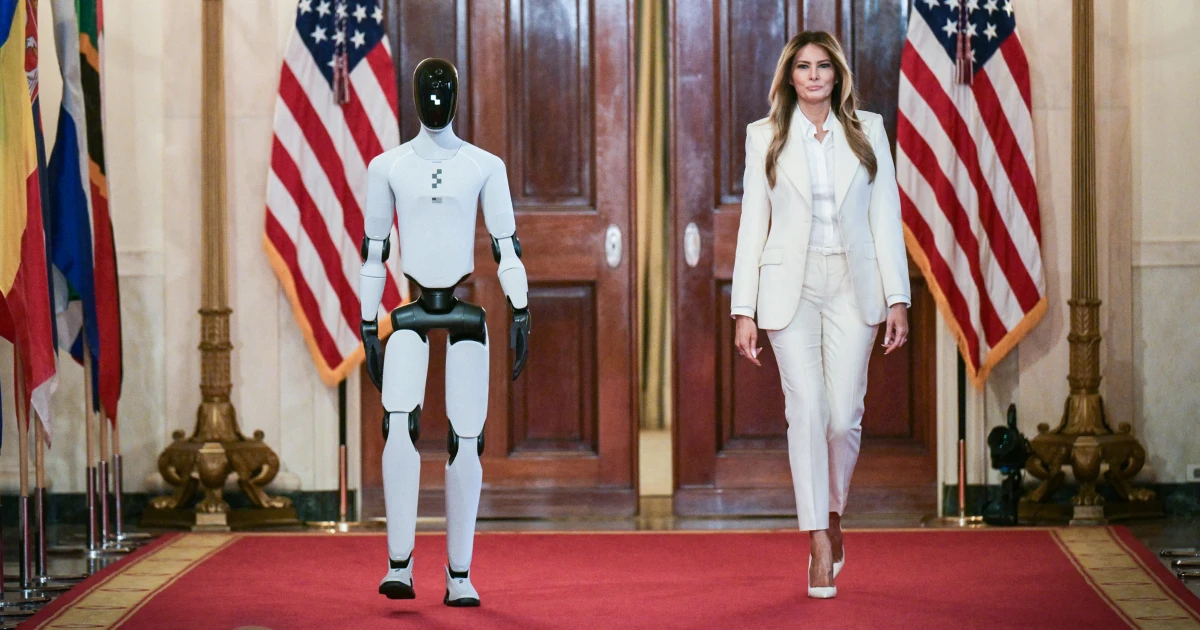
In Washington, D.C., Randi Weingarten, president of one of the nation’s most influential teachers’ unions, publicly condemned First Lady Melania Trump’s notion that humanoid robots could soon play a pivotal role in education. Her remarks came shortly after the First Lady highlighted the potential of robotic educators during the AI Education Summit.
Robots in the Classroom: A Controversial Proposal
At the summit, President Trump suggested that humanoid robot teachers could deliver tailored educational experiences that cater to individual student needs, thereby fostering critical thinking and independent reasoning skills. This assertion raised eyebrows among education advocates, particularly Weingarten, who voiced her concerns at the inaugural Workers First AI Summit.
Educational Concerns Amid AI Advancements
Addressing the AFL-CIO-sponsored conference, Weingarten characterized Trump’s comments as “every parent’s nightmare.” The event gathered labor representatives and community activists from various sectors to discuss AI’s unchecked expansion and its implications for American workers. She urged that the encroachment of AI into educational settings demands critical examination and proactive regulation.
Big Tech’s Influence on Education
Weingarten further asserted that the shift toward robotic teaching aligns with Big Tech’s ambitions to fundamentally reshape societal interactions, including in education. “What they envision is a society increasingly governed by robots,” she stated, emphasizing that education needs to remain a distinctly human endeavor.
The Need for Human Oversight in Education
Weingarten proclaimed that AI should serve as a supportive tool rather than a replacement for human educational figures. “The future is already here,” she noted. “We must ensure that AI remains an instrument in the hands of humans rather than the other way around.” This sentiment reflects a growing apprehension about technology’s role in decision-making processes within education.
A Collaborative Approach to AI in Education
The American Federation of Teachers is keenly focused on the implications of AI for teaching practices. Recently, the union collaborated with leading AI firms like OpenAI and Anthropic to establish the National Academy for AI Instruction. This initiative aims to equip educators with the necessary resources and training to effectively incorporate AI tools into their classrooms.
Understanding the Real Needs of Students
Weingarten highlighted a critical misunderstanding regarding the nature of education in America. “Twenty years ago, tech billionaires aimed to supplant teachers with technology, and now they aspire to achieve the same with AI,” she remarked. She stressed that education is not merely about data memorization but about fostering enriching human interactions that support genuine learning experiences.
The Risks of Relying on AI
For Weingarten, Trump’s remarks overlook the crucial role of human interaction in the educational process. She argued that a reliance on robotic instruction could lead to a depersonalized and mechanized learning experience. “Either this approach ignores children’s true needs or serves the interests of wealthy tech conglomerates. Both perspectives are detrimental and pose a severe threat to society,” she concluded.
