


U.S. Deploys Drones to Support Counter-Extremism Efforts in Nigeria
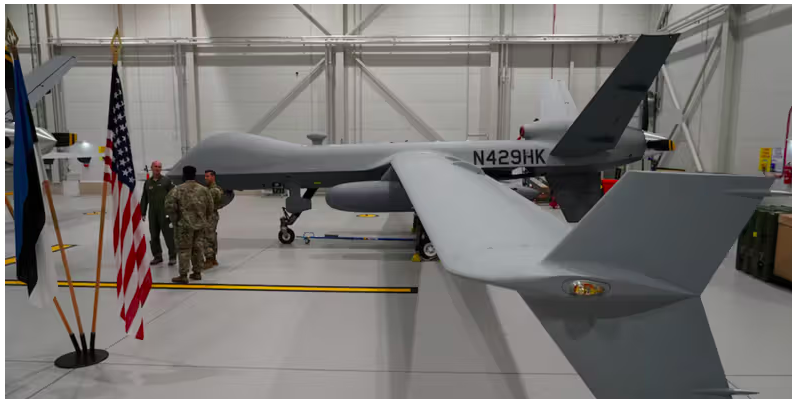
The United States has stationed multiple MQ-9 drones and approximately 200 troops in Nigeria to bolster intelligence and training for local forces combating Islamic extremist groups in the northern regions. According to U.S. and Nigerian officials speaking to Reuters, these assets will operate from an airfield situated in Bauchi State, although they are not integrated with frontline Nigerian military units.
Focus on Intelligence Gathering Amid Operational Challenges
The primary mission of the deployed drones is intelligence collection, rather than conducting airstrikes. Former Chief of Army Staff Lieutenant General Tukur Buratai remarked last Thursday that while the military has made strides in its capabilities, it still grapples with operational hurdles due to a lack of personnel and equipment to cover the expansive terrain of the northeast.
Calls for Additional Support to Address Vast Military Landscape
“The rebels do not appear to be overwhelming the military. We are managing, but we require more enablers, such as drones and additional platforms,” Buratai stated. His comments reflect the need for enhanced resources to navigate the vast territory the military patrols. Recent U.S. airstrikes targeting militants in the northwest underscore America’s commitment to addressing the Islamic State and al-Qaeda-linked insurgencies in West Africa.
Previous Military Operations in the Sahel Region
Previously, the U.S. had established a $100 million drone base in the neighboring Niger Republic, where around 1,000 troops monitored insurgent activities across the Sahel region. However, this base was closed in 2024 following a request from Niger’s military junta to withdraw as part of a broader rejection of Western military aid in the Sahel. The recent suicide bombing in a northeastern Nigerian garrison town serves as a stark reminder that the thirteen-year-old insurgency continues to pose a significant threat to urban areas.
Escalating Banditry and Its Potential to Evolve
As bandit attacks intensify in northwest Nigeria, particularly near the borders with Benin and Niger, there is a growing concern that the ongoing bandit crisis may evolve into a new arena for Islamist extremist activities. A U.S. defense official confirmed that the drone deployment was initiated in response to a request from Nigerian authorities for enhanced intelligence capabilities.
Cooperative Security Initiatives Between the U.S. and Nigeria
Describing the situation as a shared security threat, the official noted the importance of collaboration. Major General Samaira Uba, Director of Defense Intelligence at Nigeria’s Defense Headquarters, confirmed that U.S. forces are indeed operating from the airfield in Bauchi State. He highlighted that this American support builds upon the newly established U.S.-Nigerian intelligence cell, which provides actionable intelligence to ground commanders.
Challenges in Intelligence Operations and Persistent Threats
Uba reiterated that U.S. partners maintain a non-combat role, facilitating operations led by Nigerian forces. Although he did not comment on specific missions that led to U.S. intelligence operations against Nigerian militants, he emphasized the role of the U.S. military in aiding Nigeria to “identify, track, and respond to terrorist threats.” Furthermore, reports disclosed that Ghana-based aircraft were conducting surveillance flights for the U.S. military over Nigeria last year.
The Complexity of Nigerian Conflict Dynamics
The U.S., which has a longstanding military partnership with Nigeria involving training and weapon sales, initiated airstrikes in the northwest last Christmas to counter attacks on Christians in the region. However, both the Nigerian government and conflict experts have dismissed claims of a coordinated anti-Christian movement as an oversimplification of the crisis. Current investigations are ongoing to determine the perpetrators of the March 16 attack on the garrison town, with Uba noting that groups like Boko Haram and the Islamic State-aligned faction ISWAP continue to pose a considerable threat, adapting their tactics over time.
