


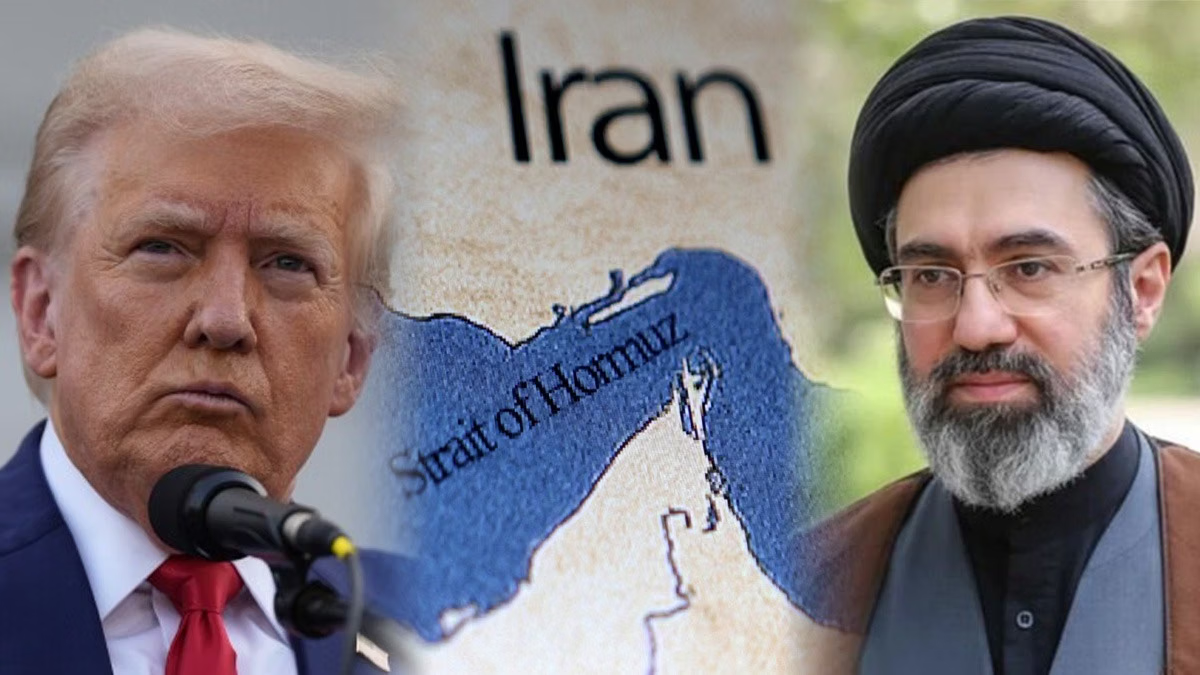
US and Iran Engage in High-Stakes Talks in Pakistan
The United States has initiated the process of clearing sea mines from the Strait of Hormuz, a significant move aimed at reopening a crucial global oil route. This operation coincides with intensifying ceasefire negotiations between the U.S. and Iran, taking place in Pakistan. The strategic strait, essential for international oil transport, has seen significant restrictions since hostilities erupted, raising global concerns about energy supply disruptions.
U.S. Central Command (CENTCOM) confirmed that the USS Frank E. Peterson Jr. and another missile destroyer have commenced mine-clearing operations. Despite a recently brokered ceasefire, maritime traffic through the corridor remains severely limited, with reports indicating that only around 30 ships have successfully navigated the area since the outbreak of conflict. CENTCOM Commander Adm. Brad Cooper stated that the mission seeks to restore channels of global commerce.
President Donald Trump acknowledged the significance of these developments, indicating that the mine clearance is being conducted as a favor to the international community. However, differing perspectives on the military implications of the operation persist. Alongside this maritime effort, diplomatic engagement between Washington and Tehran is unfolding, with both sides convening in Islamabad under a tenuous ceasefire negotiated by Pakistan.
This rare high-level dialogue marks the first direct talks between the two nations in decades, traditionally, they have relied on intermediaries for negotiations. Vice President J.D. Vance represents the U.S. delegation, while Iran is represented by a senior team led by Speaker of Parliament Mohammad Bagher Ghalibaf and Foreign Minister Abbas Araghchi. Discussions have progressed to an expert level, focusing on critical issues including maritime security, nuclear activities, sanctions, and broader regional stability.
Despite ongoing diplomatic efforts, tensions in the region remain palpable. Iranian officials confirmed the advancement of negotiations, which now include specialized committees addressing economic, military, legal, and nuclear matters. As talks continued, President Trump remarked on the significance of the negotiations occurring in Pakistan, emphasizing that the outcome would not impact his administration’s stance.
In related news, Israeli Prime Minister Benjamin Netanyahu underscored the ongoing military operations against Iran, casting doubt on the viability of the ceasefire. He asserted that the campaign is far from over, highlighting recent successes while suggesting that Iran remains weakened and is actively seeking a halt to hostilities.
Additionally, the Ministry of Transport in Qatar announced plans for full maritime navigation resumption in the Persian Gulf, starting in April 2026. This resumption will allow vessels to operate between 6 a.m. and 6 p.m. daily. While the announcement comes amid ongoing talks between the U.S. and Iran, Iran has yet to officially comment on its cooperation with Qatar regarding these maritime activities. French President Emmanuel Macron also urged Iran to seize the moment for lasting détente, emphasizing the need for a collective agreement that ensures regional security.
The crisis continues to affect not just the Gulf states but also Lebanon, where ongoing conflicts involving Israel and Hezbollah have resulted in significant casualties. Analysts suggest that the success of U.S.-Iran negotiations and the mine clearance operation will be pivotal in determining whether global shipping and energy markets can stabilize or if the region risks reverting to severe conflict.
