


Impact of Federal Immigration Operations on Life in Minneapolis and St. Paul
In St. Paul, Minnesota, Brittany Kubricky arrived at her daughter’s school parking lot, not just to pick her up but also to collect two classmates. Their mother had been in hiding, fearing encounters with federal immigration officials. A friend helped facilitate their ride, showcasing the extent of life changes in the area.
The Trump administration’s Operation Metro Surge, initiated in December, deployed 3,000 agents to Minnesota to focus on undocumented immigrants with criminal backgrounds. However, in the ensuing months, law enforcement has detained numerous individuals, including U.S. citizens, as they were pulled over in cars, taken from their homes, or apprehended at workplaces, regardless of their legal status. The operations have tragically resulted in the deaths of two Minneapolis residents, Renee Good and Alex Preti, who were observing the activities of Immigration and Customs Enforcement (ICE) agents.
This intensified federal presence has contributed to a climate of fear and disruption in the Twin Cities, as reported by the Economic Hardship Reporting Project and the Guardian. Protests have become commonplace, and local community groups have organized patrols to document interactions between residents and immigration officials. Many individuals have retreated into their homes, wary of being targeted based on their appearance. Normal routines have been significantly disrupted, leading to decreased social interactions, restricted errands, and a heightened reliance on community support.
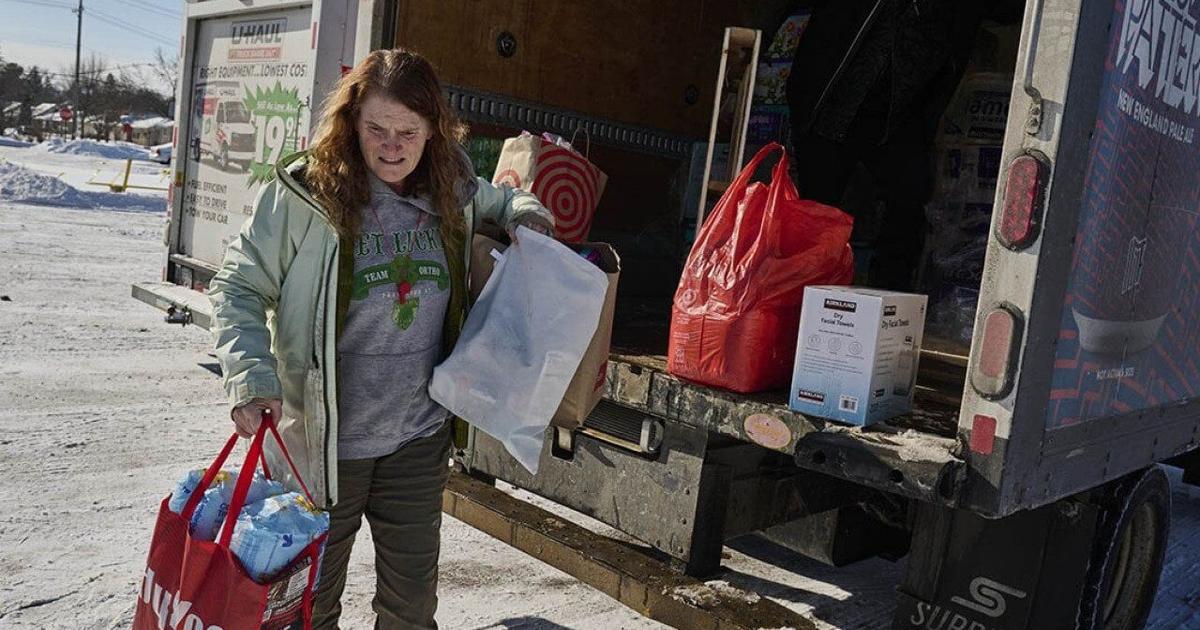
On a frigid January morning at Bethel Church in south Minneapolis, volunteers from Community Assistance Network MN were busy unloading a vehicle filled with supplies. U-Hauls and other vehicles were lined up, packed with donations. Volunteers, equipped with whistles, stood ready to alert neighbors about the presence of immigration officers nearby. Inside the church, towering stacks of boxes brimmed with diapers and other necessities revealed the community’s commitment to supporting one another during tumultuous times.
In late January, the Minnesota Community Aid Network reported serving approximately 575 families, nearly double the number served in November. Co-founder Tom Kachelmacher, juggling his full-time event planning career, has been devoting over 30 hours a week to volunteering, an increase from about 10 hours previously. His active involvement exemplifies the collective effort required to maintain stability amid uncertainty.
While many businesses grapple with closures or diminished operations, those that remain open, such as the Mexican restaurant Oro by Nixta, have adopted strict measures. Customers are allowed in one at a time, an adaptation prompted by security concerns. A notable example on Lake Street, home to numerous immigrant-owned establishments, is Taqueria Los Ocampo, which posted a sign indicating temporary closure due to safety issues.
The Lake Street Council has projected significant financial losses for the 1,000 immigrant-owned businesses in the area, estimating a collective loss of $46 million in December and January. This figure accounts for not just a downturn in sales but also lost wages for workers whose livelihoods have been distressed by the changing environment.
Panaderia San Miguel, a beloved neighborhood bakery known for its sweet treats, temporarily closed for three weeks in January to ensure employee safety. Upon reopening, operational changes included offering deliveries and coordinating rides for staff. Owner Vanessa Rubio indicated that the presence of a supportive community and ongoing demand for their products were critical in the bakery’s decision to resume business.
As community networks grew, individuals like Kubricky stepped up, raising over $40,000 to assist families with rental needs and other essentials. The initiative blends neighbor-to-neighbor support with social media outreach to coordinate aid effectively. For many, this mutual support system has become a critical lifeline during these challenging times.
As life in Minneapolis and St. Paul continues to evolve under the pressure of federal actions, the spirit of community resilience remains evident. Local residents have prioritized helping each other navigate an uncertain future, striving to restore routine in a landscape marked by fear and disruption.
