


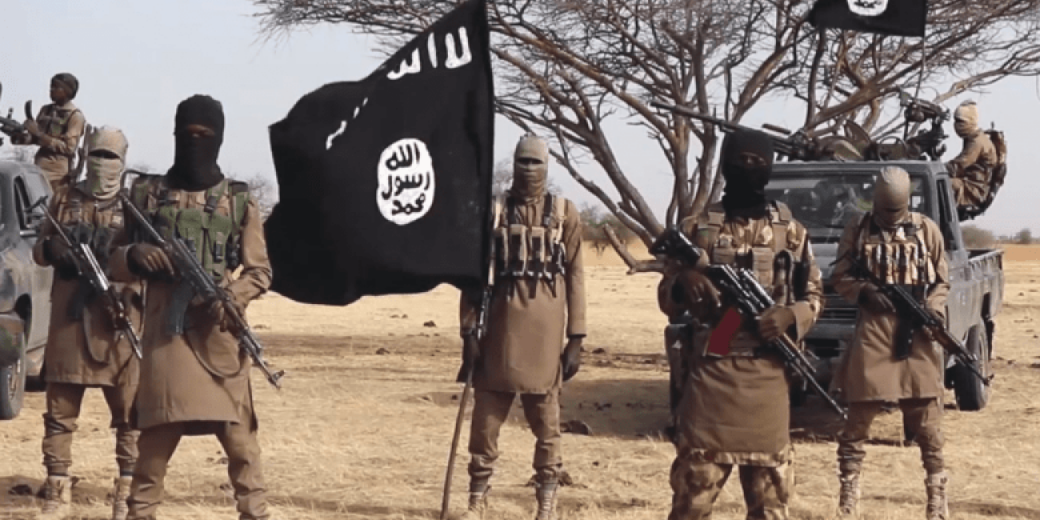
The massacre that struck the remote town of Wollo in Kiama Local Government Area of Kwara State on Tuesday was neither sudden nor indiscriminate.
According to The Punch’s findings, the killing was the climax of a carefully executed jihadist expansion led by Abubakar Saidu, better known as Sadiq.
Security sources and intelligence reports have directly linked the attack, which killed an estimated 176 people, to Sadiku, a veteran terror commander who has been active in multiple regions of northern Nigeria for more than a decade.
The rise of Sadiq within Boko Haram
For years, Sadiku operated quietly within Nigeria’s insurgent climate. That changed after the investigation uncovered a 12-year trajectory that began in 2014, when he emerged as a trusted lieutenant of Boko Haram’s late, notorious leader Abubakar Shekau.
Mr. Shekau personally sent Mr. Sadiku to Niger State to expand Boko Haram’s influence beyond its traditional northeastern stronghold. Sources told The Punch that Sadiq’s mission was part of a broader strategy to carve out new fronts as rebel camps in Borno, Yobe and Adamawa are weakened by sustained military pressure.
By the early 2020s, Sadiku had moved west, burying himself in a forest corridor that spans Niger and Kwara states. From there, he built operational cells, disrupted rural communities, displaced families, and steadily strengthened his control over rural settlements.
Security analysts now describe him as the “Shekau of the mid-northern”.
Alliance, faction collapse, integration
At one point, Sadiq teamed up with notorious bandit leader Dogo Zid, and used the partnership to gain access to weapons, intelligence, and supply routes. The alliance subsequently disintegrated over ideological differences, leading to violent clashes in which combatants on both sides died.
After the split, Sadiq retreated deep into the forest. In July 2025, intelligence reports led him to firmly infiltrate the Kainji Forest Reserve, where he established a new base of operations.
From that moment on, observers say, Sadiq renounced commercial banditry and adopted a harsh, ideologically driven campaign modeled after the early stages of Boko Haram.
Warning before killing
A few weeks before the Wollo massacre, Sadiq’s group made contact.
The village chief Salihu Umar told Punch that a letter dated January 8, written in Hausa and signed by JAS (Jamaatu Aris Sunnah Ridaadati Wal Jihad), was delivered to the village chief. The letter requested a “private” meeting with community leaders for preaching purposes and promised that no harm would come to residents.
Mr Umar said he had copied the letter and forwarded it to the Emirate of Kiama and the Department of State Services (DSS) office in Kiama.
No precautions were taken.
Development of attack
The gunmen, armed with AK-47 rifles, pump-action guns and explosives, arrived in Wollo around 5pm on motorcycles, according to eyewitness accounts cited by The Punch. They blocked all routes of retreat and attacked major strongholds simultaneously.
By 6 p.m., the attackers had stormed the emir’s palace, dragged out his family, and set the building on fire. Sporadic gunshots echoed throughout the town, causing residents to flee into nearby bushes and farmland.
Survivors said the operation then entered the implementation phase. The militants rounded up the men, tied their hands behind their backs and killed them at close range. Motorists traveling on a federal highway that passes through the community were also intercepted and shot at.
Residents reported seeing a helicopter briefly hovering over the area without intervention. Military aircraft then temporarily forced the attackers to retreat. Once the perpetrators left, they regrouped and resumed their killing spree, using the call to prayer as a ploy to lure people from their hiding places.
The violence continued until around 2 a.m., after which the attackers retreated into the forest with the abducted women and children.
survivors speak
Survivor Zulkarnain Shero Musa told The Punch that the attackers moved from house to house in a highly coordinated operation that lasted hours.
“They came in hundreds, most of them on motorbikes and heavily armed,” he said. “When they arrived, there were no security guards.”
Another survivor, Aliyu Abdul Hamid Jogod, said the attackers kidnapped his friend’s mother and killed his brother, the director of his employer, Woro Primary Health Care Centre.
The women also told reporters that some of the attackers were in full military uniform. One was reportedly a woman carrying ammunition, but this was a disguise to delay charges.
Why help arrived too late
According to the village chief, soldiers arrived around 3 a.m., about 10 hours after the distress call began. By then, the attackers had fled.
A senior intelligence official told The Punch that rescue efforts were delayed because the gunmen planted explosives on the access road after a military vehicle hit an improvised device.
Security officials said Wollo’s remoteness, proximity to Niger state and Benin Republic, and forested terrain gave Sadiku an advantage.
A massacre that took place over many years
Security researchers told The Punch that Wollo’s killing followed a pattern seen in previous attacks linked to Sadiku in parts of Niger state, confirming a deliberate move south from the Kainji axis.
For them, this massacre was not an isolated atrocity but the result of years of unchecked escalation by commanders who moved quietly, warned their targets, and attacked when they believed the nation was unstoppable.
In Wollo, Sadiq not only attacked the village, but also announced that a new jihadist front had arrived in Nigeria’s north-central region.


