


Women Leading Change in Nigeria’s Solar Sector
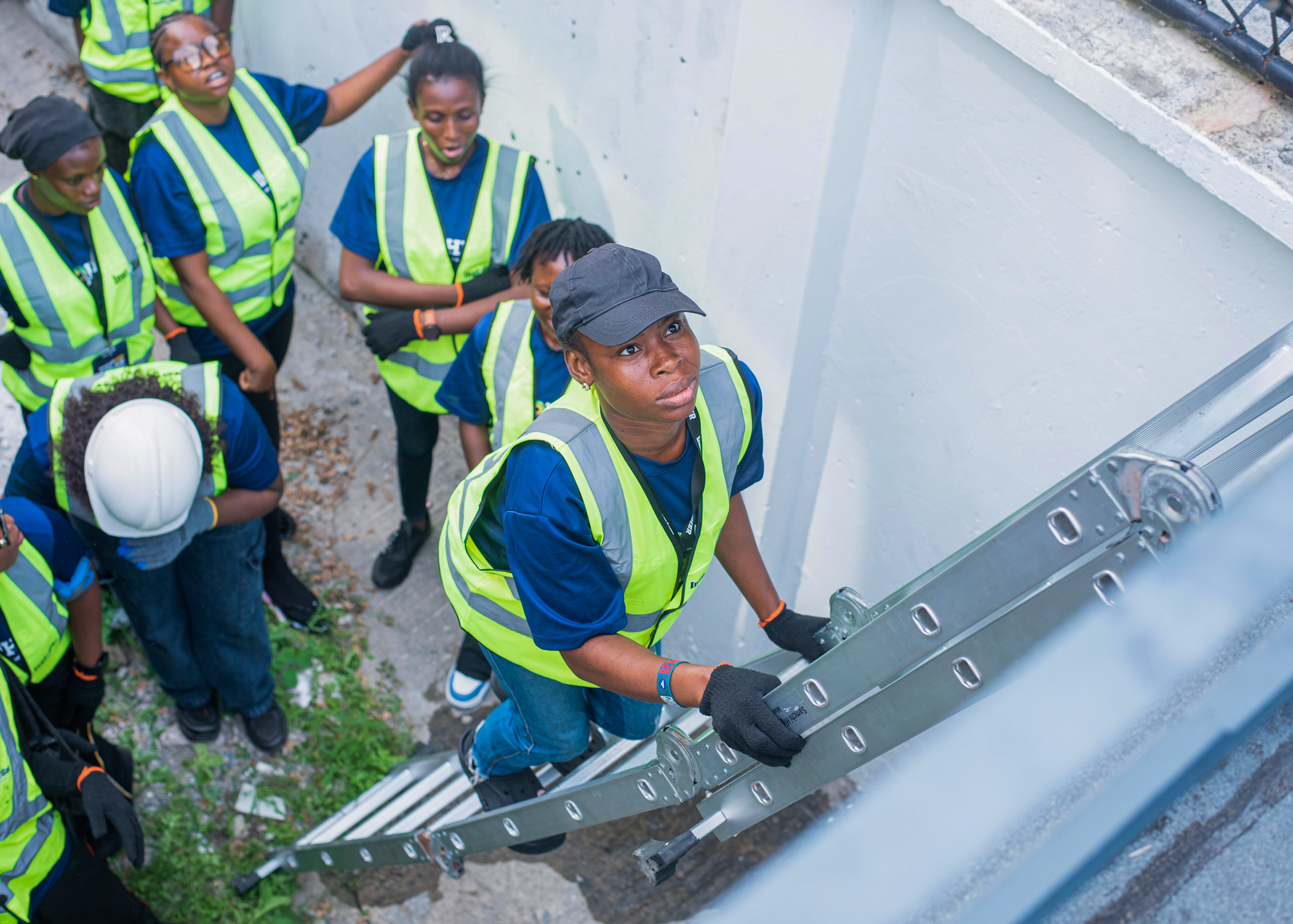
On a rooftop training facility in Lagos, a group of women, equipped with helmets, eagerly awaits their turn to ascend. This modest scene represents the significant transformations taking place within Nigeria’s energy landscape, as it redefines who will spearhead the nation’s solar future.
Gender Imbalance in Renewable Energy Roles
Historically, women have engaged with Nigeria’s renewable energy sector, primarily on the periphery of its technical core. Data from the Renewable Energy Association of Nigeria reveals that women fill only 8% of technical positions, such as system design and installation. The majority occupy non-technical roles (64%) and administrative positions (28%). This gender disparity has evolved from a social concern into a critical capacity issue for the industry.
The Urgent Need for Skilled Workers
According to Chinwe Udo Davis, CEO of Instollar and founder of installHER, a platform dedicated to training women in solar PV installation, the renewable energy sector faces a growing talent shortage. “Without women, the workforce will always be limited,” she states. As the demand for off-grid power surges due to inconsistent grid supplies and escalating fuel prices, the scarcity of skilled technicians is beginning to hamper growth.
Transforming Support Roles into Technical Expertise
In its fourth cohort, installHER provided intensive training in solar PV installation, system design, and energy auditing for 23 women over three weeks. While this may appear to be a small-scale initiative, it signifies a pivotal shift, allowing women to transition from supportive capacities into the technical backbone of the industry. For many participants, this opportunity also marks a chance to broaden their skill sets.
Overcoming Stereotypes and Building Confidence
Faith Bernard, whose previous roles included a barber and lawyer, initially considered solar power as merely an internship opportunity. “I didn’t come from a science background, so calculations were challenging,” she recalls. However, active engagement in training transformed her perspective. Similarly, Chinonso Echefu, a sociology graduate, emphasizes that while friends assumed she would be climbing rooftops, the real complexities of the field lie in its design and energy auditing aspects. By diversifying gender participation, the industry can enhance both workforce capacity and productivity.
Tackling Energy Inefficiencies Through Innovative Thinking
Some trainees are now thinking of solar energy as part of a broader solution to Nigeria’s energy inefficiencies. Happiness Thomas, who studied construction technology, aims to integrate solar power into building designs rather than treating it as an afterthought. “I feel like a solution provider now,” she states, highlighting the program’s impact on shifting mindsets from mere job-seeking to innovative problem-solving.
Addressing Gender Disparities for Future Growth
Despite the strides made in encouraging more women to participate in the solar sector, they still represent less than 2% of registered energy companies under Nigeria’s joint entitlement scheme. This reality underscores a pressing need for targeted interventions. If women are excluded from technical roles, the industry’s talent pool is diminished at a time when demand for skilled professionals is increasing, emphasizing the inefficiency of exclusion.
Looking Ahead: The Future of Women in Renewable Energy
installHER’s ambitious plan aims to train 10,000 female engineers by 2030, cultivating a new generation of female leaders in Africa’s green workforce. As Nigeria’s renewable energy sector approaches a critical juncture, the urgency for skilled labor has never been clearer. Without an aggressive expansion of talent, the industry may struggle to keep pace with rising energy costs and ongoing grid constraints. Thus, while change may be gradual, the vibrant emergence of women on Nigeria’s rooftops is laying the foundation for a more inclusive energy future.
