


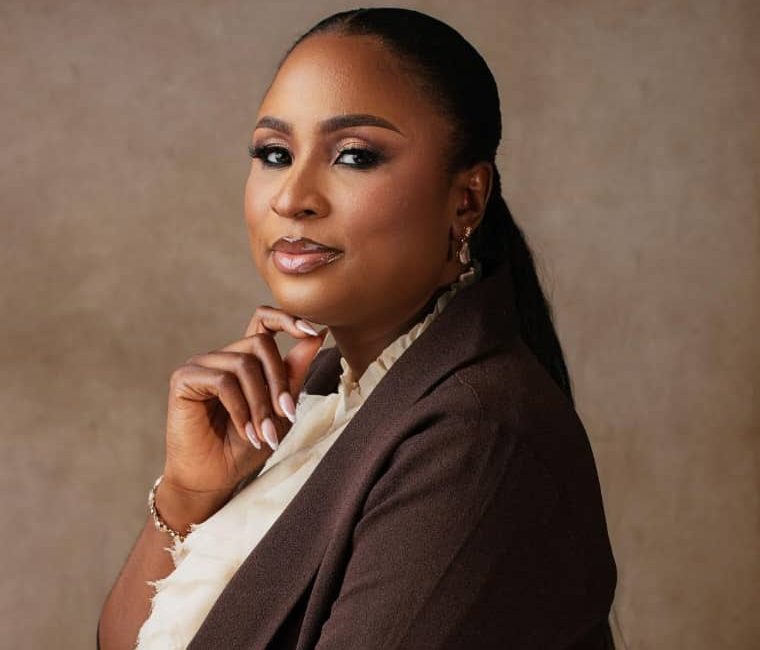
A look back at International Women’s Day with Joy Act
It is often said that women multiply what they have. Give her a home and she will start a family. Give her a classroom and she will quietly, tenaciously and often unrecognized shape the next generation. Give her a small loan and a market stall and watch how she turns it into tuition, a better roof over her head, and food for her family. Give her a voice. That way, she won’t just be talking about herself. She will be a voice for people who never had a platform in the first place.
This is not a myth. It unfolds every day, from a woman running a grocery store on Lagos Island and employing four people, to an okpa vendor in Enugu who secretly has three engineers and a doctor, to a rural community health worker in Borno who knows every child’s name and immunization record. Women have always taken what was handed to them and taken it further than expected.
This year’s International Women’s Day theme brilliantly spotlights this fact while looking at deeper issues. And today, if we stop and ask, it becomes a gentle exploration for us. Why is the request still misunderstood when a woman leaves to ask for a seat?
This is not a request for charity. It is not a zero-sum acquisition of power that comes at someone else’s expense. This is essentially an invitation to let the multiplier into the room where decisions are made. Not because multipliers are better, but because they bring a different perspective.
This year’s International Women’s Day is built on the deceptively simple idea of ”giving to gain.” It almost sounds transactional, but the meaning is deeper than that. It asks us to consider what we have left on the table by treating women’s participation as optional.
When society gives women real room to make decisions, something structural changes. Budget questions are asked differently if the person asking the question has expanded their household income over the years. Infrastructure is designed with different priorities as planners understand what it means to walk two kilometers for water before sunrise or what it means for a woman giving birth in a rural area to drive miles to find a primary health care facility to deliver her child. Policies that once looked good on paper will be stress tested against real realities.
This is what women bring to a room that has operated without them for far too long. Softness is not a counterweight to toughness. That structure is too simple. It’s more like depth. Refuse to separate outcomes from the people they affect.
For years, the evidence continues to point in the same direction. Countries with higher rates of female political participation tend to pass more public health, education, and child welfare legislation. Companies with women in senior leadership positions are more likely to survive economic downturns. Small farms run by women produce equal or higher yields than men’s farms, given equal access to land and credit. The data is not ambiguous, and the patterns are not coincidences.
Growth is already occurring. The question is whether we are creating the conditions for it to expand.
Giving women leadership positions is not a concession to political correctness, nor is it a favor. It recognizes what exclusion costs us: ideas unrealized, policies built on imperfect conditions, and a pool of talent not fully utilized.
There is no shortage of talented women in Nigeria. The same goes for other parts of Africa and other parts of the world. What is in short supply is the willingness of organizations to move beyond tokenism. That is, beyond a single woman on the board, a women minister in a soft portfolio, and a girl child campaign that disappears after a press release. Indeed, under President Bola Ahmed Tinubu, we have seen women enter positions that begin to challenge that pattern. Now we need to make sure that progress is reflected in Congress, starting with the passage of the Reserved Seats Act.
True inclusion is structural. It’s the intentional dismantling of pipelines, coaching, and unwritten rules that make certain rooms feel like they weren’t made for you. It’s also a daily choice to listen, take a step back, and share your platform without needing to be thanked.
When women stand up, they rarely do it alone. That’s pretty much the gist. They tend to pull people along, whether it’s other women, young girls watching from afar, or families whose trajectory changes because one person seizes an opportunity and makes the most of it.
We’ve seen this so many times that it no longer surprises us. My grandmother insisted on education even though no one else would. The company’s first female engineer quietly created space for a second and third person. A community leader who transformed a women’s group into a cooperative and then a small development organization.
International Women’s Day is not a celebration of arrival. No women have come. Not completely. still. It would be more accurate to call it a marker. It’s a moment to look at the distance you’ve already walked and the distance you still have to go, and get back to work. The promise of this year’s theme is not complicated. If you give women space, they will do what they have always done with what they have been given.
they will increase it.
Joy Act is an author and serves as Special Assistant on Youth and Women’s Issues to the Deputy Speaker of the House of Representatives. She writes from Abuja
