


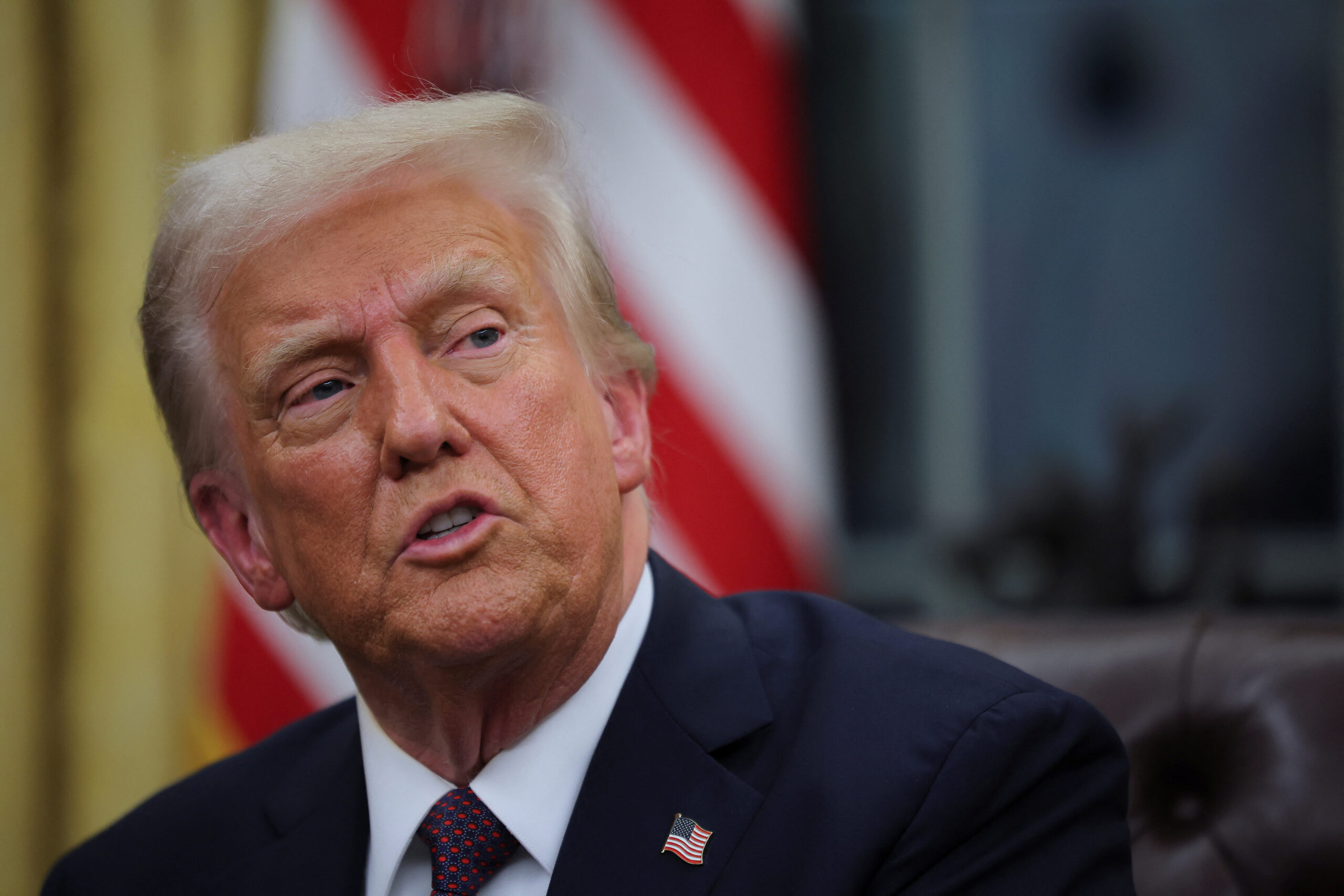
Trump’s Threats of Military Action in Nigeria Raise Concerns
U.S. President Donald Trump has issued repeated threats to consider military operations in Nigeria in response to the alleged killing of Christians. These actions could encompass ground assaults or airstrikes, intensifying the ongoing debate surrounding religious violence in the region.
Experts note that Nigeria’s complex conflicts have resulted in casualties for both Christians and Muslims, challenging assertions of targeted persecution within the country. Such claims have gained traction among right-wing groups in the United States and Europe, fueling a potentially misleading narrative regarding Nigeria’s situation.
President Trump’s remarks followed a proposal from Nigeria’s president for a meeting between the two leaders aimed at addressing these issues. When questioned by an AFP reporter aboard Air Force One about the possibility of a U.S. military presence in Nigeria, Trump responded ambiguously, hinting at various potential actions.
The President emphasized his concern for the situation, stating, “They’re killing Christians, they’re killing so many people, and we’re not going to allow that to happen.” This remark highlights Trump’s stance amid growing international scrutiny of Nigeria’s security landscape.
In contrast, the Nigerian government has refuted claims that Christians are specifically targeted. On Saturday, Trump made intense statements on his Truth Social platform, declaring that he had instructed the Pentagon to prepare for a possible attack on Nigeria unless the violence ceased. He further asserted that the U.S. would respond to Nigerian aggressors with similar ferocity as the violence against Christians.
Daniel Bwala, spokesperson for Nigerian President Bola Ahmed Tinubu, emphasized Nigeria’s partnership with the U.S. in combating terrorism, reiterating the need for collaboration that respects Nigeria’s sovereignty. Bwala suggested that Trump’s controversial post may serve to spur a meeting between the leaders to forge a united front against insecurity, hinting at the complexities in the narrative that the violence affects only Christians.
Narratives of Violence Overshadow Reality
In a recent statement, Trump alleged, without concrete evidence, that “thousands of Christians have been murdered and radical Islam is responsible for this genocide.” This rhetoric exemplifies the broader narrative of violence that is entwined with discussions surrounding Nigeria’s security challenges.
Nigeria grapples with multifaceted violence, including jihadist insurgency in the northeast, armed gangs in the northwest, and lethal clashes between farmers and herders in the central regions. Christian community leader Danjuma Dickson Auta acknowledged the plight of Christians but stated, “We cannot deny the fact that Muslims are also being killed.” This sentiment reflects a more nuanced understanding of the ongoing conflicts.
Abubakar Gamandi, a Muslim representative from Maiduguri, the epicenter of Islamic extremism in Nigeria, echoed similar concerns, asserting that jihadists indiscriminately target both Christians and Muslims. He pointed out that far more Muslims fall victim to these attacks, underscoring the complexity of the region’s strife.
President Tinubu countered the characterization of Nigeria as a religiously intolerant nation, asserting that such depictions do not accurately represent the lived experiences of its citizens. As both leaders prepare for potential discussions, the framing of Nigeria’s conflicts continues to evoke strong feelings both domestically and internationally.
