


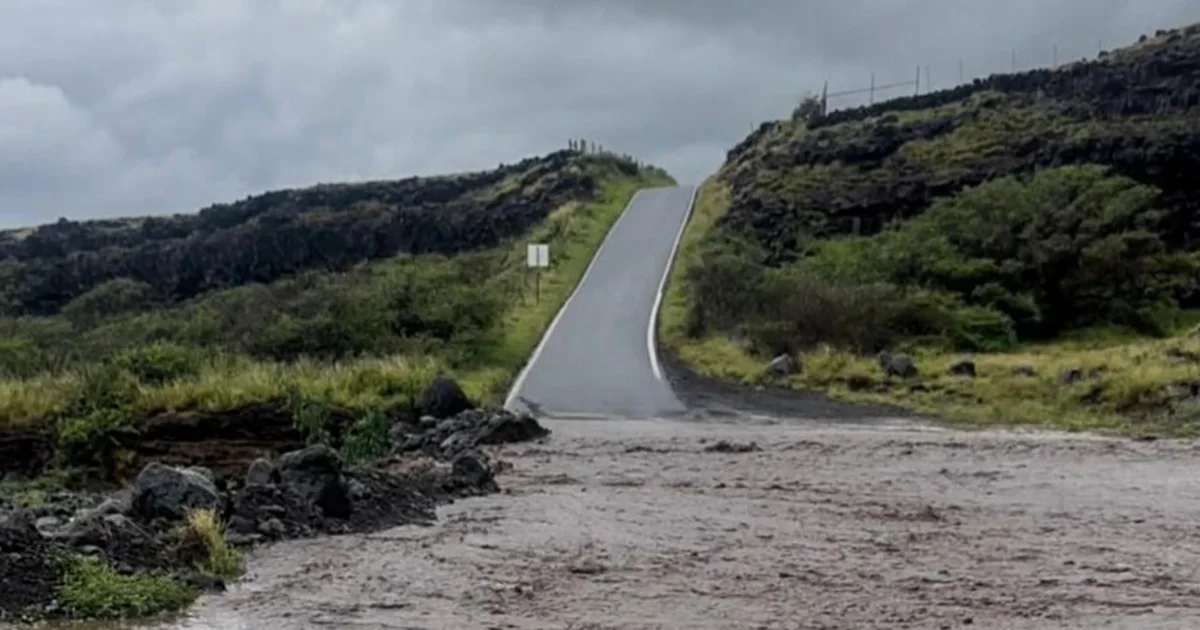
Hawaii Faces New Flooding Threat After Recent Storms
The Hawaiian Islands are preparing for additional flooding on Thursday, just days after a severe storm brought record rainfall that caused road collapses and structural damage.
Between March 10 and March 16, some regions in Maui received over 5 feet of rain, according to the University of Hawaii’s climate data team. Notably, Haleakala Crater experienced 33 inches of rain in a mere 24 hours.
While the impending storm is not expected to be as severe as previous ones, National Weather Service (NWS) forecasters caution that flooding could become an immediate concern. A flood watch is currently in effect for most of Hawaii.
The NWS indicated that due to the high soil saturation from the recent Kona storm, even moderate rainfall could lead to rapid runoff and flooding risks.
The Unique Nature of Kona Storms
Kona storms represent a distinct weather pattern in Hawaii, often resulting in heavy rains in areas typically shielded from precipitation. The expected rain this week will stem from a new Kona storm.
These storms exacerbate existing concerns related to wildfires across the islands. Regions impacted by the recent heavy rains are the same areas that have endured significant wildfire damage in the past few decades. Rainfall on previously burned land can lead to increased runoff and erosion, heightening the risks of flooding and landslides.
Recent Flooding Hits Lahaina Hard
Lahaina, a community that faced devastating losses during the 2023 wildfires, is one of the areas severely affected by the recent flooding. Joseph Puruta, a displaced Lahaina resident, noted the overwhelming debris flowing from the burn scar into homes and streets.
The extreme weather is part of a broader pattern of chaotic climate conditions affecting the United States. While Hawaii grapples with heavy rains, California and Arizona are experiencing record-breaking heat waves, with temperatures soaring into the 90s and even triple digits. This follows heavy snowfall across the Northeast and unprecedented wildfires in Nebraska.
Understanding Hawaii’s Rain Patterns
Hawaii is accustomed to rainfall, primarily due to a phenomenon known as “orographic lift,” which occurs when trade winds collide with mountainous terrain. This wind pattern forces air upward, cooling it and resulting in precipitation. Typically, rainfall is concentrated in the upwind areas, averaging around 400 inches annually, while the southern and western parts of the island tend to remain much drier.
In contrast, Kona storms disrupt this typical distribution. They arise from shifts in the jet stream, drawing significant moisture toward Hawaii and delivering unexpected rainfall to usually dry regions.
Compounding Environmental Challenges
The recent Kona storm not only contributed to flooding but also highlighted the increasing frequency and intensity of wildfires in Maui. Clay Trauernicht, a wildland fire expert at the University of Hawaii at Manoa, has long warned about the proliferation of non-native grasses that increase fire risk on lands previously used for sugar and pineapple farming.
Despite years of research, the interconnectedness of flooding and fire remains poorly understood. Flooding can lead to the growth of these invasive grasses, which then die off during droughts, creating more combustible fuel for future fires.
Infrastructure Struggles Amid Flood Risks
Areas like Lahaina are exceptionally vulnerable to both flooding and fire due to their histories. Many regions in South Maui are designated floodplains, where floodwaters have already caused significant property damage and infrastructure disruption. Maui County Public Works Director Jordan Molina emphasized the county’s commitment to upgrading drainage systems to better withstand extreme weather events.
However, constructing infrastructure capable of completely mitigating flooding during severe storms is prohibitively expensive. As the county prepares for the next storm, the Department of Public Works is actively clearing debris and assessing drainage systems to reduce potential obstructions.
As residents brace for yet another storm, concerns about ongoing flooding risks remain prominent. The message from officials is clear: proactive measures are critical in the face of ongoing and severe weather patterns.
