


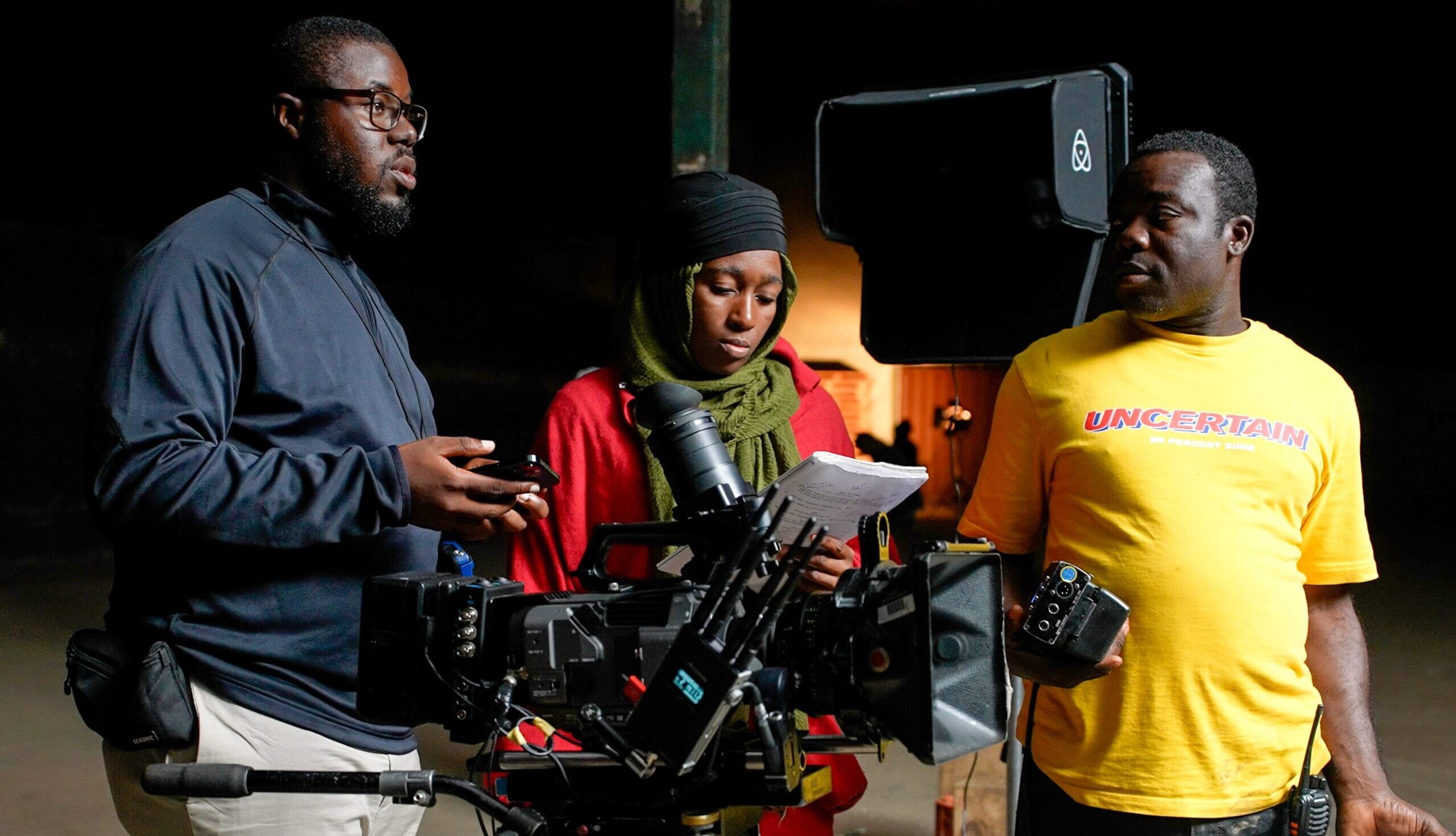
When 17-year-old Zara Sodangi gains admission to Makemation, Nigeria’s premier fictional tech academy, her life transforms dramatically—from struggling for survival in a Lagos neighborhood to competing in the high-stakes realms of artificial intelligence, product design, and data analysis. This forthcoming coming-of-age feature film depicts Zara’s journey as she contends with elite technical education, social class barriers, and self-doubt, all in a bid to alter her family’s future through innovation.
Beyond its emotional narrative, Makemation embodies a larger narrative unfolding in African cinema today.
Integration of AI in Production
As filmmakers converge at this year’s Cannes Film Festival to question whether generative artificial intelligence poses a threat to the future of cinema, several African producers are already embracing AI as a practical production tool. They are utilizing it to reduce costs, broaden creative horizons, and navigate long-established financial and infrastructural challenges.
Described as Africa’s first AI-themed feature film, Makemation integrates artificial intelligence not only as a narrative device but also within its production process. By combining generative AI systems with live-action filmmaking, the creators are pushing the boundaries of traditional storytelling.
The film employs advanced production techniques, including the Arri Alexa LF camera setup, CGI, holograms, and sophisticated visual effects. This reflects a burgeoning movement among African filmmakers to merge technology with storytelling, aligning with practices typically found in more established production markets.
Transforming Workflows with AI
This innovative approach is not limited to isolated projects. Faced with mounting pressure to produce high-quality content affordably, filmmakers, animators, and post-production teams across Africa’s creative sector are increasingly implementing AI-driven workflows. These advancements are enhancing processes related to editing, subtitling, dubbing, sound enhancement, animation, storyboarding, and visual effects.
This evolution occurs against a backdrop of ongoing structural challenges within Africa’s film industry, including restrictions on funding, high equipment costs, a weak studio ecosystem, and a fragmented distribution network. For many smaller studios and independent creators, AI is beginning to appear as a viable operational solution rather than a distant, disruptive technology. According to UNESCO, Africa’s film and audiovisual sector already sustains over five million jobs and generates roughly US$5 billion annually across the continent.
Navigating Resource Limitations
Despite such potential, a significant portion of the industry operates under stringent resource limitations. In many African markets, the cost of visual effects remains prohibitively high, prompting numerous productions to outsource advanced post-production work abroad or scale back their creative aspirations.
Sector analyst Kenim Oba notes that this disparity reflects longstanding systemic issues that have shaped African cinema. “Hollywood didn’t achieve its status merely due to better stories; it developed because America constructed and safeguarded its entire production system,” Oba points out. She argues that Western nations have created a global storytelling framework and monopolized access to it, effectively excluding Africa from both capital flow and what she terms “production intelligence”—the essential technology, post-production systems, and industry knowledge necessary for transforming storytelling into a lucrative commercial medium.
Nevertheless, Nollywood has emerged as one of the world’s largest and most prolific film industries, producing thousands of films each year through a streamlined and cost-effective model. This has established Nigeria as a pivotal cultural force in Africa.
Reassessing African Narratives
Oba maintains that this evolution counters long-held beliefs within the global media spectrum. “African storytelling has always been significant; the real question was whether African creators could turn demand into a sustainable economic model,” she states. This economic challenge is now intertwined with the emergence of artificial intelligence.
Across platforms like YouTube and TikTok, African filmmakers are increasingly experimenting with AI-generated visuals—from futuristic cityscapes to folklore-inspired fantasy worlds that would have previously required impractical budgets. While many of these projects remain experimental, others have gained considerable traction online for their ambitious visuals, achieved at relatively low costs.
Oba emphasizes, “This is not a minor shift; it’s the dawn of a new production paradigm.” AI significantly streamlines visual development, enabling filmmakers to create concept art, mood boards, storyboards, character designs, and prototype worlds long before securing major funding. This is particularly impactful in an industry where creators have long struggled to convince investors to finance large-scale productions without costly proof-of-concept materials.
Formalizing Innovative Technology Use
Nigeria has begun formally exploring AI technology, exemplified by the establishment of an AI-centric creative community. The Naija Artificial Intelligence Film Festival, launched in 2025, received hundreds of submissions from various countries, illustrating a growing interest in AI-generated narratives, hybrid animation, and experimental production methodologies.
This trend indicates that Africa is shifting from mere consumption of technology to active experimentation within its creative sectors. This narrative contrasts sharply with the prevailing global discourse on AI, which largely centers on ethical issues like copyright, labor displacement, and the potential replacement of human creativity.
The urgency for many African filmmakers focuses not on maintaining a large-scale studio system but on discovering ways to enhance production quality amid ongoing financial and technological constraints. This unique perspective may ultimately influence how African creators adopt AI tools compared to their counterparts in wealthier film industries.
Expanding beyond Content Creation
Moreover, African film entrepreneurs are beginning to leverage AI in ways that extend beyond merely producing content. Grace Olubiyo, founder of the Africa-focused film marketing intelligence platform CR8US AI, highlights a critical issue facing African cinema: the lack of robust audience intelligence and precise market targeting.
“Most African films underperform at the box office, not due to the quality of the script,” Olubiyo asserts, “but because filmmakers often enter the market without adequate insights.” Her venture aims to develop AI systems that assist filmmakers in understanding audience behaviors, optimal release timings, and marketing strategies before a film’s launch.
This evolution hints at the potential for AI to reshape not only film production but also marketing, distribution, and monetization strategies within African cinema. However, this transition comes with inherent risks. Oba warns that African creators might face a new wave of cultural appropriation if local aesthetics, narratives, and traditions are integrated into global AI systems without securing domestic ownership of platforms, intellectual property, and distribution channels.
“It’s a struggle that demands our attention,” she concludes. “The battle is about claiming ownership of the mechanisms that enable us to share our stories.”
