


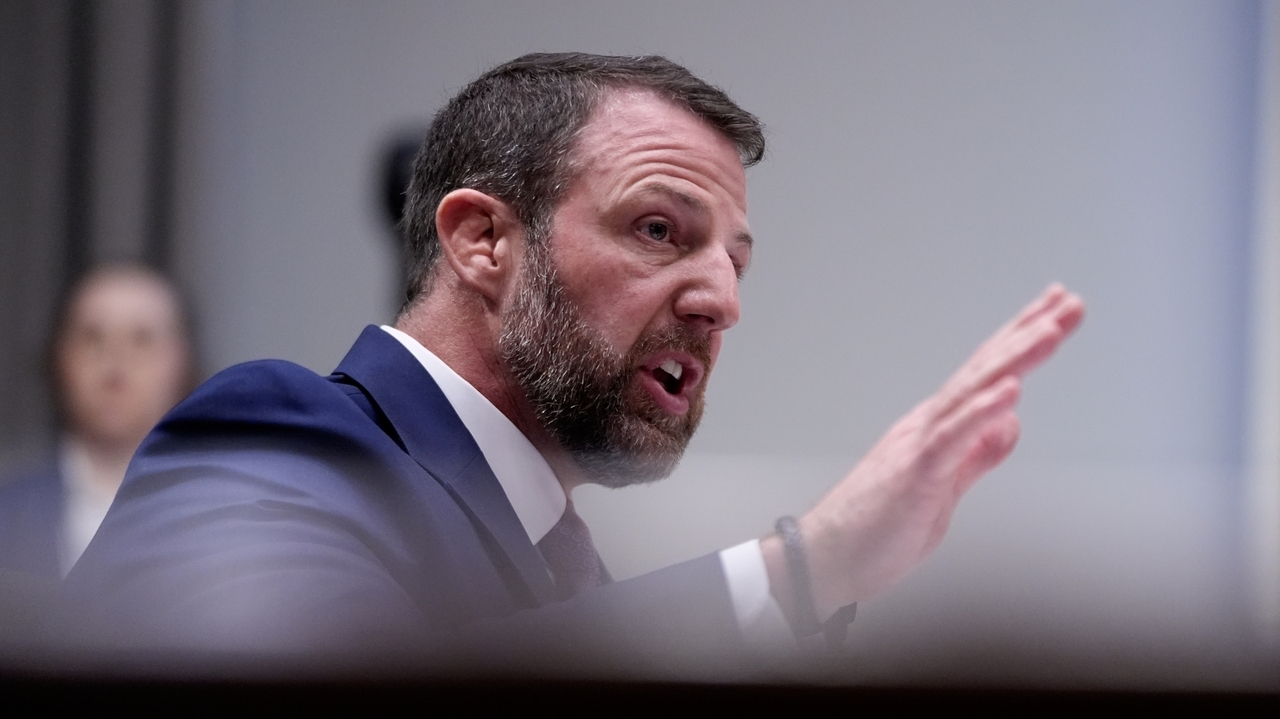
WASHINGTON – The Senate is progressing towards the confirmation of Markwayne Mullin as the new Homeland Security Secretary, following President Donald Trump’s nomination. Mullin’s appointment comes amid significant turbulence within the department, marked by the dismissal of Kristi Noem, which sparked public backlash over the administration’s aggressive immigration policies and mass deportations.
A Republican senator from Oklahoma with a close affiliation to Trump, Mullin has presented himself as a stabilizing figure, aiming to keep the Homeland Security Department out of the headlines. However, during a contentious confirmation hearing last week, he faced challenges from the Republican chairman of the Homeland Security Committee, who scrutinized Mullin’s character and temperament.
Mullin’s nomination advanced on Sunday with a largely party-line vote during an unusual weekend session, clearing the way for a full Senate confirmation expected late Monday.
Taking over at a particularly challenging time, Mullin will navigate a Homeland Security Department that has faced budget constraints as Democrats push for reforms in immigration enforcement. The fallout from the deaths of two Americans during protests in Minneapolis this year has led to increased wait times at U.S. airports, particularly during the bustling spring break travel season. In response, Trump announced plans to have immigration officials assist Transportation Security Administration agents, although lawmakers have cautioned that this could fuel tensions at busy airports.
MMA Fighter Steps into Homeland Security Role
Although Mullin has served in Congress for over a decade and managed a growing family-owned plumbing business, he is not widely recognized as a key player in immigration policy. A former mixed martial artist and college wrestler, Mullin has engaged in early morning training sessions at the members-only House gym, building rapport with both parties and establishing himself as a negotiator in the often-partisan environment of Washington.
His loyalty to Trump is evident, and he is expected to maintain alignment with the president’s immigration policies. Prior to his DHS nomination, Mullin was a staunch advocate for the administration’s approach to immigration and ICE agents. He asserted during his confirmation hearing, “I can have a different opinion than everyone in this room, but as Homeland Secretary, I will protect everyone.”
Immigration Enforcement at the Center of Budget Stalemate
Mullin’s immediate responsibility will involve restoring day-to-day funding to the Department of Homeland Security, which has been stalled since mid-February due to Democratic calls for stricter regulations on immigration officials. Proposed reforms include requiring officials to identify themselves and to refrain from enforcement actions near schools, churches, and hospitals. Additionally, they would need to wear body cameras and obtain a judge’s approval prior to entering private homes.
During his confirmation hearing, Mullin made attempts to position himself as a steady hand at a critical juncture for the agency. Yet, committee chairman Senator Rand Paul raised doubts during a heated exchange. Democrats expressed skepticism, viewing Mullin as a loyal executor of Trump’s immigration agenda.
Although Paul voted against Mullin in committee, he abstained during the vote that advanced Mullin’s nomination with a 54-37 tally, which included support from Democratic Senators John Fetterman of Pennsylvania and Martin Heinrich of New Mexico, who aligned with most Republicans.
Challenges Ahead for FEMA and Disaster Assistance
Mullin will also prioritize developing policies for the Federal Emergency Management Agency (FEMA), which has faced scrutiny for its disaster relief efforts in regions affected by hurricanes and other calamities. Noem’s requirement for personal approval on contracts over $100,000 has hindered timely disaster response, and the agency continues to operate without a full-time administrator, attracting criticism from within its ranks, including some Republicans.
During his Senate confirmation hearing, Mullin proposed new strategies for federal emergency management, rejecting the notion of dismantling FEMA and expressing intentions to rescind Noem’s stringent contract approval processes.
